The short answer
You likely need a new chimney liner if the existing flue tiles are cracked or missing, or if you are converting a boiler from oil to gas. RoyalFlue inspects the flue, then installs a liner sized for your appliance, including the top plate and cap, and shows you the finished work.
A chimney liner is the protective channel inside your flue that carries smoke and exhaust gases up and out of the house. It also keeps heat and corrosive byproducts away from the surrounding brick and framing. In many Brooklyn brownstones, row houses and older detached homes, the original clay tiles have cracked, shifted or crumbled. In others, the flue was never lined for the appliance now connected to it. RoyalFlue Chimney Services installs new liners for fireplaces, wood stoves, and oil or gas boilers and water heaters in Brooklyn and nearby neighborhoods. Our certified technicians start with an inspection, show you what they found, and recommend a liner sized for your appliance and flue. Below is what to watch for, what the work includes, how the crew works in your home, and how a visit goes from start to finish.
Signs you need it
A damaged or missing liner usually shows up as small changes that are easy to dismiss. If you notice any of the following, have the flue inspected before the next time you use the fireplace or before heating season starts.
New York City's heat season runs from October 1 through May 31. Owners who rent out units must keep apartments heated to the city's minimum temperatures during that time, so it pays to find liner problems before October rather than in the middle of winter.
- A smoke or creosote smell in the house, especially on damp days or when the fireplace is cold
- Poor draft: smoke rolling into the room, fires that are hard to start, or a boiler that struggles to vent
- Pieces of clay tile, mortar or brick flakes collecting in the firebox or at the base of the flue
- White staining on the outside brick, a sign that moisture or acidic condensate is moving through the masonry
- Water in the firebox or rust at the bottom of the flue after rain
What's included
Every liner job covers the full path from the appliance or firebox to the top of the chimney. We size the liner to the appliance it serves. A liner that is too large or too small can cause poor draft and heavy buildup.
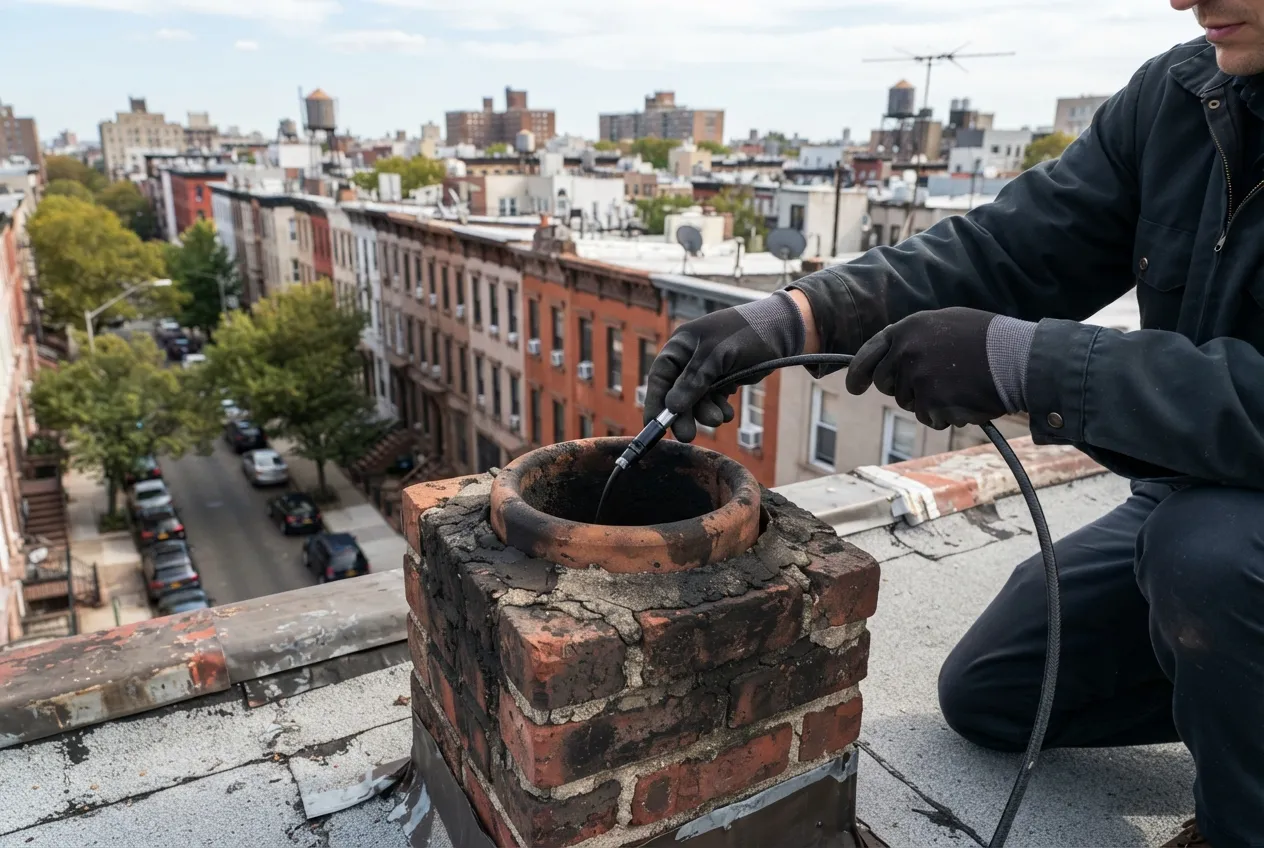
- Camera inspection of the existing flue before any work begins
- Cleaning the flue to remove creosote, soot and loose debris
- Removing broken tiles or obstructions that would block the new liner
- Measuring the flue and matching liner size and type to your fuel and appliance
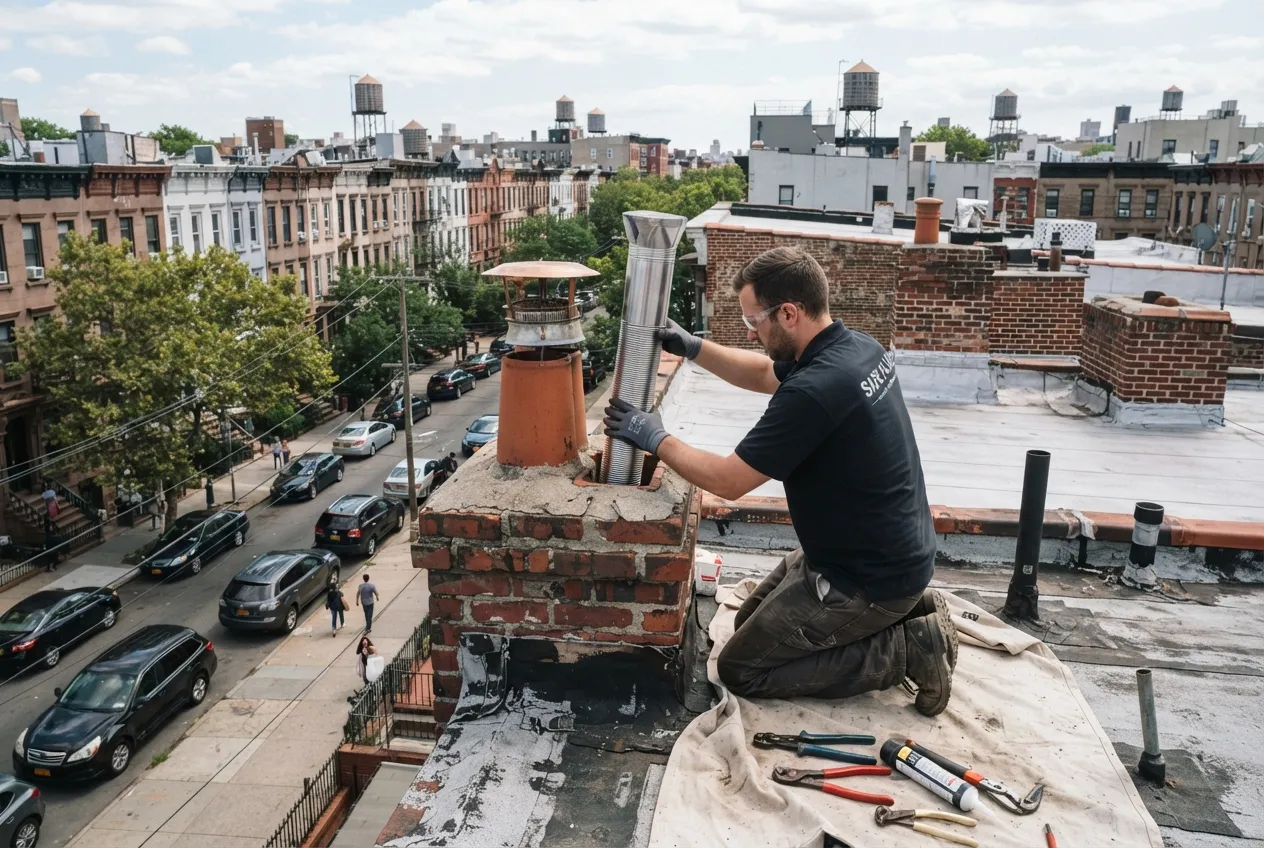
- Installing a stainless steel liner with the proper connector at the appliance or smoke chamber
- Insulating the liner where clearances or flue conditions call for it
- Fitting and sealing a top plate, plus a cap to keep out rain, debris and animals
- A final camera check and photos of the completed installation
How the crew works in your home and on the roof
Inside, the crew lays drop cloths from the door to the fireplace or boiler room before bringing in tools. We seal the fireplace opening or appliance connection and run HEPA vacuums during cleaning so soot stays out of the room. Rotary brushes clear the old flue walls, and a camera lets us see the full length of the chimney, including spots that cannot be seen from the top or bottom.
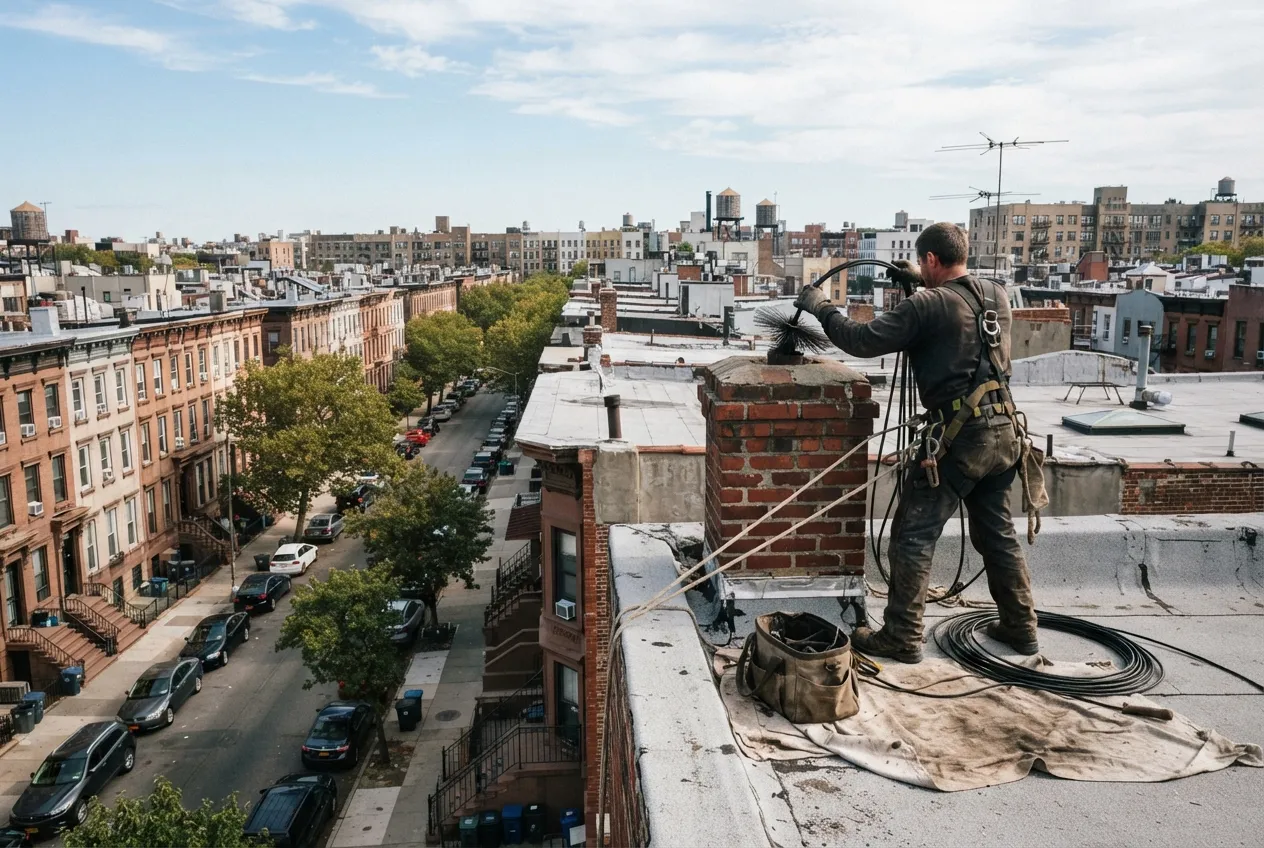
On the roof, technicians set up safe access, check the crown and the top of the chimney, and feed the liner down from above. Brooklyn row houses often share walls and roof lines with neighbors, so we keep tools and materials contained to your chimney. We also clean up the roof before we leave.
Time for your annual chimney check?
The standard we follow
Our work follows the NFPA 211 standard, which calls for chimneys, fireplaces and vents to be inspected once a year. Chimney professionals use three inspection levels. Level 1 is for when nothing has changed. Level 2 is for when the system changes, such as a new appliance or a switch of fuel, or when the home is sold. Level 3 is for when a hidden hazard has to be reached by opening part of the chimney or building. Liner installation usually follows a Level 2 inspection, because a liner is most often needed when something about the system has changed or the flue shows damage.
Fuel conversions are a common reason for new liners in New York City. When a building converts its boiler from oil to gas, the chimney has to be evaluated as part of the work. A new liner is often needed because gas exhaust produces acidic condensate that can corrode a masonry flue.
What affects the price
Every chimney is different, so we quote after we have seen the flue. These are the main factors that shape the cost of a liner installation.
- Chimney height and how easy it is to reach the roof safely
- Fuel type: wood, oil and gas each call for different liner specifications
- Flue size and condition, including offsets or bends in the chimney
- How much creosote, soot or debris has to be removed first
- Whether broken tiles must be cleared or the flue opened up
- Whether insulation, a new cap or related masonry repair is needed
How a visit works
First, we schedule an inspection. The technician looks at the appliance or fireplace, the flue and the top of the chimney, and records camera footage of the inside. You get a clear explanation of what was found, photos, and a written recommendation and quote.
If you go ahead, we book the installation. Most installations are done in a single visit, though chimneys with heavy damage or tight offsets can take longer. When the liner is in, we test the draft and run a final camera check. Then we walk you through the results and leave the work area clean. We also let you know when your next yearly inspection is due.
Chimney Liner Installation by city
- Chimney Liner Installation in GreenpointLocal service & repairs
- Chimney Liner Installation in Long Island CityLocal service & repairs
- Chimney Liner Installation in Hunters PointLocal service & repairs
- Chimney Liner Installation in WilliamsburgLocal service & repairs
- Chimney Liner Installation in Stuyvesant TownLocal service & repairs
- Chimney Liner Installation in Peter Cooper VillageLocal service & repairs
- Chimney Liner Installation in SunnysideLocal service & repairs
- Chimney Liner Installation in East WilliamsburgLocal service & repairs
- Chimney Liner Installation in Murray HillLocal service & repairs
- Chimney Liner Installation in Kips BayLocal service & repairs
- Chimney Liner Installation in East VillageLocal service & repairs
- Chimney Liner Installation in GramercyLocal service & repairs