The short answer
Air duct cleaning makes sense when you can see substantial mold, signs of pests, or heavy dust and debris in your ducts, or after a renovation. RoyalFlue cleans the full supply and return system under negative pressure with HEPA filtration and rotary brushes, and shows you camera photos before and after.
Forced-air heating and central air move a lot of air through a Brooklyn home. Over time the ducts can collect dust, renovation debris, pet hair and sometimes signs of pests. RoyalFlue Chimney Services cleans residential air duct systems in row houses, brownstones, detached homes and condos across Brooklyn and nearby neighborhoods. Our certified technicians clean the whole system, not just the grilles you can see, and they show you what they found. We also keep our claims honest. The U.S. EPA notes that duct cleaning has not been shown to prevent health problems. What cleaning does do is remove visible dust and debris, clear out material left by pests or construction, and help air move freely through the supply and return lines.
Signs you need it
Most owners call us after noticing something they can see or smell. One dusty register isn't a reason to clean an entire system, but several of these signs together usually are.
If you see mold, we'll point out where moisture is likely coming from. Cleaning removes the growth that's there now, but it will come back unless the moisture source is fixed.
- Dust puffing out of supply vents when the heat or air conditioning turns on
- Floors and furniture that gather dust again within a day or two of cleaning
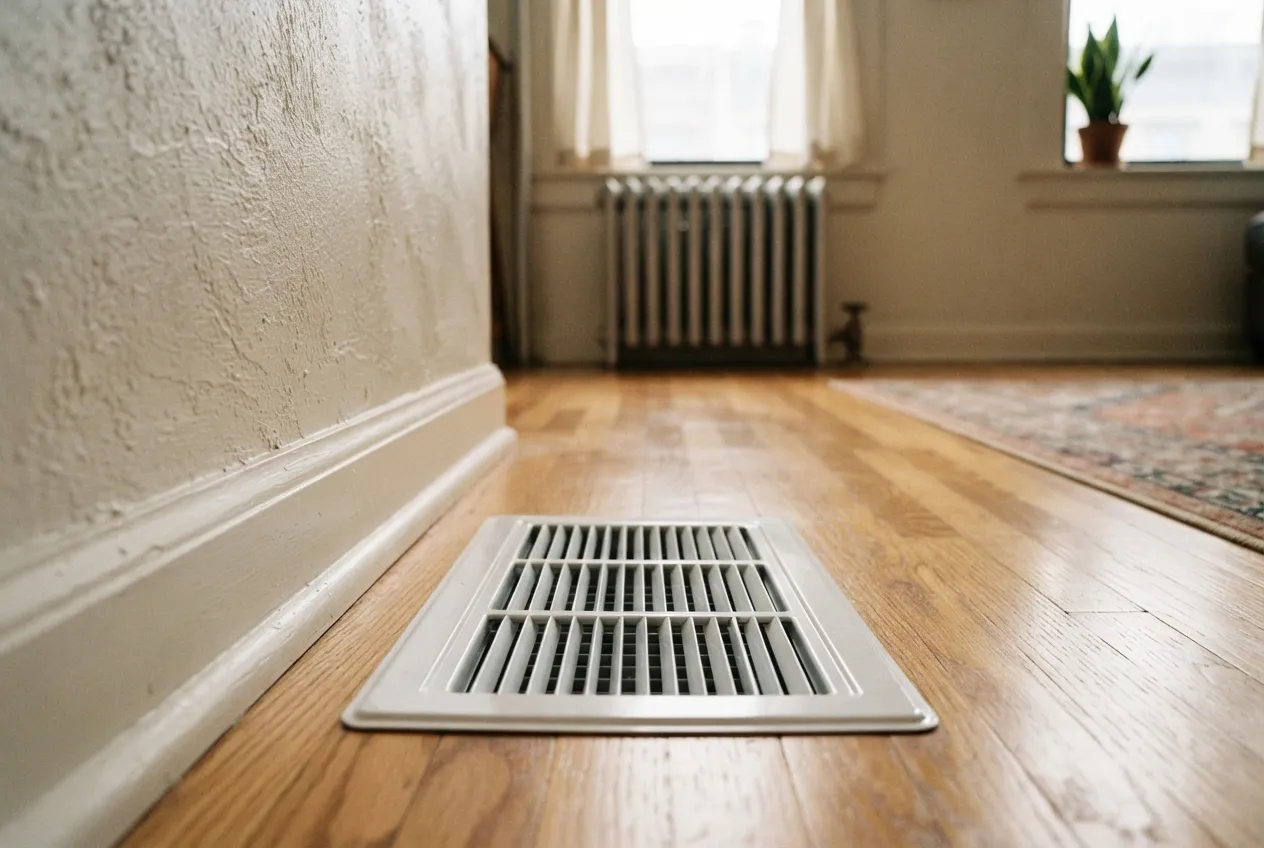
- Visible dust, debris or lint built up inside registers and return grilles
- A musty, stale or burnt-dust odor when the system starts up
- Scratching or animal noises in the ductwork, or droppings or nesting material near vents
- Drywall dust, plaster or sawdust left in the ducts after a renovation
- Visible mold growth on duct surfaces, around registers or near the air handler
- Weak airflow in some rooms even with a clean filter and open dampers
What's included
A full cleaning covers both sides of the system. That means the supply ducts that deliver air to each room and the return ducts that pull it back to the equipment.
- A walkthrough to locate every supply register, return grille and the furnace or air handler
- A camera look inside the main trunk lines before cleaning, where access allows
- Removal and washing of registers and grilles
- Agitation of every reachable supply and return run with rotary brushes
- HEPA-filtered vacuum collection at the trunk line under negative pressure
- Cleaning of the return plenum and the accessible areas of the blower compartment
- Removal of debris, nesting material and renovation dust found in the lines
- A filter check and replacement
- A camera check after cleaning, with photos you can keep
- Notes on anything that needs attention, such as disconnected or crushed ducts
How our crew works in your home
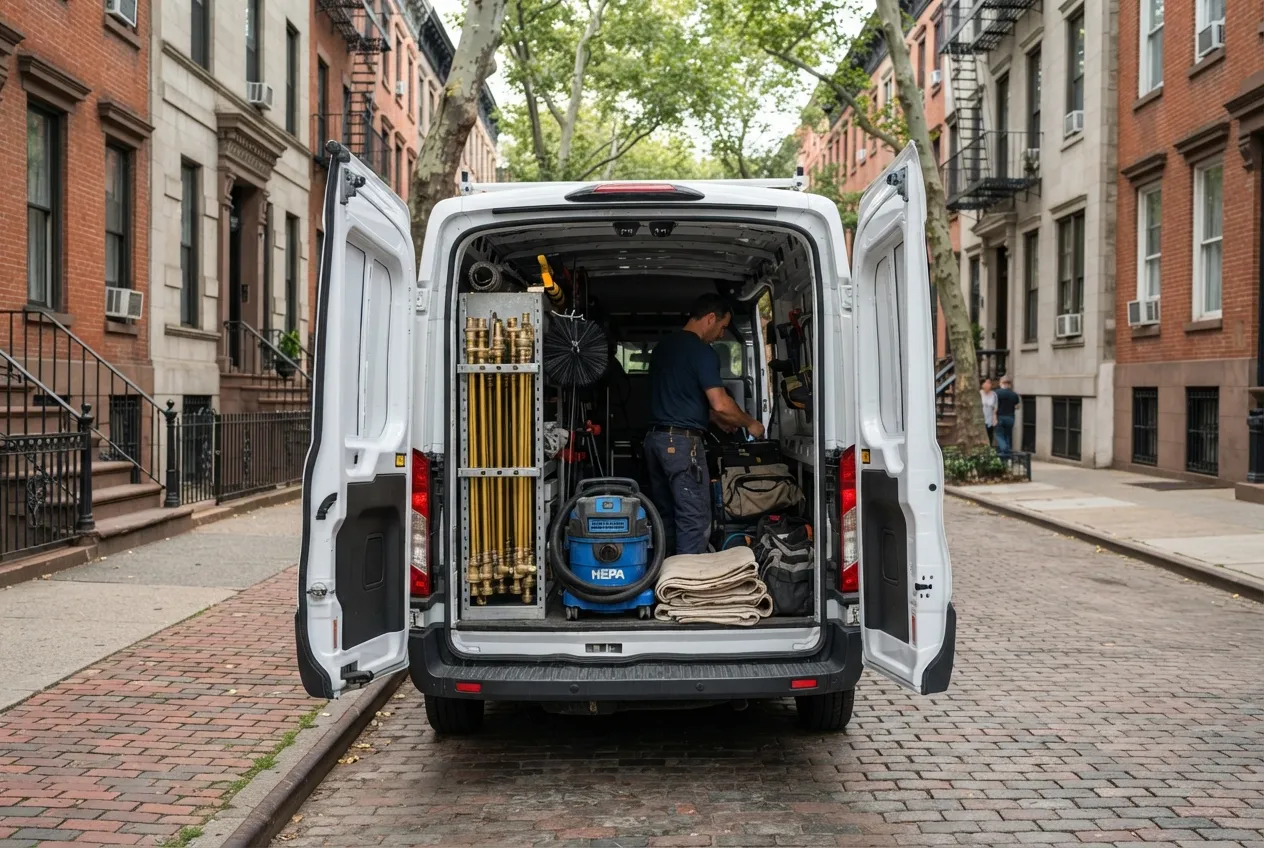
We start by laying drop cloths from the entry to each work area and covering floors and furniture near the registers. We seal off registers that aren't being worked on, so loosened dust is pulled toward the collection point instead of into your rooms.
The collection unit connects to the trunk line and holds the system under negative pressure while technicians work each run with rotary brushes and air whips. Exhaust passes through HEPA filtration. Where we can fit it, a camera lets us confirm that a line is clean instead of guessing. We don't fog or spray chemical treatments as part of a standard cleaning, because the EPA urges caution with them. If one ever seems warranted, we'll explain why and let you decide.
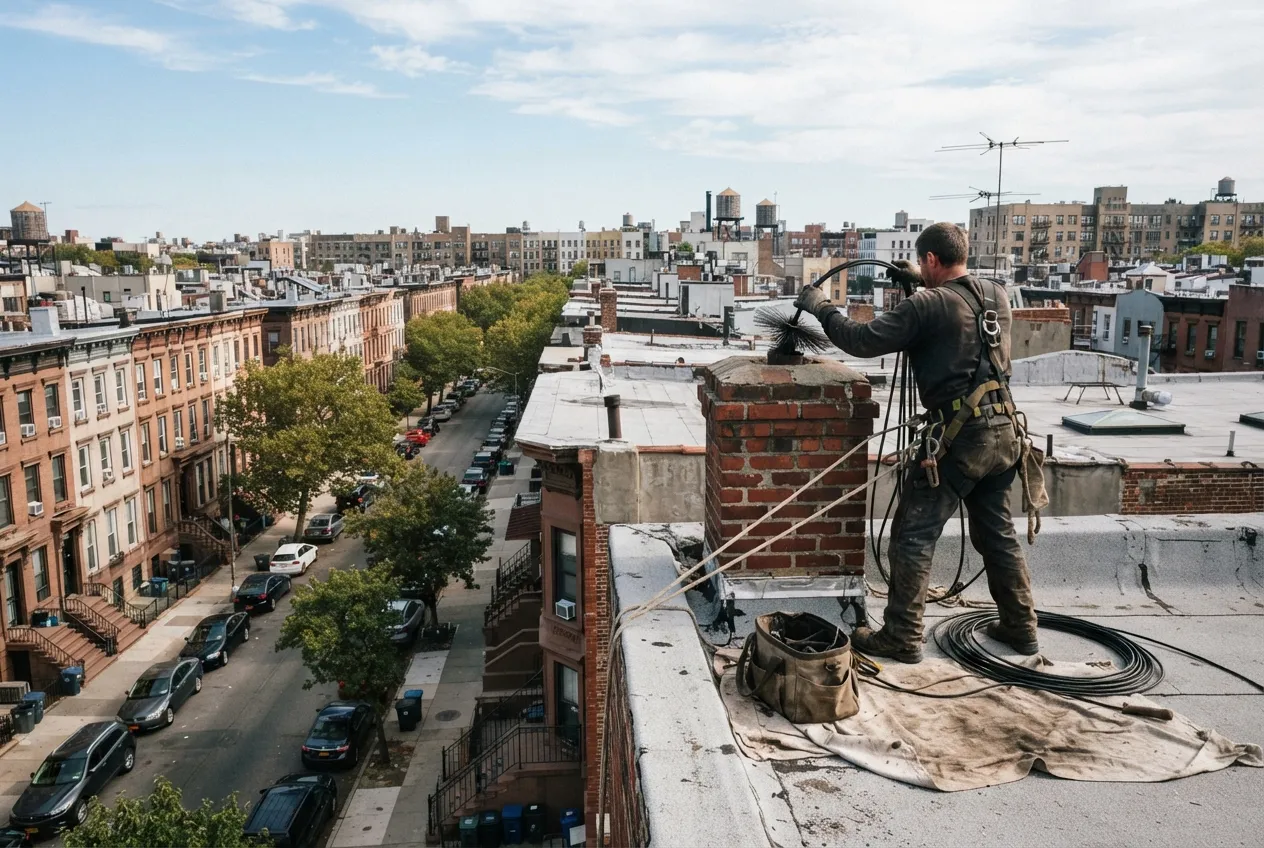
Most Brooklyn homes don't need anyone on the roof for duct work. If your building has a rooftop unit or a roof-mounted exhaust tied into the system, we confirm safe access with you before the visit.
Time for your annual chimney check?
What guides our recommendations
Residential ductwork has no yearly inspection standard like the one NFPA 211 sets for chimneys and vents. For ducts, we follow U.S. EPA guidance: cleaning makes sense when there is substantial visible mold growth, signs of vermin, or excessive dust and debris. If your ducts look reasonably clean on camera, we'll tell you so.
The EPA also notes that duct cleaning has not been shown to prevent health problems. It warns homeowners to research the process before responding to very cheap advertised offers. We'd rather earn your trust with a clear scope of work and photos than with promises about your health.
Timing matters too. New York City's heat season runs from October 1 through May 31, so many owners schedule cleaning in late spring or early fall, before the system runs every day. If you have a dryer vent, we can clean it on the same visit. The U.S. Fire Administration identifies failure to clean as the leading factor in home clothes dryer fires.
What affects the price
Every home is different, so we quote after we understand your system. The main factors are listed below.
If we find repairs, we'll show you and price them separately before doing any of that work.
- The size of the home and the number of supply and return vents
- How many heating and cooling systems or air handlers you have
- Access to the ductwork, including tight basements, attics, soffits and any rooftop equipment
- The type and condition of the ducts: rigid metal, flex duct or lined duct
- How much buildup is inside, including renovation dust, nesting material or mold
- Whether a camera inspection is needed before or after cleaning
- Repairs, such as disconnected joints, crushed flex runs or missing access panels
How a visit works
When you contact us, we ask about your home, your system and what you've noticed. Then we schedule an arrival window and tell you roughly how long the job should take.
When we arrive, the technician walks the home with you, checks the equipment and registers, and takes a camera look where access allows. You get a clear scope of work before anything starts.
After cleaning, we reinstall the registers, replace the filter, run the system to confirm airflow, and clean up the work areas. You'll get photos and a short summary of what we did and anything worth keeping an eye on.
Air Duct Cleaning by city
- Air Duct Cleaning in GreenpointLocal service & repairs
- Air Duct Cleaning in Long Island CityLocal service & repairs
- Air Duct Cleaning in Hunters PointLocal service & repairs
- Air Duct Cleaning in WilliamsburgLocal service & repairs
- Air Duct Cleaning in Stuyvesant TownLocal service & repairs
- Air Duct Cleaning in Peter Cooper VillageLocal service & repairs
- Air Duct Cleaning in SunnysideLocal service & repairs
- Air Duct Cleaning in East WilliamsburgLocal service & repairs
- Air Duct Cleaning in Murray HillLocal service & repairs
- Air Duct Cleaning in Kips BayLocal service & repairs
- Air Duct Cleaning in East VillageLocal service & repairs
- Air Duct Cleaning in GramercyLocal service & repairs