The short answer
A chimney should be inspected once a year under the NFPA 211 standard and swept whenever that inspection finds creosote, soot or a blockage. RoyalFlue's certified technicians clear the flue from the firebox to the cap, protect your home with drop cloths and HEPA vacuums, and use a camera where needed to show you the flue's condition.
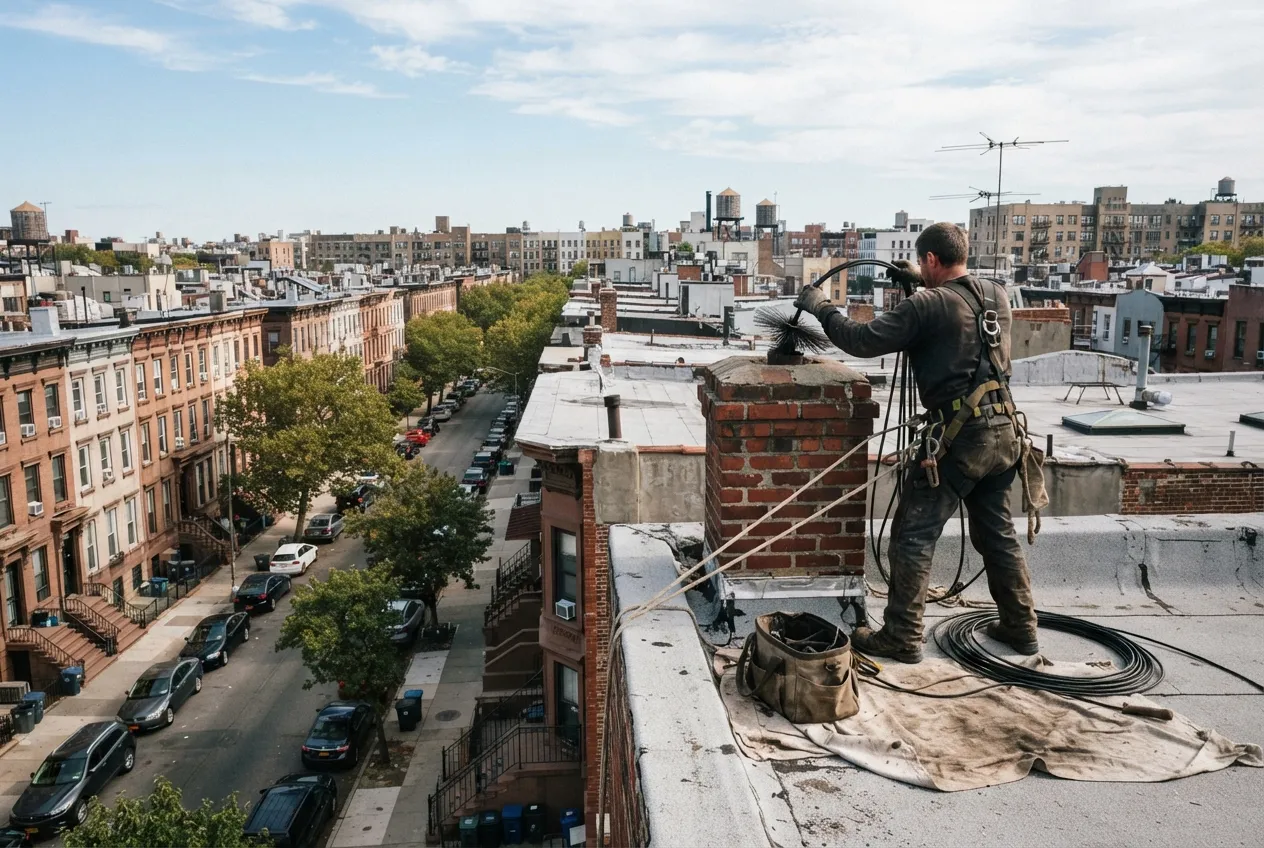
A chimney sweep removes the soot, creosote and debris that build up inside a flue each time you burn wood or run a fuel-burning appliance. If it is left in place, creosote can ignite, and blockages from nests, leaves or loose masonry can push smoke and carbon monoxide back into the house. RoyalFlue Chimney Services sweeps wood-burning fireplaces, wood stoves, and boiler and furnace flues in row houses, brownstones, detached homes and small multifamily buildings across Brooklyn and nearby neighborhoods. Our certified technicians clean the full length of the flue, note what they find along the way, and tell you plainly whether the chimney is ready to use. Below you will find the warning signs to watch for, what a sweep includes, how we protect your home, and what to expect from a visit.
Signs You Need a Chimney Sweep
Many homeowners book a sweep only after something seems off. These are the most common signs that a flue needs cleaning or a closer look. Even if you notice none of them, a chimney you use regularly should still be inspected once a year.
- A smoky, tar-like or campfire smell coming from the fireplace, especially on humid days or when the air conditioning runs
- Poor draft: the fire is hard to start, smoke drifts into the room, or the fire burns weakly
- Black flakes, soot, debris or bits of brick and mortar falling into the firebox
- White staining (efflorescence) on the exterior brick, which points to moisture moving through the masonry
- Scratching, chirping or fluttering sounds that suggest birds or animals in the flue
- Water or rust in the firebox or on the damper after rain
- Several seasons since the last sweep, or a recent move into a home where you don't know the chimney's history
What a Chimney Sweep Includes
Every sweep follows the same checklist, so you know exactly what was done and what we found. If something needs repair, we explain it and leave the decision to you.
- Visual check of the firebox, damper, smoke chamber and flue before cleaning
- Rotary or hand brushing of the full flue to remove soot and creosote
- Cleaning of the smoke shelf, smoke chamber and damper area
- Removal of nests, leaves and other blockages where they can be reached safely
- Camera inspection of the flue liner where access allows or a problem is suspected
- Roof-side check of the crown, cap, flashing and exterior brick when the roof can be safely accessed
- Cleanup of the work area and HEPA vacuuming of loose soot
- A plain-language report of what we cleaned, what we saw, and any recommended next steps
How Our Crew Works in Your Home and on the Roof
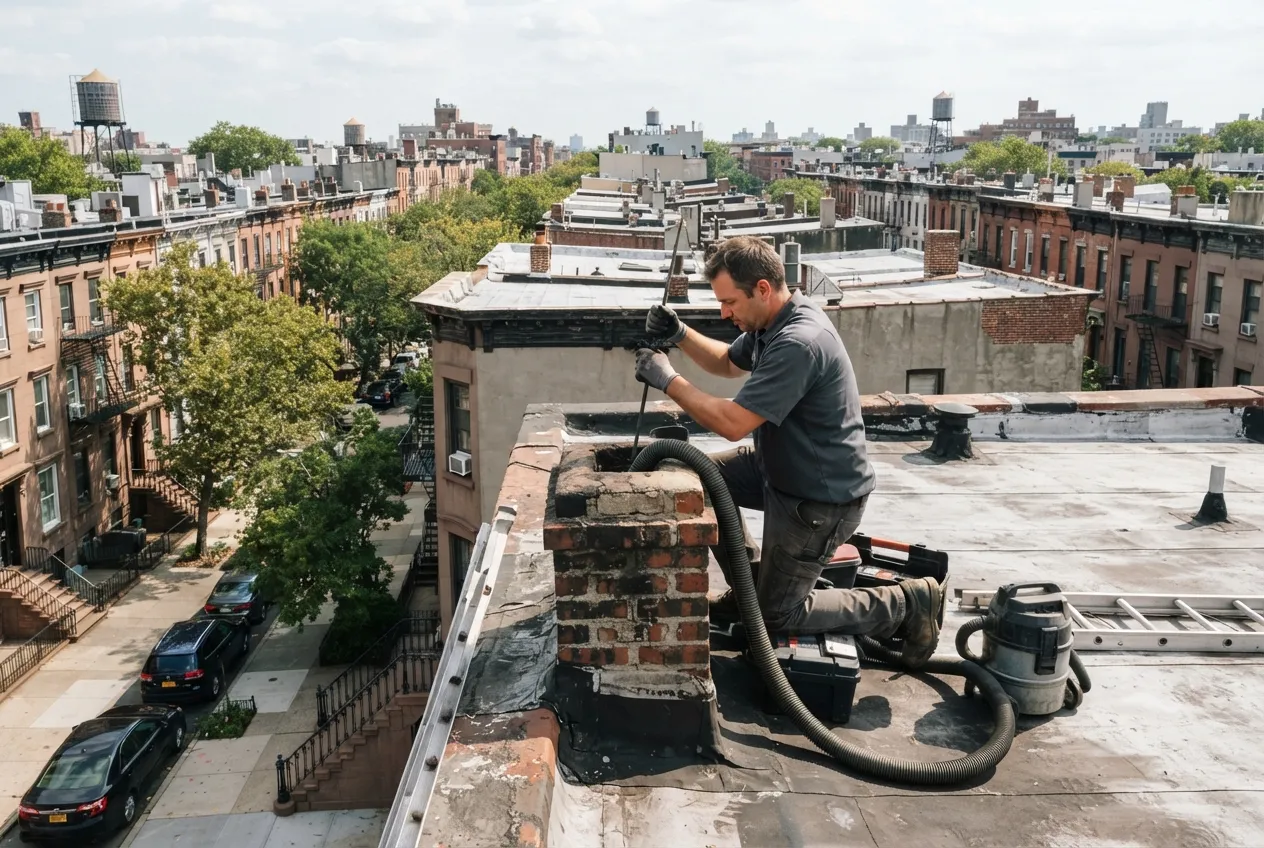
Inside, we lay drop cloths from the door to the fireplace and cover the hearth before any tools come out. A HEPA vacuum runs throughout the cleaning to pull loose soot away from the room, and the fireplace opening is sealed so dust stays inside the flue while we work. We use rotary brushes sized to your flue to loosen creosote from the liner walls, then follow up with hand brushes in the smoke chamber and around the damper.
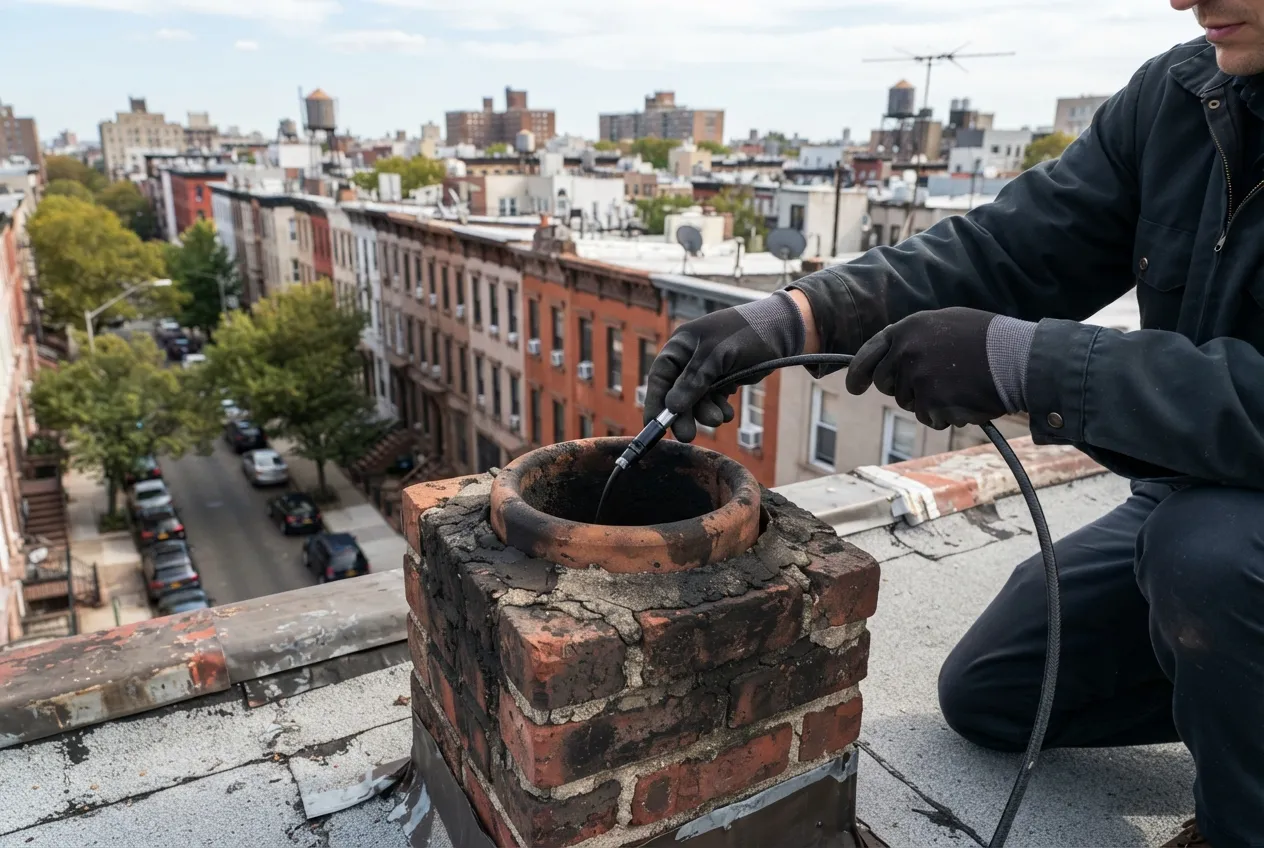
Where it fits, we run a camera up the flue so we can see cracks, gaps in liner joints, or heavy glazed creosote that brushing alone won't remove. We can show you the footage so you see the same thing we do.
On the roof, we check the chimney cap, crown and flashing, and brush from the top down when the flue calls for it. Brooklyn roofs vary widely, from flat row-house roofs reached through a hatch to steep pitched roofs, so we plan roof access for each home and only go up when it can be done safely.
Time for your annual chimney check?
The Standard We Follow
Our work follows the NFPA 211 standard, which calls for chimneys, fireplaces and vents to be inspected once a year. Chimney professionals use three inspection levels. Level 1 applies when nothing about the system has changed. Level 2 applies when the system changes, for example a new appliance or a switch of fuel, or when the home is sold. Level 3 is used when a hidden hazard has to be reached by opening part of the chimney or building.
Fuel changes matter in New York City. When a building converts its boiler from oil to gas, the chimney has to be evaluated as part of the work, and a new liner is often needed because gas exhaust produces acidic condensate that can corrode a masonry flue. If you are planning a conversion, tell us when you book so we can schedule the right level of inspection.
Timing matters too. New York City's heat season runs from October 1 through May 31, when building owners must keep apartments heated to the city's minimum temperatures. Sweeping boiler and furnace flues before the season starts helps avoid surprises once the heat is running.
What Affects the Price
We quote each job after learning about your chimney, because no two flues are the same. The main factors are:
- Chimney height and how the roof is reached
- Fuel type: wood, oil or gas
- Flue size, shape and condition, and whether there is more than one flue
- How much soot and creosote has built up, including glazed creosote that needs extra work
- Whether a camera inspection or a higher inspection level is needed
- Any repairs found during the visit, such as a new cap, damper or liner work
How a Visit Works
When you contact us, we ask what you burn, how often you use the chimney, and whether you've noticed any of the warning signs above. Before we arrive, let the fire go out completely and give the ashes time to cool, and clear a path to the fireplace or appliance.
On the day of the visit, the technician walks you through the plan, sets up drop cloths and the HEPA vacuum, inspects, sweeps and cleans up. Afterward, we review what we found, show camera footage if we recorded any, and explain any recommended repairs so you can decide what to do next. Nothing beyond the agreed sweep is done without your approval.
Chimney Sweep by city
- Chimney Sweep in GreenpointLocal service & repairs
- Chimney Sweep in Long Island CityLocal service & repairs
- Chimney Sweep in Hunters PointLocal service & repairs
- Chimney Sweep in WilliamsburgLocal service & repairs
- Chimney Sweep in Stuyvesant TownLocal service & repairs
- Chimney Sweep in Peter Cooper VillageLocal service & repairs
- Chimney Sweep in SunnysideLocal service & repairs
- Chimney Sweep in East WilliamsburgLocal service & repairs
- Chimney Sweep in Murray HillLocal service & repairs
- Chimney Sweep in Kips BayLocal service & repairs
- Chimney Sweep in East VillageLocal service & repairs
- Chimney Sweep in GramercyLocal service & repairs