The short answer
You likely need chimney repair if you see water in the firebox, white staining on the brick, flaking mortar or brick, or notice a smoke smell or poor draft. RoyalFlue's certified technicians inspect first. They then repair mortar, crowns, caps, flashing and liners following NFPA 211, and they protect your home throughout the work.
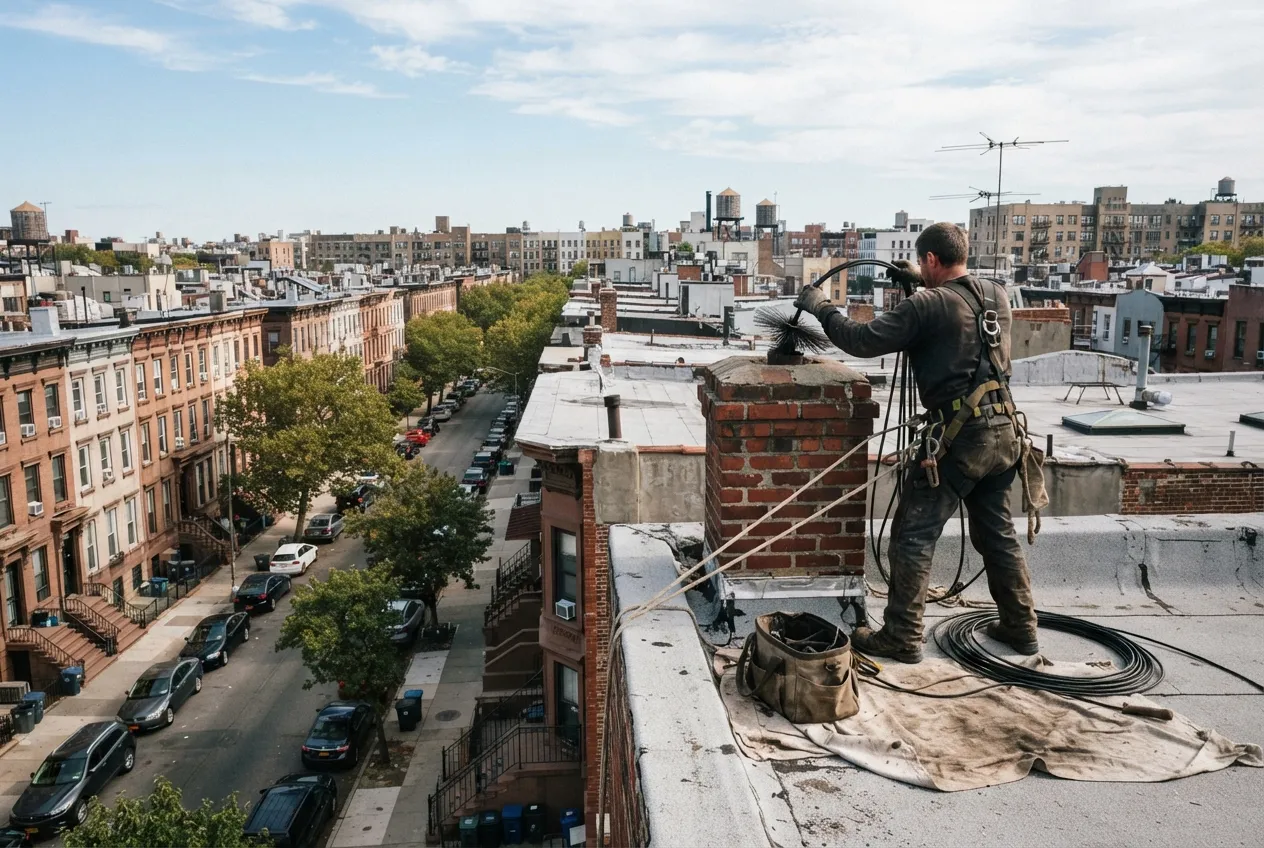
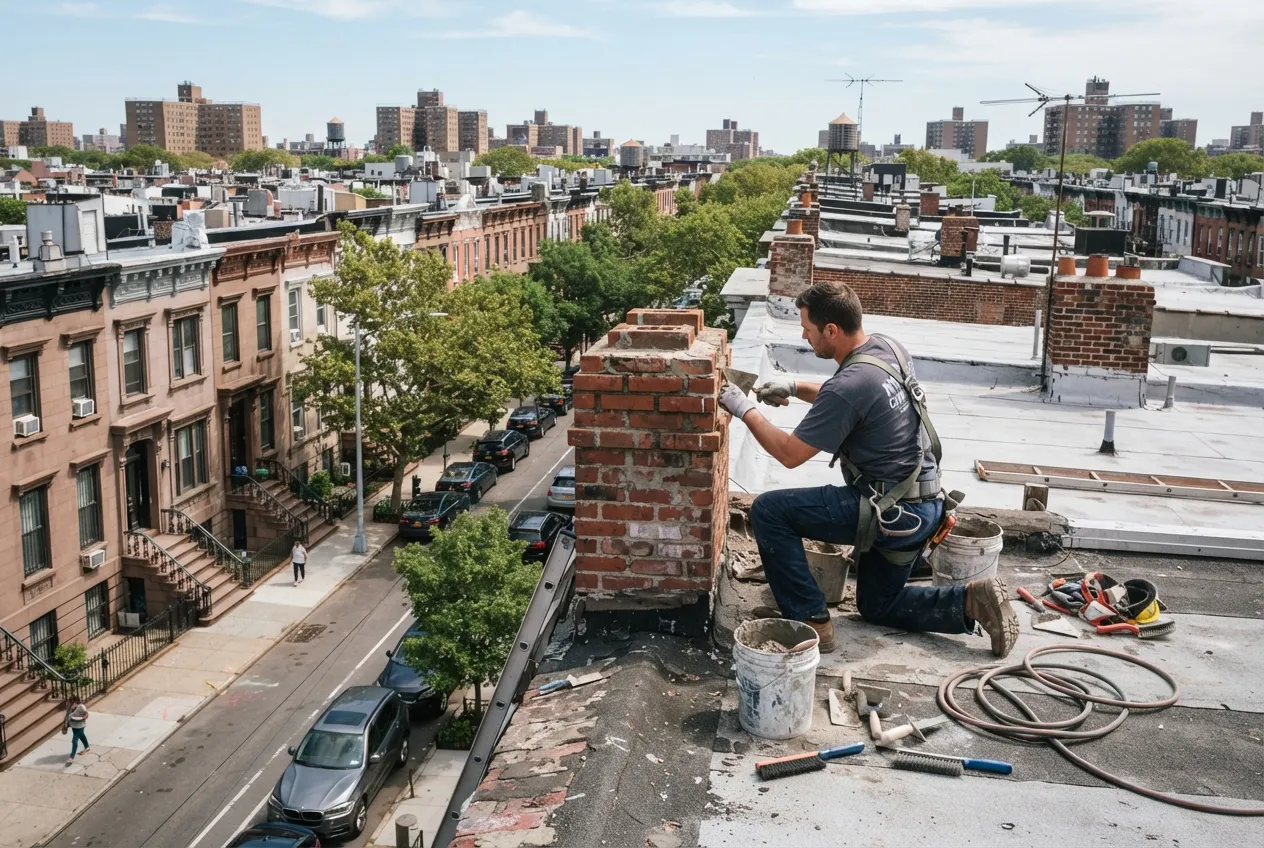
Brooklyn chimneys work hard. Many sit on row houses and brownstones where the brick has been through years of freeze-thaw winters, wind-driven rain and long heating seasons. The city's heat season runs from October 1 through May 31, so a chimney that serves a boiler or furnace is in use for most of the year. When mortar washes out, a crown cracks or flashing pulls away, water gets into the masonry, and the damage spreads faster than most owners expect. RoyalFlue Chimney Services repairs masonry chimneys, crowns, caps, flashing and liners for homeowners across Brooklyn and nearby neighborhoods. Our certified technicians find the cause first, explain it in plain terms, and fix what actually needs fixing.
Signs You Need Chimney Repair
Most chimney damage starts small and out of sight. These are the signs Brooklyn homeowners tend to notice first:
Any one of these signs is worth a look. Two or more together usually mean water has been getting in for a while. The repair is often bigger than it looks from the street.
- Water in the firebox, or a damp, stained ceiling or wall next to the chimney
- White, chalky staining on the brick, which means water is moving through the masonry
- Brick flakes, mortar sand or pieces of flue tile in the firebox
- A smoke or creosote smell in the house, especially on humid days or when the heat comes on
- Poor draft: smoke rolling into the room, or a fire that is hard to keep going
- Scratching or chirping inside the chimney, which usually points to a missing or broken cap
- Loose bricks, gaps where the chimney meets the roof, or a crown with visible cracks
What Chimney Repair Includes
Every repair job starts with an inspection, so the work matches the actual problem. Depending on what we find, a repair can include the following:
We tell you what is urgent and what can wait. If part of the chimney is in good shape, we say so and leave it alone.
- Inspection of the chimney exterior, crown, cap, flashing and firebox, plus the flue where we can reach it
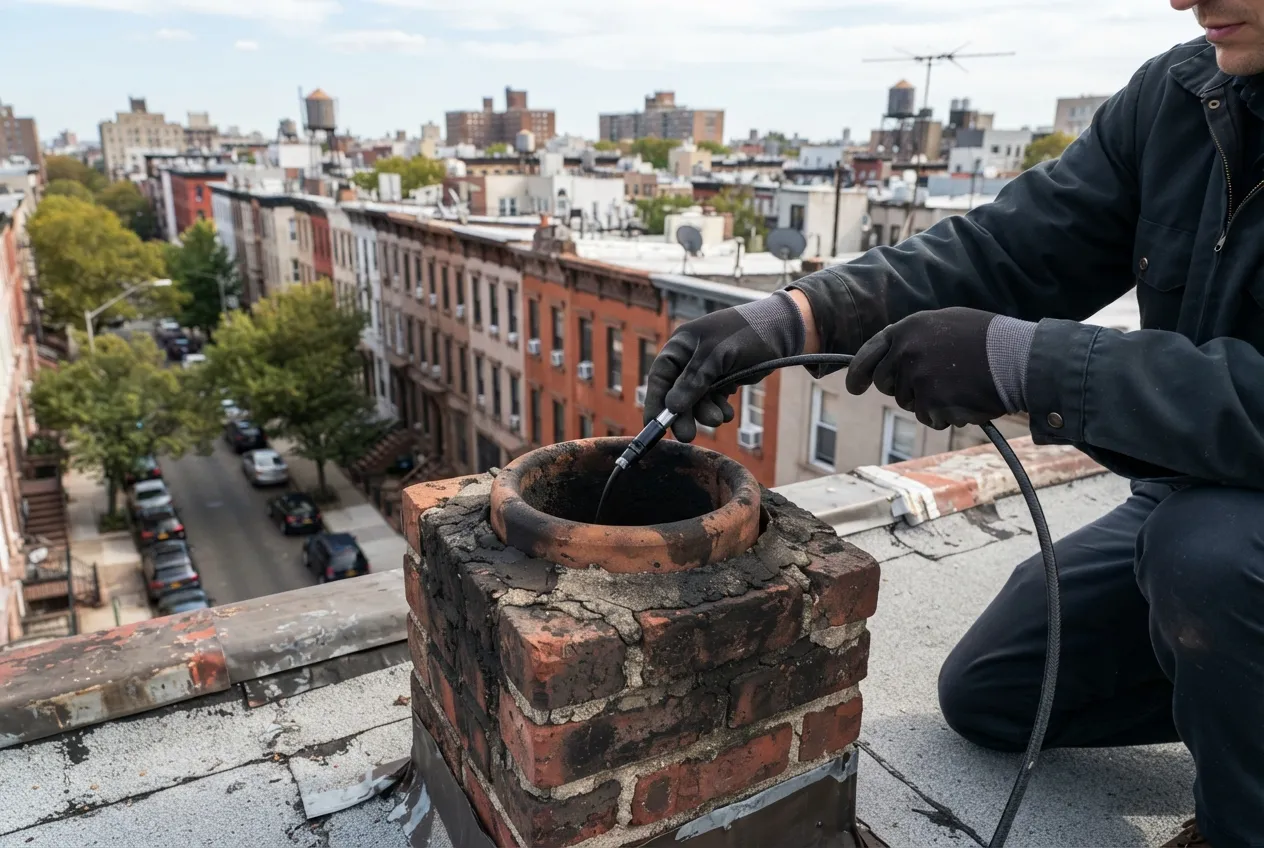
- Camera inspection of the flue when we suspect cracked tiles, open joints or a damaged liner
- Repointing of worn or missing mortar joints
- Replacing cracked, spalled or loose bricks
- Sealing or rebuilding a cracked chimney crown
- Installing or replacing a chimney cap to keep out rain and animals
- Resealing or replacing flashing at the roof line
- Repairing firebox mortar and firebrick
- Damper repair or replacement
- Liner repair or relining, including liners suited to gas appliances
- A breathable water repellent on the masonry after the repairs are done
- Photos of the problem areas and a written summary of the work
How We Work Inside Your Home and on the Roof
Inside, we lay drop cloths from the entry to the fireplace and seal off the fireplace opening before any work begins. HEPA vacuums run while we clear debris, so soot and mortar dust stay out of your living space. Rotary brushes clean buildup from the flue before we repair it, so we can see the true condition of the liner. When a camera is needed, we show you the footage on a screen, so you see the same cracks or gaps we do.
On the roof, we protect the roofing around the chimney and keep debris contained. That way it doesn't end up in your gutters or on a neighbor's roof, which matters on row houses with shared walls and tight roof access. We plan the access route before we start. We match new mortar to the existing brick as closely as practical. Older, softer brick should not be repointed with mortar that is harder than the brick itself, because that can make the brick crack and flake faster.
Time for your annual chimney check?
The Standard We Follow
We work to NFPA 211, the national standard for chimneys, fireplaces and vents. It calls for these systems to be inspected once a year. Chimney professionals use three inspection levels, and the level determines how deep the inspection goes:
Fuel changes are common in Brooklyn. When a building converts its boiler from oil to gas, the chimney has to be evaluated as part of the work. A new liner is often needed, because gas exhaust produces acidic condensate that can corrode a masonry flue. If you are planning a conversion, bring us in early so the chimney work fits your schedule.
- Level 1: for a chimney in regular use when nothing has changed
- Level 2: when the system changes, such as a new appliance or a switch of fuel, or when the home is sold
- Level 3: when a hidden hazard can only be reached by opening part of the chimney or building
What Affects the Price
We price each job after the inspection, because no two chimneys are the same. The main factors are:
You get a written estimate before work starts. If we find something new once work is underway, we stop and talk it through with you before going further.
- The height of the chimney and how hard it is to reach from the roof
- Fuel type (wood, gas or oil), which affects liner and material choices
- Flue size and condition, including cracked tiles or a missing liner
- How much creosote or soot has to be cleared before repairs can start
- Whether a camera inspection is needed to locate the problem
- The scope of the repair, from a few mortar joints to a crown rebuild or full relining
How a Visit Works
When you book, tell us what you have noticed, such as a leak, a smell or a sound in the flue. On the day of the visit, a technician arrives, protects the work area, and inspects the chimney inside and out, using a camera where it helps. You see the photos, hear what we found, and get a written estimate.
Smaller repairs, such as a new cap or minor repointing, can often be done on the same visit. Larger masonry or relining work is scheduled for a stretch of dry weather. When we finish, we clean up, walk you through the work, and leave you with photos and notes for your records.
Late spring through early fall is the easiest time for repairs, before heat season begins on October 1. That said, an active leak or a damaged flue should not wait for good timing.
Chimney Repair by city
- Chimney Repair in GreenpointLocal service & repairs
- Chimney Repair in Long Island CityLocal service & repairs
- Chimney Repair in Hunters PointLocal service & repairs
- Chimney Repair in WilliamsburgLocal service & repairs
- Chimney Repair in Stuyvesant TownLocal service & repairs
- Chimney Repair in Peter Cooper VillageLocal service & repairs
- Chimney Repair in SunnysideLocal service & repairs
- Chimney Repair in East WilliamsburgLocal service & repairs
- Chimney Repair in Murray HillLocal service & repairs
- Chimney Repair in Kips BayLocal service & repairs
- Chimney Repair in East VillageLocal service & repairs
- Chimney Repair in GramercyLocal service & repairs