The short answer
RoyalFlue repairs chimney masonry, crowns, flashing, caps and flue liners for apartment buildings and townhouses in Peter Cooper Village and nearby Manhattan neighborhoods. We start with an inspection so the repair matches the real problem, and we plan larger jobs around the city's heat season.
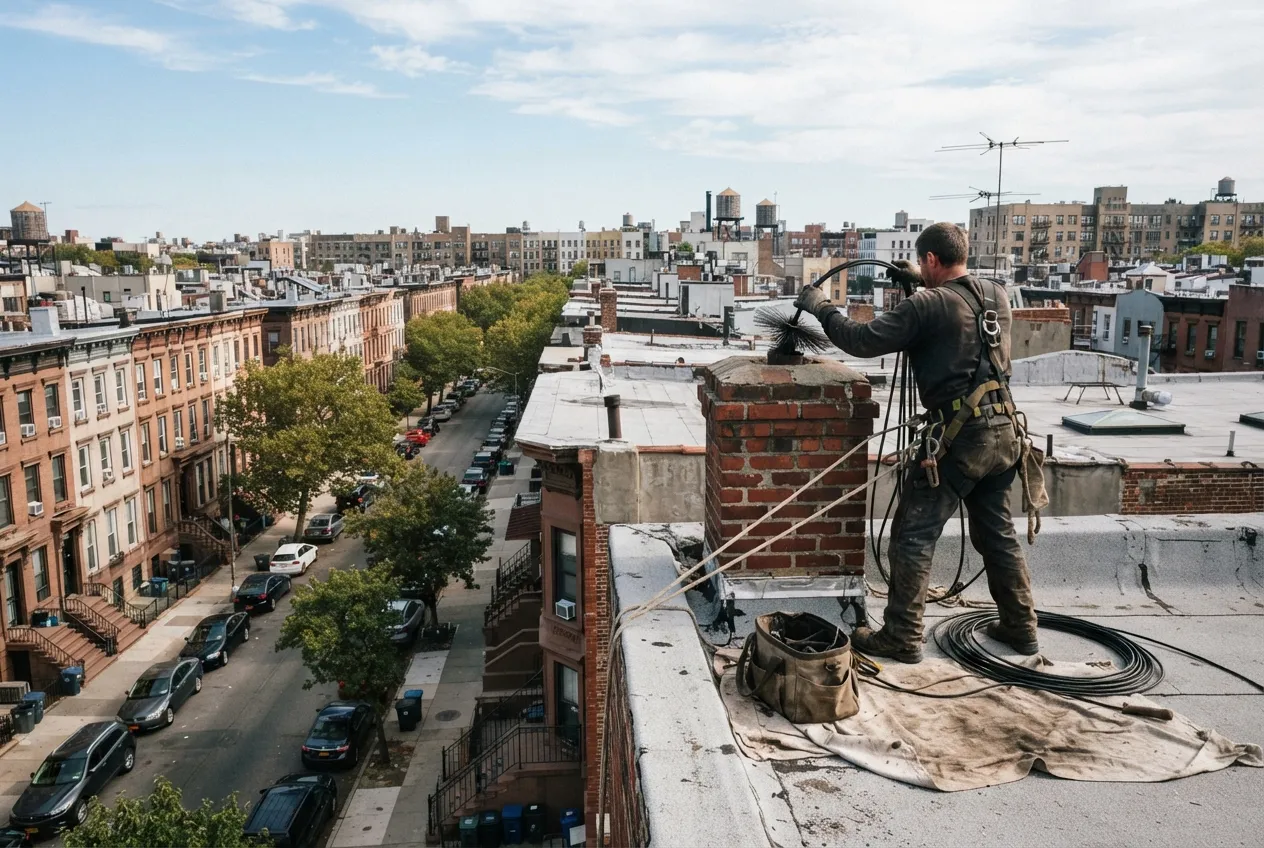
Chimneys in Peter Cooper Village and the surrounding East Side neighborhoods work hard. Building boiler flues run for much of the year, and the masonry chimneys on nearby brownstones and rowhouses are exposed to freeze-thaw cycles, wind-driven rain and decades of heat. RoyalFlue Chimney Services repairs chimneys for homeowners, co-op boards and building managers in this part of Manhattan. Our certified technicians come across the East River from our office in Greenpoint, Brooklyn, about a mile away. We find what is actually wrong, explain it in plain terms, and fix it without selling you work you don't need.
Chimney Problems We See in This Part of Manhattan
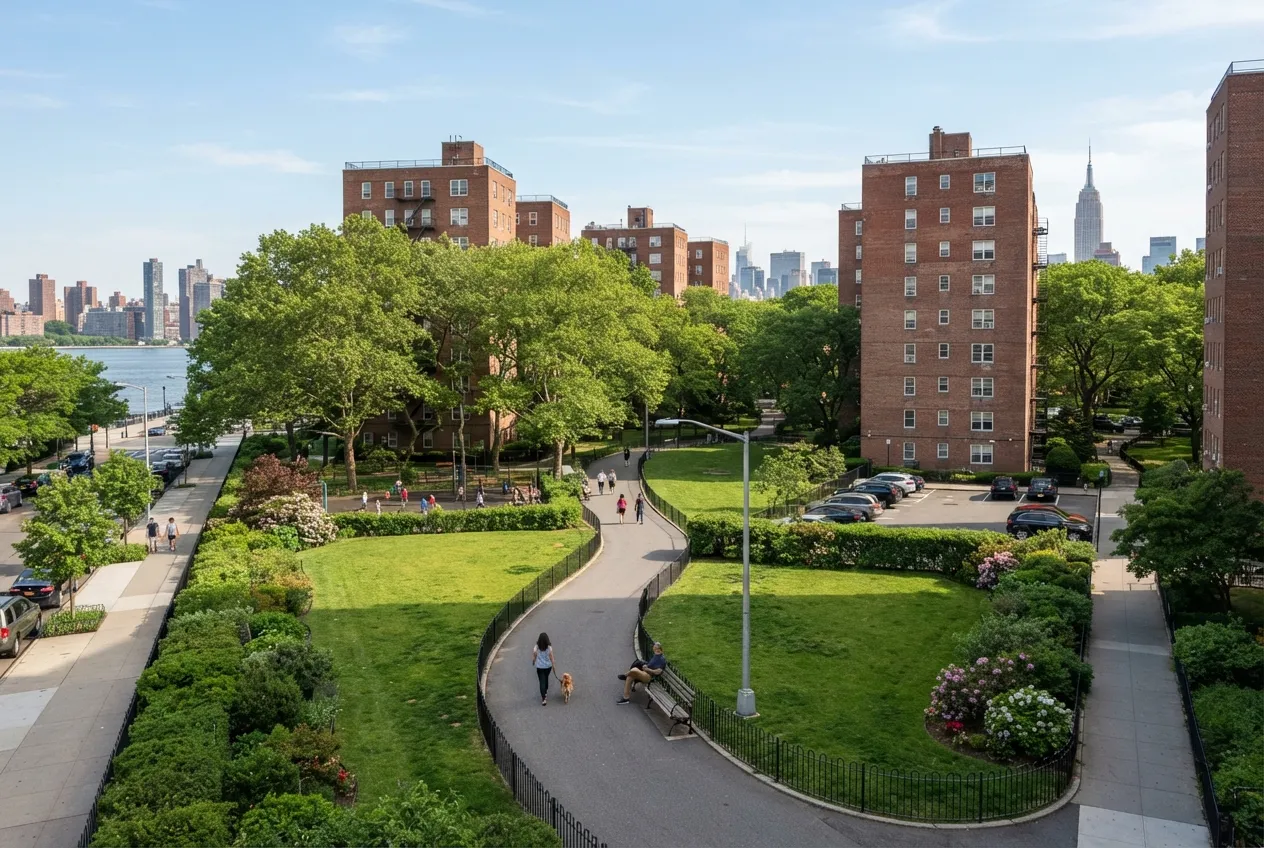
Housing in and around Peter Cooper Village ranges from large mid-century apartment buildings with central boiler chimneys to pre-war walk-ups, brownstones and rowhouses with working or decorative fireplaces. The materials differ, but the failures tend to follow the same pattern: water gets into the masonry, and heat and cold do the rest.
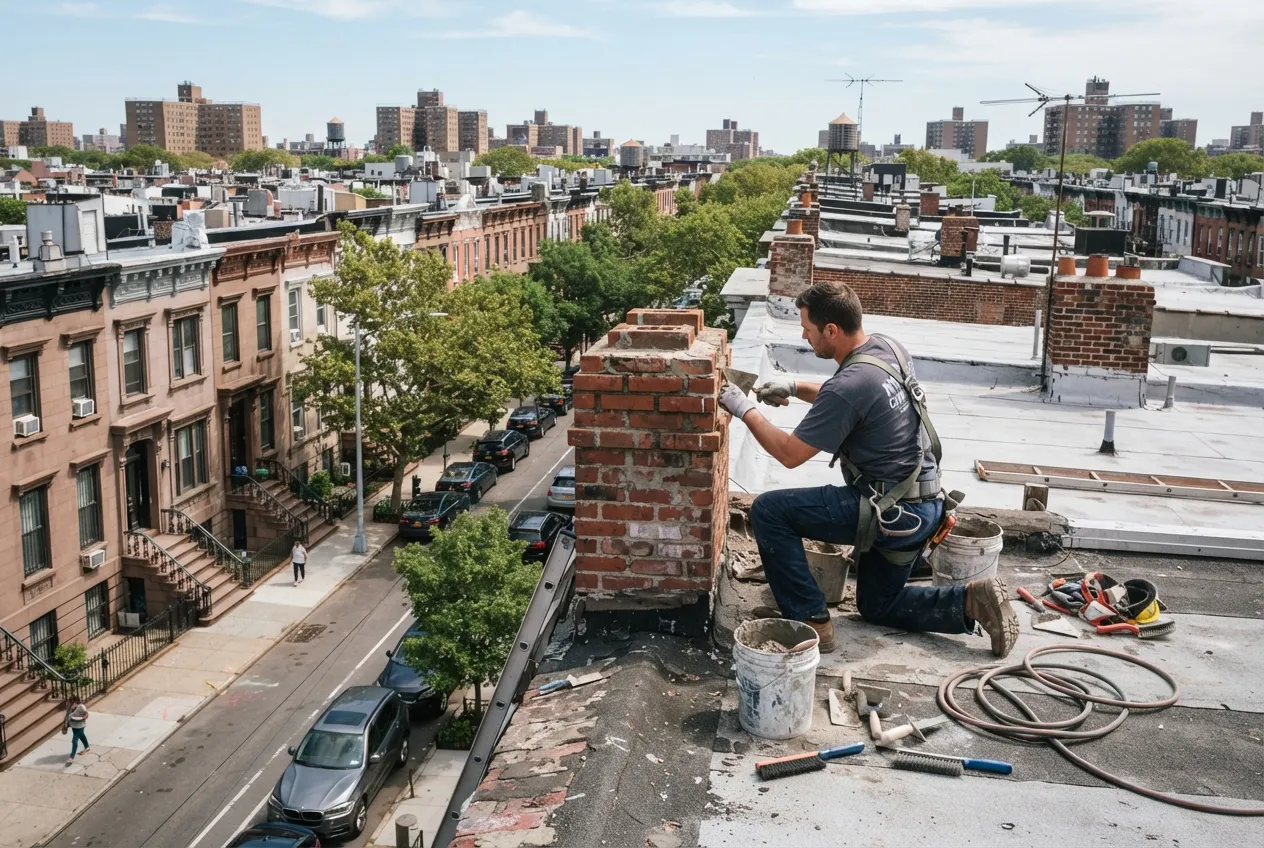
A cracked crown lets rain soak into the brick below. Mortar joints wear out and open up. Flashing where the chimney meets the roof pulls loose and leaks into top-floor ceilings. Inside, a flue liner can crack, shift or corrode, which lets exhaust and heat reach parts of the building they shouldn't.
- Repointing worn or missing mortar joints
- Rebuilding or resealing cracked chimney crowns
- Replacing or resealing roof flashing
- Installing and replacing chimney caps to keep out rain and animals
- Repairing or relining damaged flues
- Rebuilding loose or spalling brick at the top of the stack
Boiler Chimneys and Oil-to-Gas Conversions
Many Manhattan apartment buildings vent a central boiler through a tall masonry chimney. When a New York City building converts that boiler from oil to gas, the chimney has to be evaluated as part of the work. A new liner is often needed, because gas exhaust produces acidic condensate that can corrode a masonry flue that handled oil without trouble for years.
If your building is planning a conversion or has already switched fuels, we can evaluate the existing flue, tell you whether it can stay in service, and install a properly sized liner if it can't. We coordinate with your boiler contractor so the chimney work doesn't hold up the rest of the project.
How We Approach a Repair
Every repair starts with knowing the condition of the whole system, not just the spot that's leaking. The NFPA 211 standard calls for chimneys, fireplaces and vents to be inspected once a year, and chimney professionals use three inspection levels. A Level 1 inspection covers systems where nothing has changed. A Level 2 inspection is used when the system changes, such as a new appliance or a fuel switch, or when the home is sold. A Level 3 inspection is reserved for hidden hazards that can only be reached by opening part of the chimney or building.
After the inspection, we walk you through what we found, show you photos, and separate urgent safety problems from items that can be scheduled later. For co-ops and condos, we can provide written findings your board or managing agent can review before approving the work.
Time for your annual chimney check?
Timing Repairs Around Heat Season
New York City's heat season runs from October 1 through May 31, and building owners must keep apartments heated to the city's minimum temperatures during that time. That makes it hard to take a boiler chimney out of service in winter. Whenever possible, we plan relining and major masonry work for the warmer months.
If a problem shows up mid-season, we focus on making the system safe to operate and schedule the larger repair when heat demand drops. Townhouse fireplace repairs are more flexible, but late spring and summer are still the easiest times to do masonry work, since mortar cures best in mild weather.
Signs Your Chimney Needs Attention
Some chimney damage is easy to spot from the street or the roof. Other problems only show up inside the building. Call for an inspection if you notice any of the following:
- Water stains on ceilings or walls near the chimney
- Crumbling mortar, loose bricks or white staining on the masonry
- Pieces of tile or masonry in the fireplace or at the base of the flue
- Smoke or odors entering rooms instead of going up the chimney
- A missing or rusted cap, or animals nesting in the flue
- A planned boiler replacement or fuel conversion
More services in Peter Cooper Village
- Chimney Sweep in Peter Cooper VillageLocal service & repairs
- Chimney Inspection in Peter Cooper VillageLocal service & repairs
- Air Duct Cleaning in Peter Cooper VillageLocal service & repairs
- Chimney Liner Installation in Peter Cooper VillageLocal service & repairs