The short answer
Chimneys, fireplaces and vents in Peter Cooper Village should be inspected once a year, as the NFPA 211 standard calls for. The best time is before New York City's heat season starts on October 1. A Level 2 inspection is the right choice after a fuel switch, a new appliance, or a home sale.
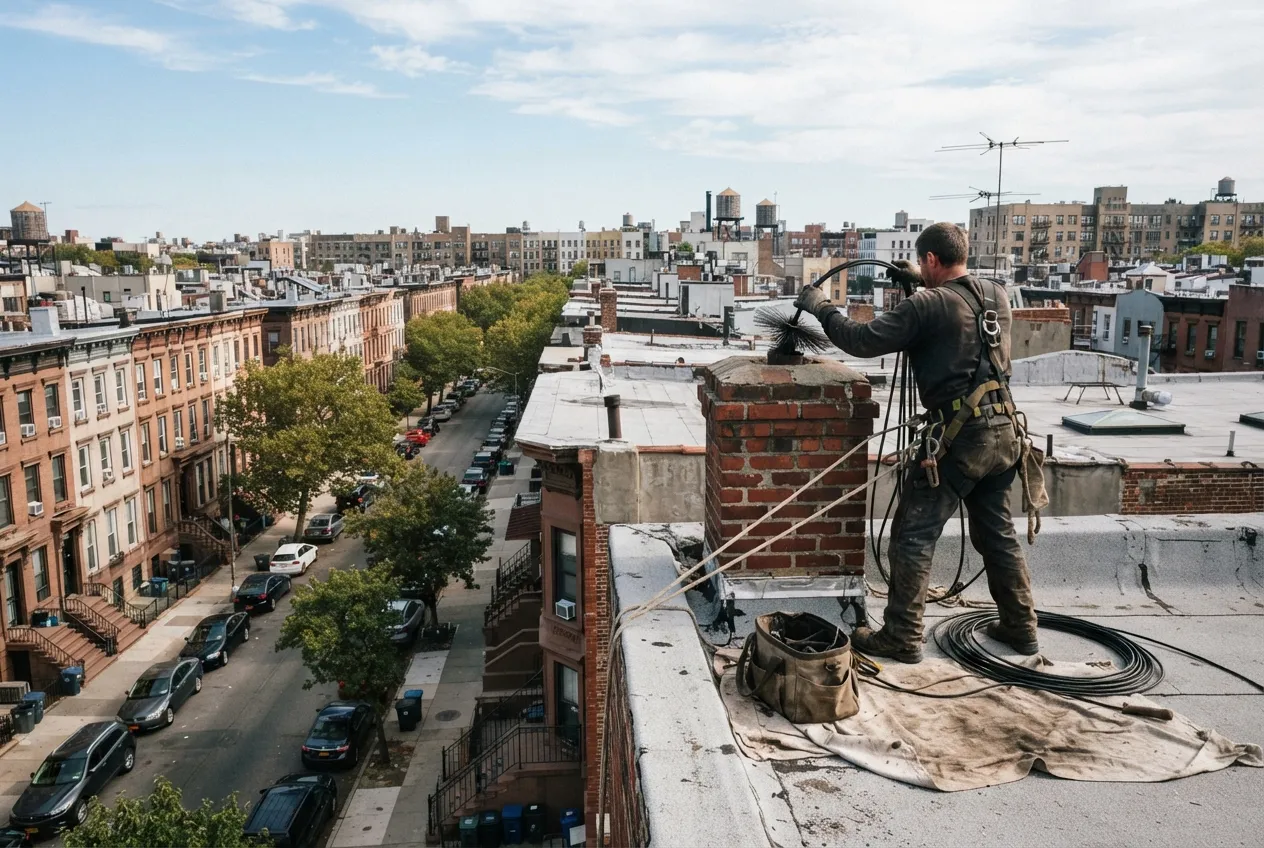
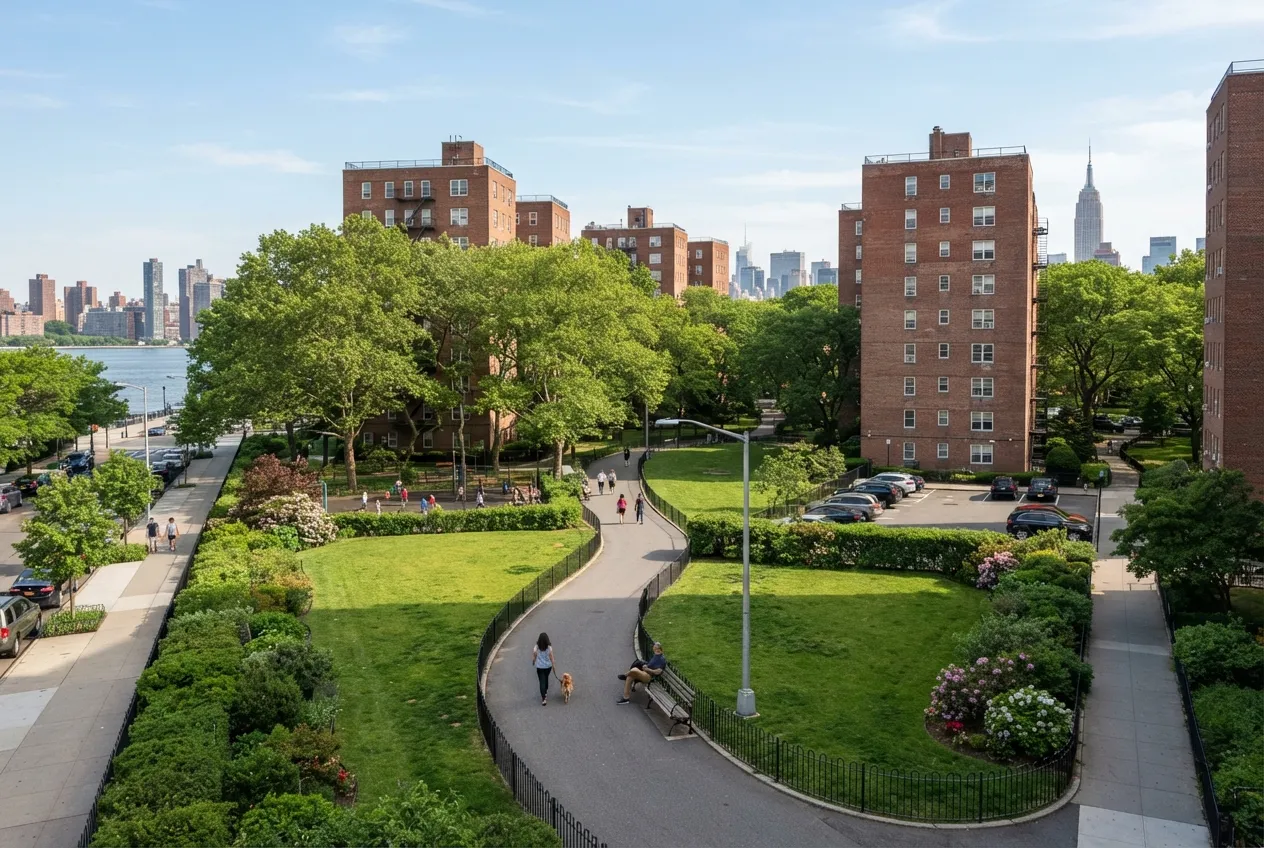
Peter Cooper Village is made up mostly of apartment buildings, and the surrounding neighborhoods of Stuyvesant Town, Kips Bay, Gramercy, Murray Hill and the East Village mix larger buildings with brownstones and rowhouses. A chimney may serve a central boiler, a water heater, or a wood-burning fireplace in a single home, and it still needs a regular, careful look. RoyalFlue sends certified technicians from our office in Greenpoint, about a mile east across the river, to inspect chimneys, flues and vents. We explain what we find in plain language, so you know what is sound, what needs watching, and what needs work.
Why a Yearly Inspection Matters in This Part of Manhattan
The NFPA 211 standard calls for chimneys, fireplaces and vents to be inspected once a year. In a dense neighborhood like Peter Cooper Village, a flue problem rarely stays inside one home. Blocked vents, cracked liners and leaking joints can push exhaust or carbon monoxide into living space, hallways or neighboring units.
Timing matters here as well. New York City's heat season runs from October 1 through May 31, and building owners must keep apartments heated to the city's minimum temperatures during that period. If a boiler flue problem turns up in January, the repair has to happen while the building still has to stay warm. Booking your inspection in late spring or summer leaves time for any repairs before the boiler is needed again.
Choosing the Right Inspection Level
Chimney professionals use three inspection levels. We will recommend the one that fits your situation and tell you why. We won't push a deeper inspection than the chimney needs.
- Level 1: for a chimney that has been used the same way with the same appliance, and nothing about the system has changed. We examine the readily accessible parts of the chimney, flue and connections.
- Level 2: for when the system changes, such as a new boiler, water heater or insert, or a switch from oil to gas. It is also the standard choice when a home or building is sold. This level includes a camera inspection of the flue's interior.
- Level 3: for when a hidden hazard is suspected and the only way to reach it is to open part of the chimney or the building. This is uncommon, and we discuss it with you before any work begins.
Oil-to-Gas Conversions and Flue Liners
Many Manhattan buildings have moved, or are planning to move, their boilers from oil to gas. When a New York City building converts its boiler from oil to gas, the chimney has to be evaluated as part of the work. Gas exhaust produces acidic condensate that can corrode an unlined or poorly lined masonry flue, so a new liner is often needed.
If your building is planning a conversion, we can inspect the chimney early. That way the liner question is answered before the schedule is set. If a conversion has already happened and the chimney was never checked afterward, a Level 2 inspection will show the condition of the flue now.
Time for your annual chimney check?
What We Check During an Inspection
Every chimney is different, but most inspections in this area cover the same core points. We look at the system from the appliance or firebox all the way to the top of the chimney, as far as access allows.
- Flue liner condition, including cracks, gaps, spalling and signs of corrosion from condensate
- Creosote and soot buildup in fireplace flues
- Connector pipes, thimbles and the joints where appliances tie into the chimney
- Blockages from debris, nesting animals or fallen masonry
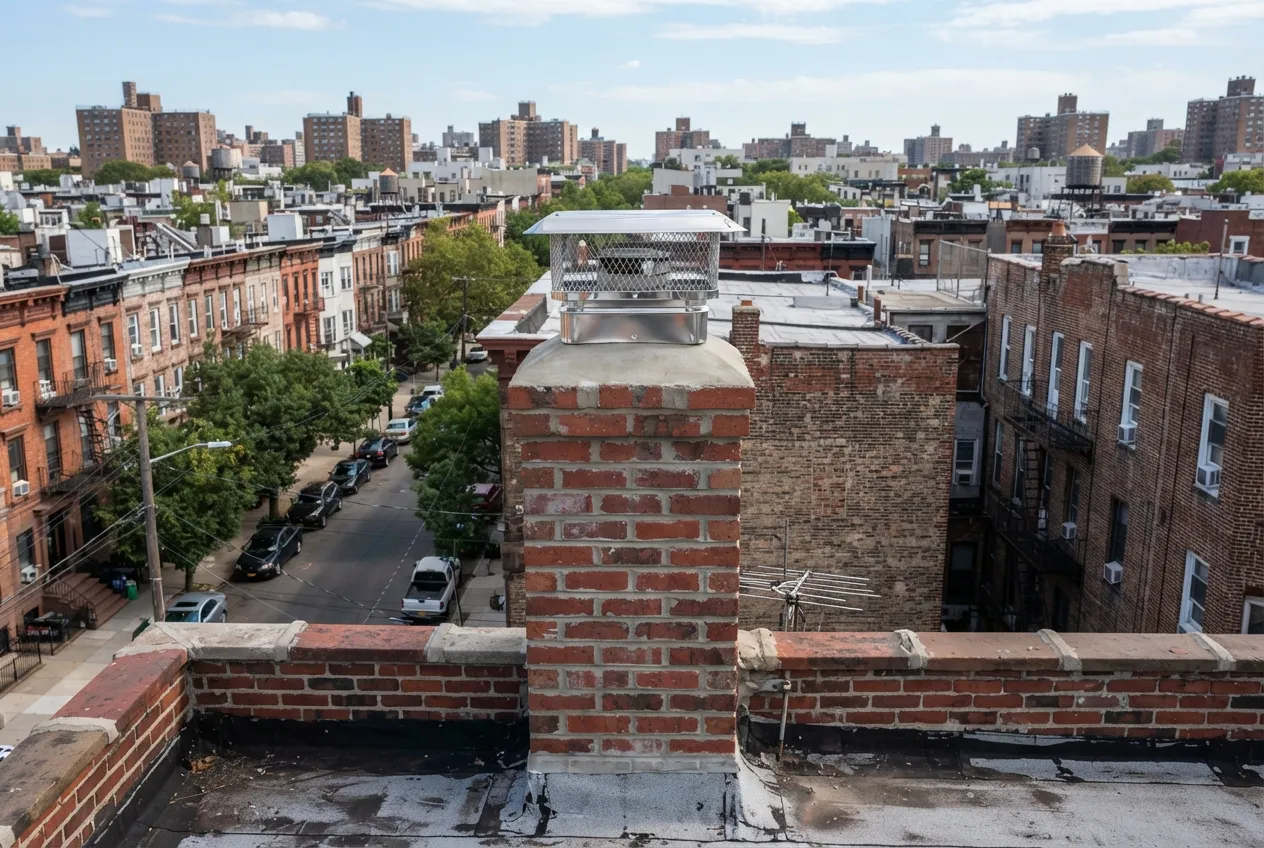
- Chimney cap, crown and flashing, and any water entry at the roof
- Firebox, smoke chamber and damper in homes with working fireplaces
- Proper draft and clearance to nearby combustible materials
After the Inspection
You will get a clear written summary of what we found, with photos or camera footage where it helps. Any problems are sorted by urgency. We separate items that need attention before the next use from items that can be planned for later.
For co-op boards, property managers and building owners, the report gives you a straightforward record to share with whoever needs it. For homeowners in nearby brownstones and rowhouses, it answers the basic question: is this fireplace or flue safe to use this season?
More services in Peter Cooper Village
- Chimney Sweep in Peter Cooper VillageLocal service & repairs
- Chimney Repair in Peter Cooper VillageLocal service & repairs
- Air Duct Cleaning in Peter Cooper VillageLocal service & repairs
- Chimney Liner Installation in Peter Cooper VillageLocal service & repairs