The short answer
A chimney inspection checks the firebox, flue liner, crown, cap, flashing and connected appliances to make sure smoke and exhaust leave your home safely. The NFPA 211 standard calls for an inspection once a year, and the inspection level depends on whether anything about your chimney or home has changed.
A chimney inspection tells you whether your fireplace, wood stove or boiler flue can safely carry smoke and exhaust out of your home. RoyalFlue Chimney Services inspects chimneys in Brooklyn and nearby neighborhoods, from brownstone fireplaces to the flues that vent oil and gas boilers. Our certified technicians check the chimney from the firebox to the crown. They explain what they find in plain terms and tell you what needs attention now and what can wait. If you use your fireplace or a chimney vents your heating system, a yearly inspection is the simplest way to catch problems early.
Signs you need a chimney inspection
Many chimney problems build slowly and stay out of sight. These are the signs homeowners most often notice before they call for an inspection:
If you notice any of these, stop using the fireplace or appliance until the chimney has been checked.
- A smoky or campfire smell from the fireplace, especially on humid days or when the air conditioning runs
- Smoke rolling into the room instead of going up the flue, or a fire that is hard to start and keep going
- Debris, bits of mortar, or flakes of brick or flue tile falling into the firebox
- White, powdery staining on the outside brick, which shows water is moving through the masonry
- Scratching, chirping or rustling inside the chimney, which usually means birds or animals have moved in
- Water dripping or pooling in the firebox after rain
- A new appliance, a switch from oil to gas, or a home purchase, even if nothing looks wrong
What the inspection includes
Every inspection covers the parts of the system we can reach without opening walls or removing masonry. You get a written summary of what we found, with photos where they help.
- Firebox, damper and smoke chamber checked for cracks, gaps and damage
- Flue liner examined for cracks, missing mortar joints and blockages
- Creosote and soot buildup checked, with a note on whether cleaning is needed
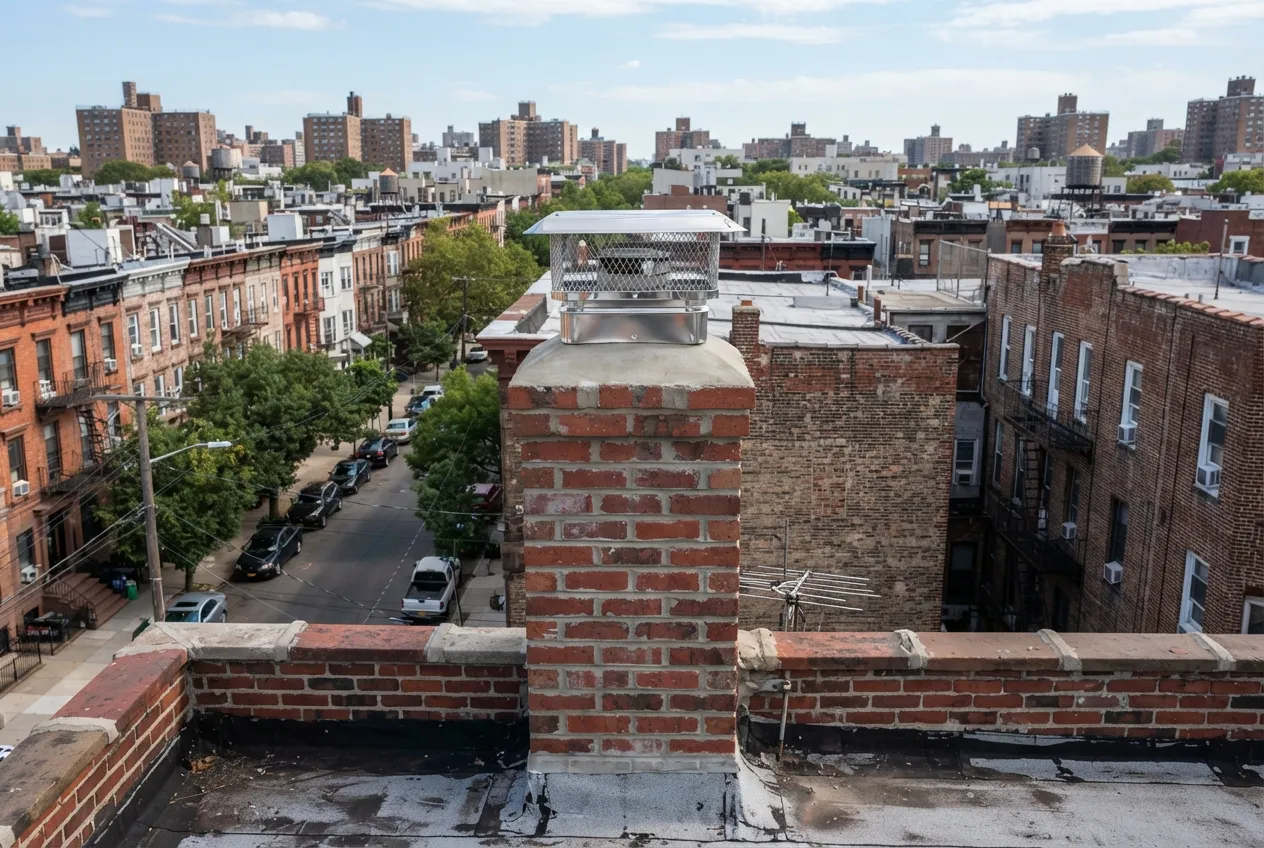
- Chimney crown, cap and spark arrestor checked for cracks, rust and missing pieces
- Exterior brick and mortar joints checked for spalling, gaps and water staining
- Flashing where the chimney meets the roof checked for lifting or gaps
- Connector pipes for boilers, furnaces and water heaters checked for proper fit and corrosion
- Clearances to nearby wood framing and other combustible materials checked where they are visible
- Camera inspection of the flue when the liner can't be seen fully from either end
How we work inside your home and on the roof
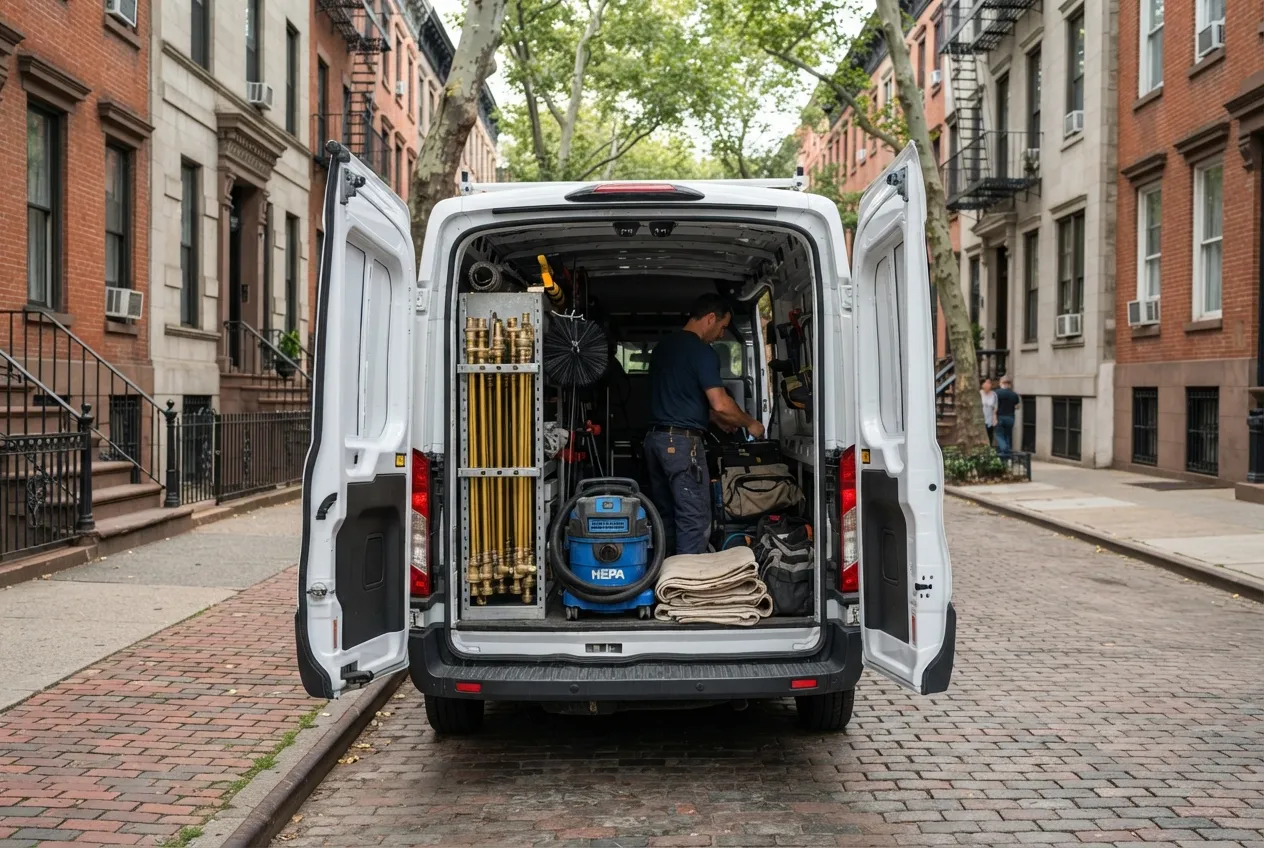
Inside, the crew lays drop cloths from the door to the fireplace and covers the hearth and nearby furniture before any work begins. We seal the fireplace opening and run HEPA vacuums while we work, so soot and dust stay out of the room. If the flue has to be cleaned before we can see it clearly, we use rotary brushes sized to your liner. They reach the walls of the flue without scraping the tile or metal.
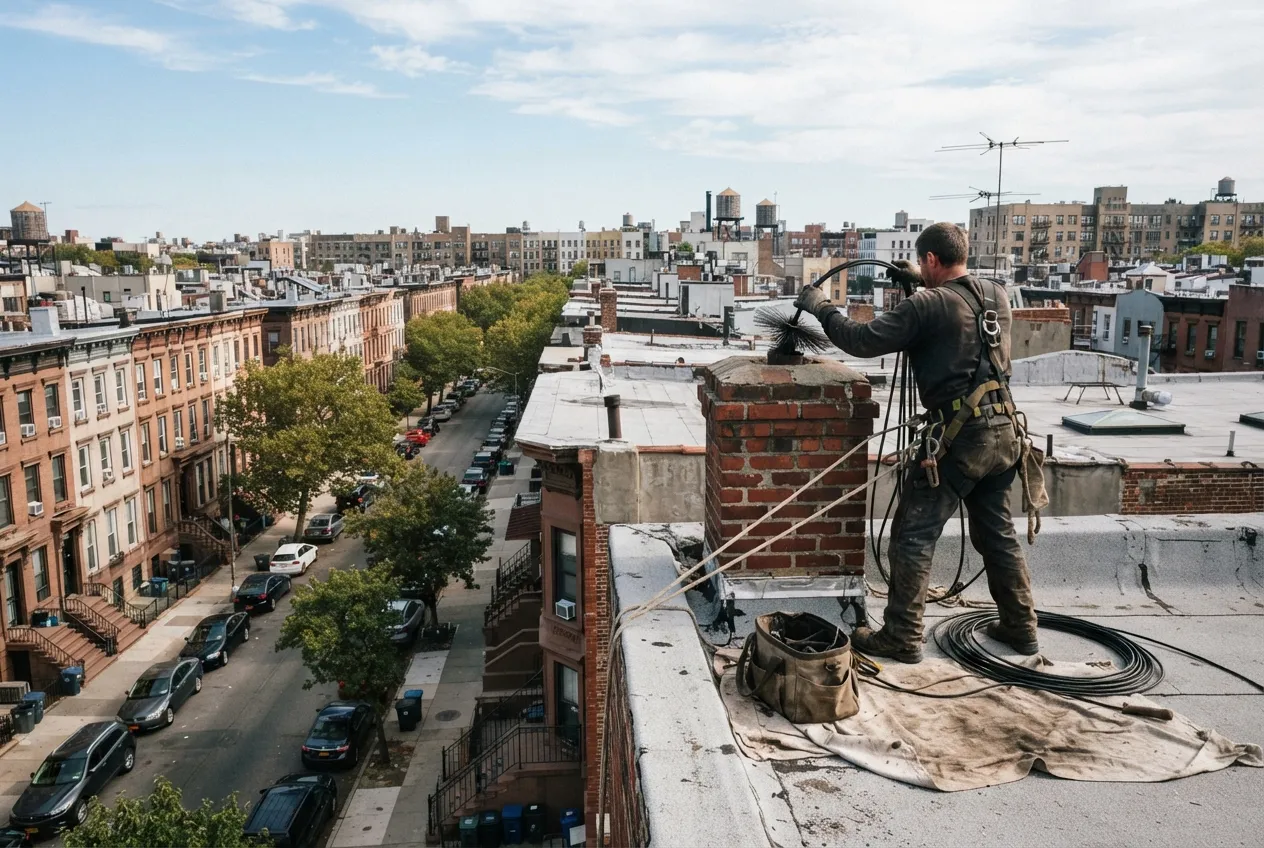
To see the full length of the flue, we lower a camera through it and show you the footage on a screen, so you see the same cracks or buildup we do. On the roof, technicians use proper ladders and fall protection. They check the crown, cap, flashing and upper brick and photograph anything that needs attention. Before we leave, we clean up, take away the drop cloths and walk you through what we found.
Time for your annual chimney check?
The standard we follow
We follow NFPA 211, the national fire safety standard for chimneys, fireplaces and vents. It calls for these systems to be inspected once a year, whether you use the fireplace often or only a few times a season. Chimney professionals use three inspection levels, and before we start we tell you which one fits your home.
In New York City, the chimney has to be evaluated whenever a building converts its boiler from oil to gas. A new liner is often needed because gas exhaust produces acidic condensate that can corrode a masonry flue. The city's heat season runs from October 1 through May 31, so it helps to plan conversion work for the warmer months, when the heat can be shut off.
- Level 1: for a chimney in regular use with no changes. We check the readily accessible parts of the chimney inside and outside.
- Level 2: when something changes, such as a new appliance or a switch to a different fuel, and when a home is sold. It adds a camera inspection of the flue and a check of accessible areas such as attics and crawl spaces.
- Level 3: when we suspect a hidden hazard that can only be reached by opening up part of the chimney or the building.
What affects the price
We give you a quote before any work begins. The cost of an inspection depends on your home and your chimney:
- How tall the chimney is and how safely we can reach the roof
- Fuel type (wood, gas or oil) and which appliances connect to the flue
- Flue size, the number of flues, and the condition of the liner
- How much soot or creosote has built up, and whether the flue needs cleaning first
- Whether a camera inspection is needed
- Whether the inspection turns up repairs
How a visit works
When you contact us, we ask what fuel your chimney serves, when it was last inspected and what you have noticed. That tells us which inspection level to plan for and how much time to set aside. Please don't use the fireplace for about a day before the visit so the firebox is cool.
On the day of the visit, the technician sets up, inspects the system inside and on the roof, and shares photos or camera footage along the way. Afterward you get a written summary that separates urgent safety problems from routine maintenance. If you need cleaning or repairs, we explain the options and give you a quote. Nothing is done without your approval.
Chimney Inspection by city
- Chimney Inspection in GreenpointLocal service & repairs
- Chimney Inspection in Long Island CityLocal service & repairs
- Chimney Inspection in Hunters PointLocal service & repairs
- Chimney Inspection in WilliamsburgLocal service & repairs
- Chimney Inspection in Stuyvesant TownLocal service & repairs
- Chimney Inspection in Peter Cooper VillageLocal service & repairs
- Chimney Inspection in SunnysideLocal service & repairs
- Chimney Inspection in East WilliamsburgLocal service & repairs
- Chimney Inspection in Murray HillLocal service & repairs
- Chimney Inspection in Kips BayLocal service & repairs
- Chimney Inspection in East VillageLocal service & repairs
- Chimney Inspection in GramercyLocal service & repairs