The short answer
Gramercy chimneys should be inspected once a year, as the NFPA 211 standard calls for. You also need an inspection when you change appliances, convert a boiler from oil to gas, or sell the home. RoyalFlue's certified technicians inspect brownstone fireplaces and pre-war building flues and explain exactly what they find.
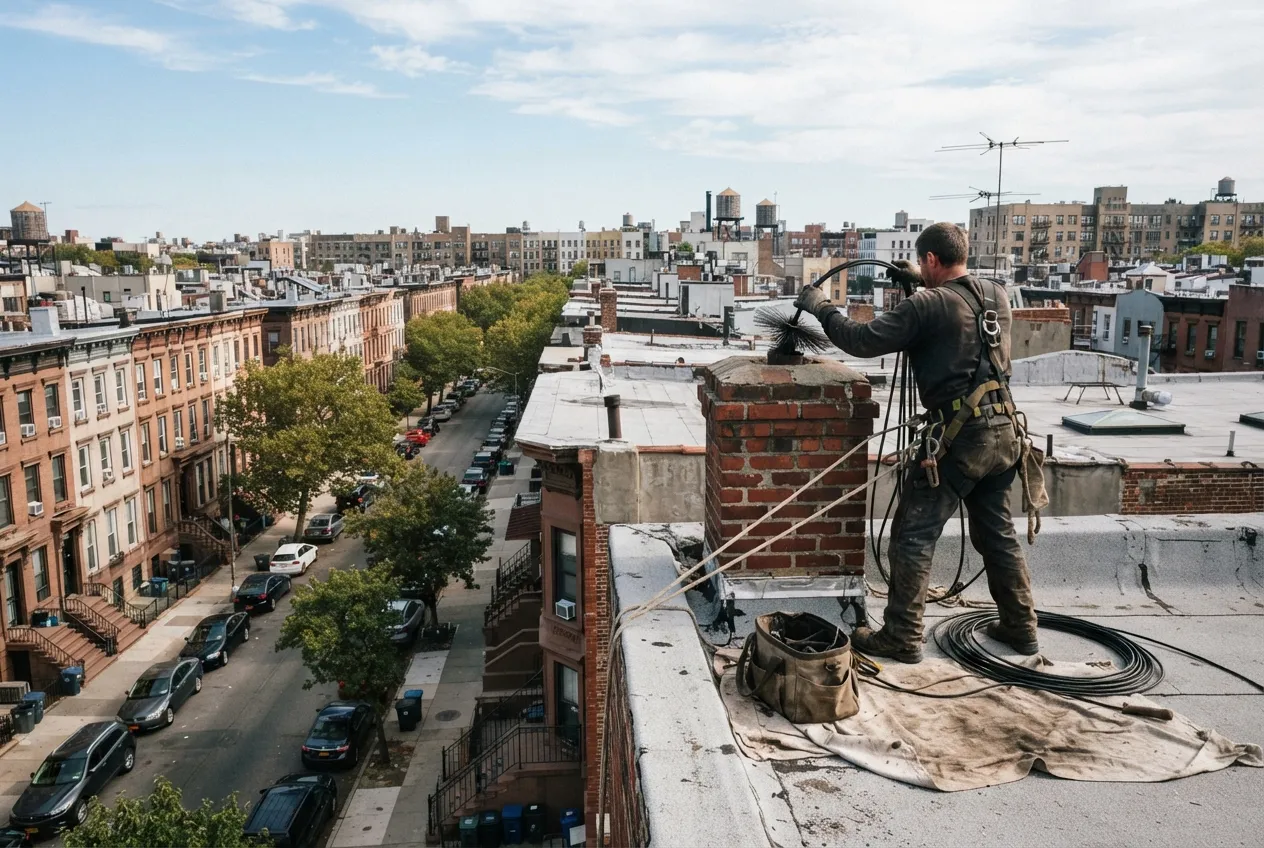
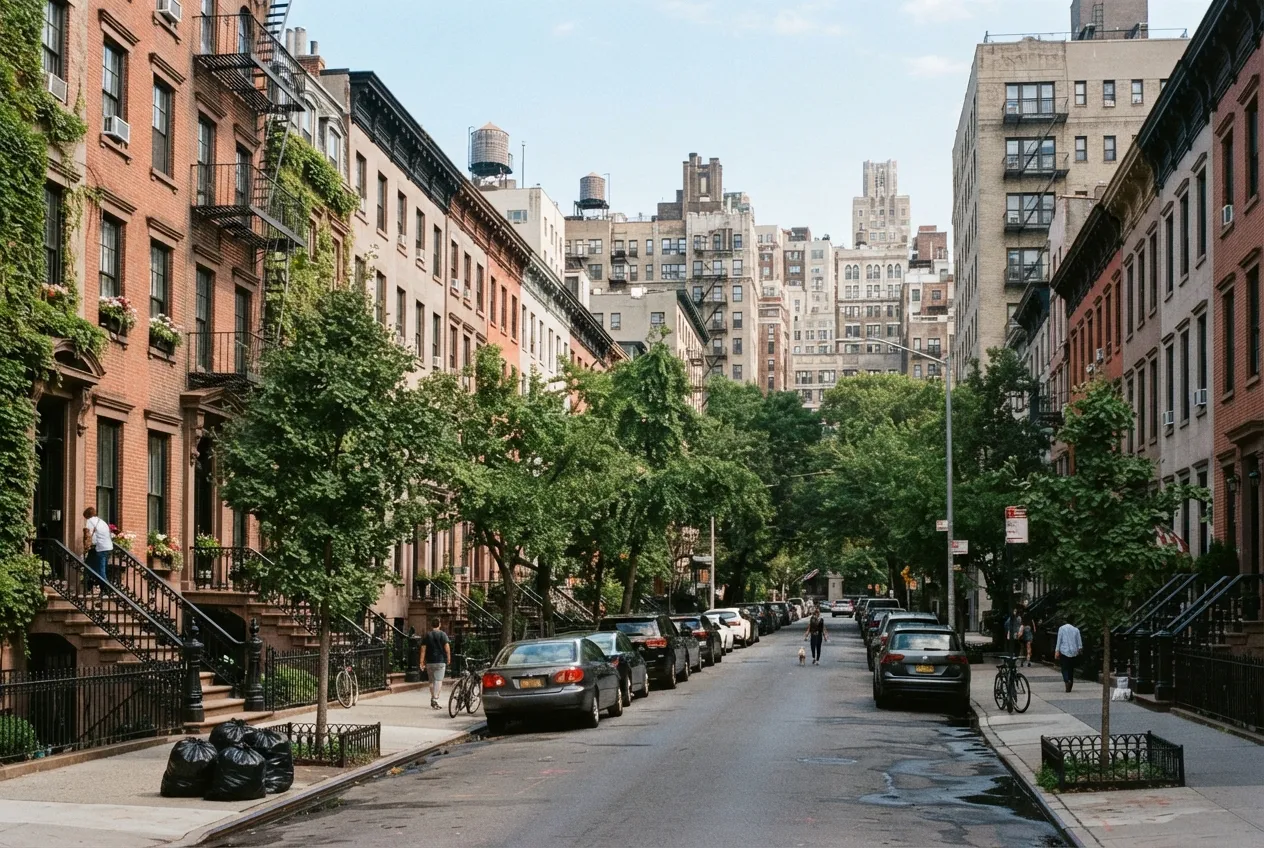
Gramercy has a lot of older chimneys still in daily use. Brownstones and rowhouses often have one or more working fireplaces, and pre-war apartment buildings rely on tall masonry flues to vent their boilers. RoyalFlue Chimney Services inspects these systems for homeowners, co-op and condo boards, and building managers in the 10010 ZIP code. Our certified technicians come from our office in Greenpoint, Brooklyn, about 2 miles away, so Gramercy is a short trip for us. We also serve Stuyvesant Town, Peter Cooper Village, Murray Hill, Kips Bay and the East Village.
Which inspection level your Gramercy home needs
The NFPA 211 standard calls for chimneys, fireplaces and vents to be inspected once a year. Inspectors work at three levels. The right one depends on what has happened to your chimney since it was last checked.
If you are buying or selling a brownstone or an apartment with a fireplace, plan on a Level 2.
- Level 1: for a chimney in regular use with no changes. We check the readily accessible parts of the chimney, firebox, damper and connections, and we look for blockages and creosote buildup.
- Level 2: when something changes, such as a new boiler, a new insert or stove, or a switch from oil to gas, and when a home is sold. This adds a video scan of the flue interior and a look at accessible areas like the attic, basement and roof.
- Level 3: when a hidden hazard is suspected and the only way to reach it is to open part of the chimney or the surrounding wall. We recommend this only when a Level 1 or Level 2 finding points to it.
What we look for in older Gramercy chimneys
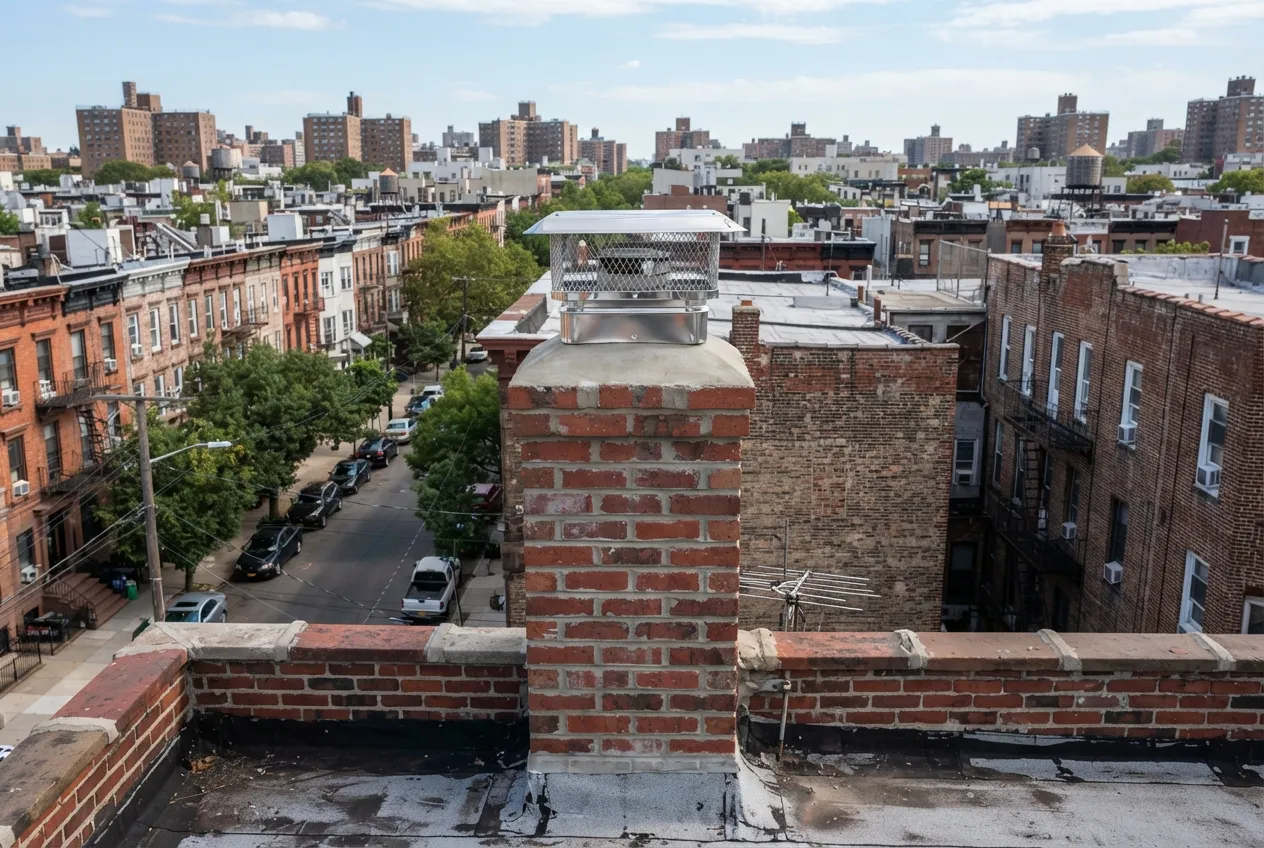
Many chimneys in the neighborhood were built long before modern liners were common. Some have clay tile liners that have cracked or shifted over the decades, and others have no liner at all. The brick and mortar on the crown and upper courses take the brunt of rain, snow and winter freeze-thaw cycles. That damage often can't be seen from the street.
Fireplaces in pre-war apartments are another common case. A fireplace may have sat unused for years, been sealed off by a past owner, or share a flue that serves other units. Before you light a fire in one, have it inspected. The inspection confirms that the flue is open, intact and actually meant to carry smoke.
- Cracked, missing or offset flue tiles
- Creosote and soot buildup inside the flue
- Nests, debris or fallen masonry blocking the flue
- Damaged crowns and caps, and damaged flashing where the chimney meets the roof
- Loose or eroded mortar joints and spalling brick
- The condition of the damper, smoke chamber and firebox
Boiler conversions from oil to gas
Many Manhattan buildings have switched their boilers from oil to gas. When a New York City building makes that switch, the chimney has to be evaluated as part of the work. Gas exhaust produces acidic condensate that can corrode an unlined or aging masonry flue from the inside, so a new liner is often needed.
We inspect the flue that will serve the new boiler and document its condition. Then we tell you plainly whether the existing flue can be used or needs a liner. That gives your contractor and board clear information before the conversion moves forward.
Time for your annual chimney check?
Timing your inspection around heat season
New York City's heat season runs from October 1 through May 31. During those months, building owners must keep apartments heated to the city's minimum temperatures, so a problem with a boiler flue becomes urgent fast. If you schedule the inspection in late summer or early fall, you leave time to make repairs before the boiler is needed every day.
The same logic applies if you own a fireplace. An inspection before your first fire of the season is easier to schedule, and it gives you time to fix anything we find.
What to expect during the visit
Our technician lays down drop cloths and checks the fireplace or appliance connection from inside. When roof access is available, they also examine the chimney from the roof. On a Level 2 inspection, we run a camera through the flue to see the liner. Afterward, we show you photos of what we found and explain which items need attention now and which can wait.
If you live in a co-op or condo, ask your building management about roof access before the appointment. We are glad to coordinate with your super.
More services in Gramercy
- Chimney Sweep in GramercyLocal service & repairs
- Chimney Repair in GramercyLocal service & repairs
- Air Duct Cleaning in GramercyLocal service & repairs
- Chimney Liner Installation in GramercyLocal service & repairs