The short answer
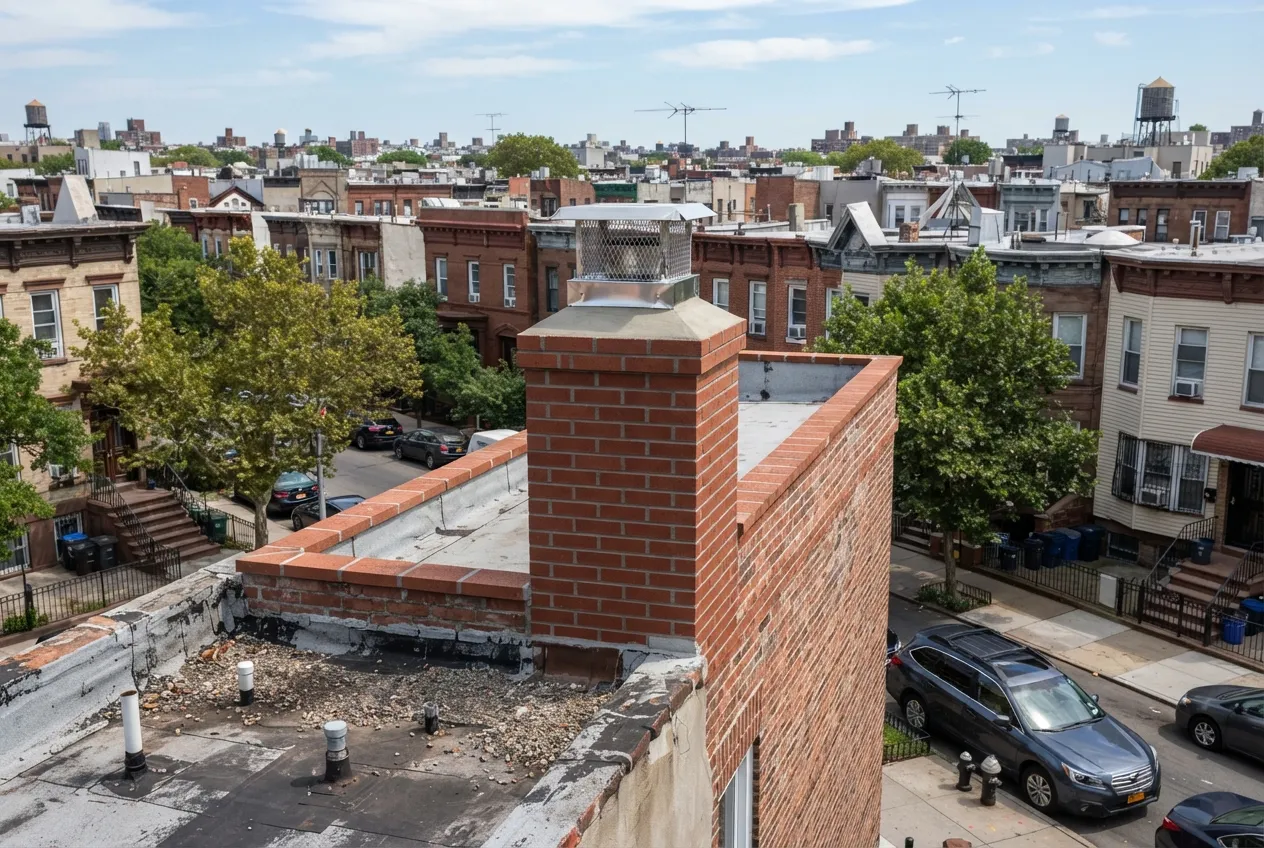
You need a chimney rebuild when bricks are crumbling, loose, cracked through, or leaning, or when water keeps getting through the masonry, and repointing won't fix it. The crew takes the damaged section down to sound brick and rebuilds it with new brick, mortar, a crown, flashing, and a cap. Where the flue is damaged, the work also includes new flue tiles or a liner.
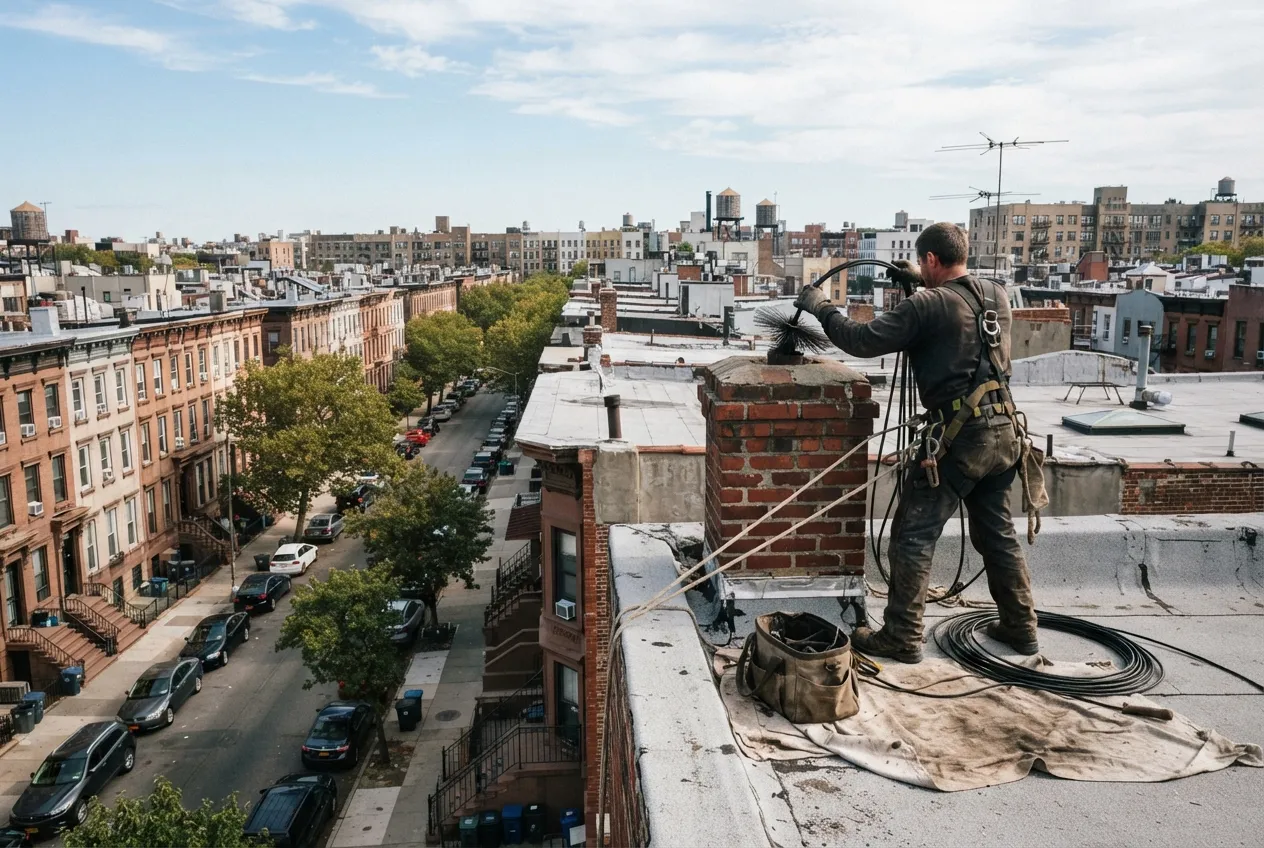
A chimney that is losing bricks, leaning, or letting water into the house usually needs more than a patch. Chimney rebuilding means taking damaged masonry down to sound brick and laying it back up with new brick, mortar, a crown, and flashing. Sometimes that is only the top few courses above the roofline, and sometimes it is more. Many Brooklyn row houses and brownstones have chimneys that have been through years of freeze-thaw cycles, wind, and changes in heating fuel, so rebuilds are common work here. RoyalFlue's certified technicians inspect first and show you what they find. They recommend a partial or full rebuild only when repointing or a smaller repair won't hold.
Signs you need it
Masonry damage tends to show up in a few predictable places. You can see some signs from the sidewalk, and others show up inside at the fireplace. Any one of these is worth an inspection. Several together usually mean the damage goes deeper than the surface.
- Brick flakes, crumbled mortar, or bits of clay flue tile in the firebox or on the damper
- White, chalky staining on the brick, inside or out, which means water is moving through the masonry
- Water in the firebox, or damp stains on the wall or ceiling next to the chimney
- Poor draft or smoke rolling into the room, which can happen when a damaged top or fallen debris restricts the flue
- A smoky or creosote smell that gets stronger in humid weather
- Bricks at the top of the stack that are cracked, spalling (faces popping off), loose, or missing
- A chimney that leans, has a crack running through it, or has pulled away from the house
- A cracked or crumbling crown, or flashing that has lifted from the roof
What's included
Every rebuild is scoped to your chimney, but the core steps are the same each time. Before any work starts, you get a written scope that says how far down the rebuild goes and what else it covers.
- Inspection of the chimney, flue, and roof connection, including a camera look inside the flue
- Careful teardown of damaged masonry down to solid brick
- Removal of old brick and debris from the roof and site
- New brick matched as closely as practical to the existing color and size
- New mortar joints, laid and tooled to shed water
- A new sloped crown with a drip edge so water runs off instead of soaking in
- New or reset flashing where the chimney meets the roof
- Replacement flue tiles or a new liner where the existing flue is damaged
- A chimney cap to keep out rain, debris, and animals
- Cleanup inside and out, with photos of the finished work
How the crew works inside your home and on the roof
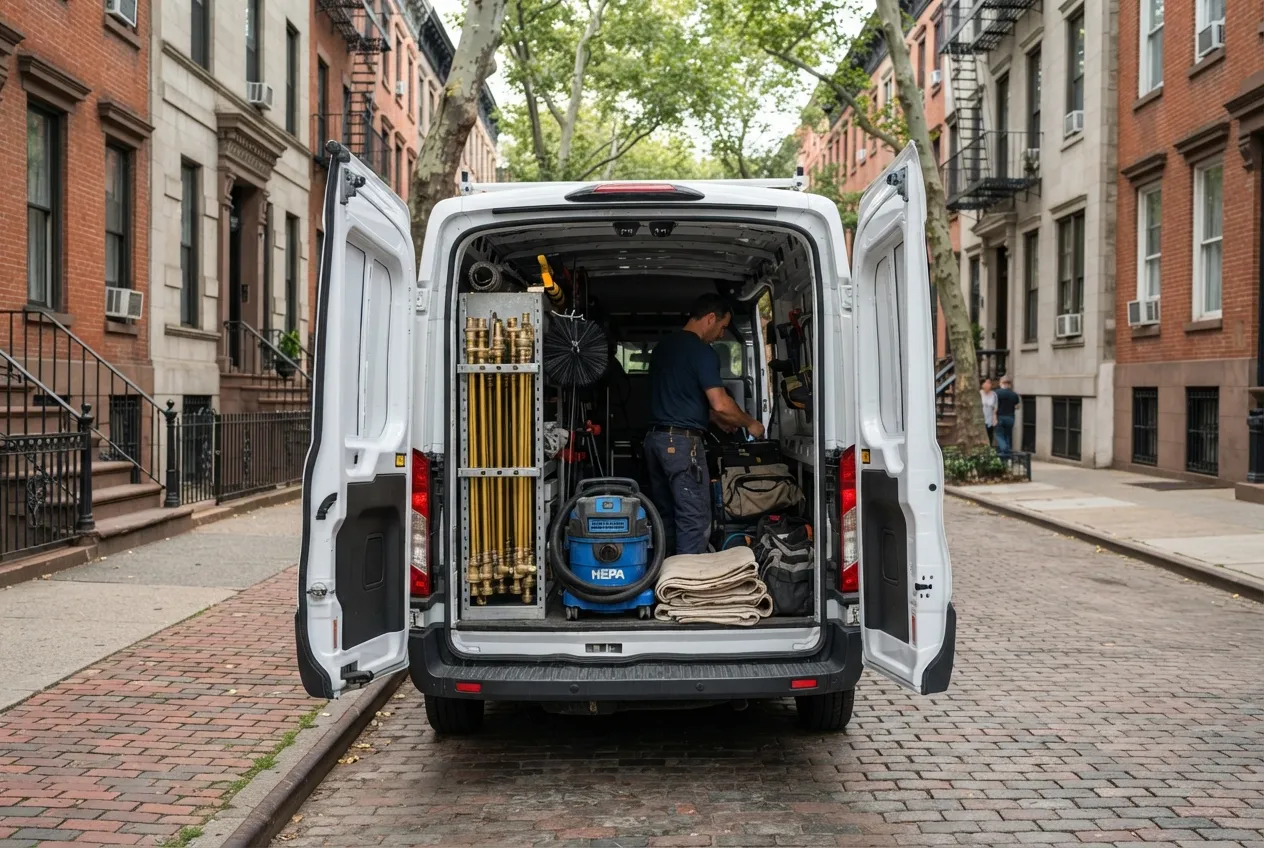
Most of a rebuild happens on the roof, but the inside of your home still gets protected. Before work starts, the crew lays drop cloths from the door to the fireplace and seals the fireplace opening so dust and mortar fragments stay in the flue. HEPA vacuums run during any work at the firebox to capture fine soot and masonry dust. If the flue has to be cleaned before it can be inspected or relined, the crew uses rotary brushes to clear creosote and loose debris. Then a camera goes up the flue to record the condition of the tiles and joints.
On the roof, the crew sets up ladders or scaffolding as the building requires. Roofing around the chimney is protected before any brick comes down. Old masonry is lowered in buckets or bags instead of being dropped, so it doesn't damage the roof, gutters, or yard. At the end of each work day, the open chimney is covered against overnight rain. Attached homes share walls and sometimes rooflines, so the crew keeps the work contained to your chimney. If they notice anything on an adjoining roof that needs attention, they will tell you.
Time for your annual chimney check?
The standard we follow
The NFPA 211 standard covers chimneys, fireplaces, and vents, and it calls for them to be inspected once a year. Chimney professionals use three inspection levels:
Level 1 is for when nothing about the system has changed. Level 2 is for when something has changed, such as a new appliance or a switch of fuel, and when the home is sold. Level 3 is for when a hidden hazard can only be reached by opening part of the chimney or the building.
We typically begin a rebuild with a Level 2 inspection, because the camera look at the flue helps decide how far the work needs to go.
If you are converting a boiler from oil to gas, New York City requires the chimney to be evaluated as part of that job. A new liner is often needed, because gas exhaust produces acidic condensate that can corrode a masonry flue. If a conversion is coming up, it makes sense to plan the rebuild and the liner together.
What affects the price
We don't quote a rebuild until we have seen the chimney, because the cost depends on details that vary from house to house. The main factors are:
- The chimney's height and how hard the roof is to reach, including whether scaffolding is needed
- How far down the damage goes: the top few courses or a larger section of the stack
- The fuel the chimney serves (wood, oil, or gas), which affects liner and flue choices
- Flue size and condition, and whether tiles need replacing or a new liner is required
- How much creosote or debris has to be cleaned out before inspection and repair
- Whether a camera inspection or added repairs, such as crown, flashing, or cap work, are needed
- Brick matching, if the chimney is visible from the street and should blend with older masonry
How a visit works
On the first visit, a technician inspects the chimney from the roof and the fireplace. If needed, they clean the flue so they can see it clearly, then run a camera inside. You get photos and a written scope explaining what we recommend and why. If a smaller repair, like repointing or a new crown, will do the job, we will tell you.
Masonry work depends on the weather, because mortar needs reasonable temperatures and dry conditions to cure. New York City's heat season runs from October 1 through May 31, and during that time building owners must keep apartments at the city's minimum temperatures. If your chimney vents a boiler or furnace, we schedule the work so your heat stays running.
On work days, the crew protects the inside and the roof, takes down the damaged section, and rebuilds it. Depending on the scope, the job takes one day or several. When it's finished, we clean up, walk you through the work with photos, and tell you when the chimney is ready to use again.