The short answer
Fireplace and damper repair fixes the parts that keep smoke moving up the chimney and keep weather, animals and drafts out: the firebox, mortar joints, firebrick and damper. RoyalFlue inspects first, explains what's wrong, then repairs or replaces what's damaged. Common jobs include repointing, firebrick replacement, and repairing or replacing dampers.
A fireplace that smokes into the room, a damper that won't close, or brick crumbling at the back of the firebox is more than an annoyance. These problems let heat escape, let water and animals in, and can let hot gases reach parts of the house they shouldn't. RoyalFlue Chimney Services repairs fireplaces and dampers for homeowners in Brooklyn and nearby neighborhoods, from original masonry fireplaces in older row houses to newer prefabricated units. We start by finding out why the problem is happening, then fix the cause, not just the symptom.
Signs you need fireplace or damper repair
Most fireplace and damper problems develop gradually. Owners usually notice one of these first:
Any one of these is worth a look. When several show up together, they often share one cause, such as a failed chimney cap or crown letting water into the system.
- A smoky or creosote smell in the room, especially on humid days or after the fireplace has sat unused
- Poor draft: smoke rolls out of the opening instead of going up the flue
- Debris, loose mortar or brick flakes collecting on the firebox floor
- White, chalky staining on the brick, which usually means water is moving through the masonry
- Water in the firebox or rust on the damper after rain
- Scratching or chirping above the fireplace, a sign that animals got past an open or broken damper
- A damper handle that sticks, spins freely, or won't hold the plate closed
- Cold drafts coming from the fireplace when it isn't in use
What's included
Every repair visit starts with an inspection of the fireplace and the parts of the chimney that affect it. Depending on what we find, the work can include:
We explain any recommended work before we start it. If the inspection turns up a problem beyond the fireplace, such as a damaged flue liner, we tell you what it is and what your options are.
- Inspection of the firebox, smoke chamber, damper and visible flue
- Testing the damper for full opening, a tight close and a working handle or chain
- Cleaning soot and creosote from the firebox, damper area and smoke chamber when buildup is present
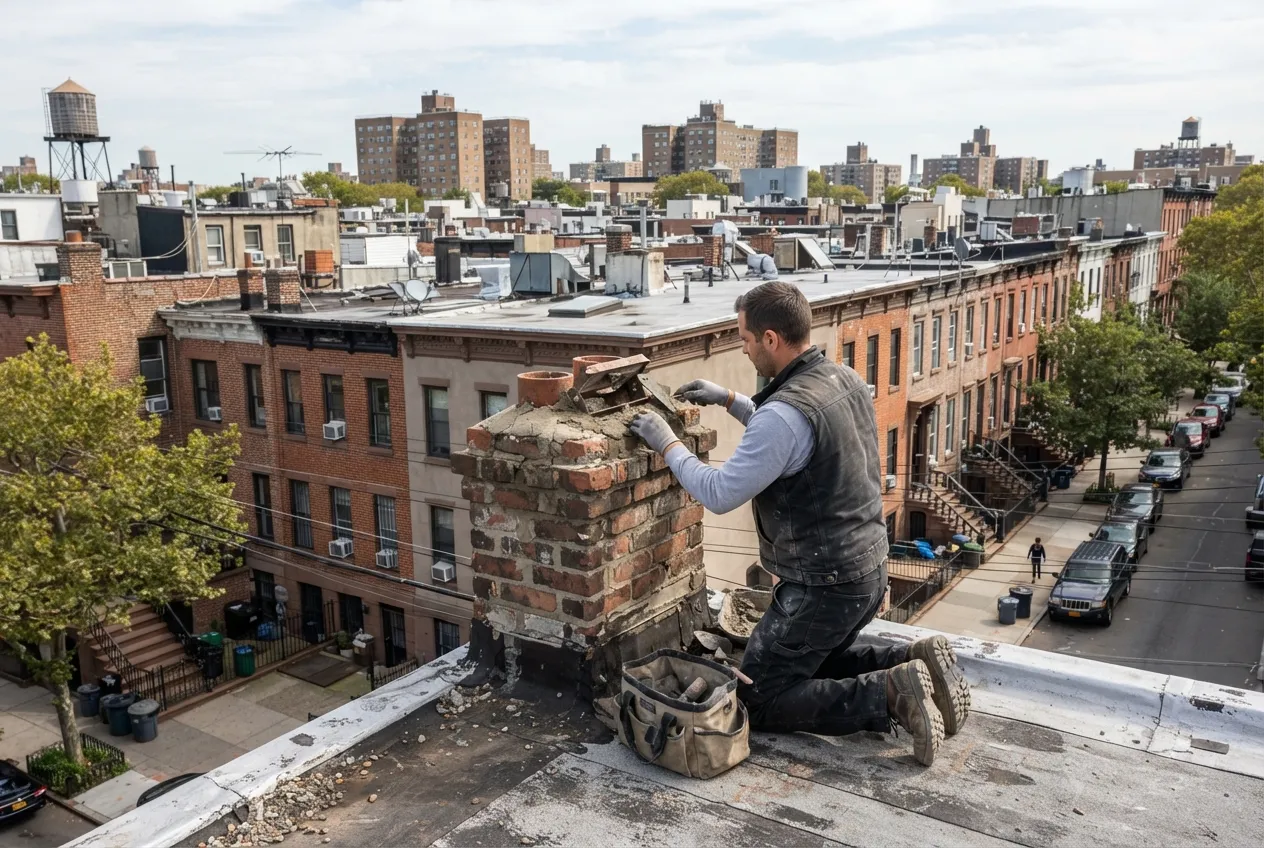
- Repointing cracked or missing mortar joints in the firebox
- Replacing spalled or broken firebrick with new firebrick set in refractory mortar
- Repairing or replacing a cast-iron throat damper
- Installing a top-sealing damper at the top of the chimney when a throat damper can't be repaired
- Checking the hearth and hearth extension for cracks or gaps
- Checking the chimney cap and crown for the source of water or animal entry
- Photos of what we found and a written explanation of the repair
How we work inside your home and on the roof
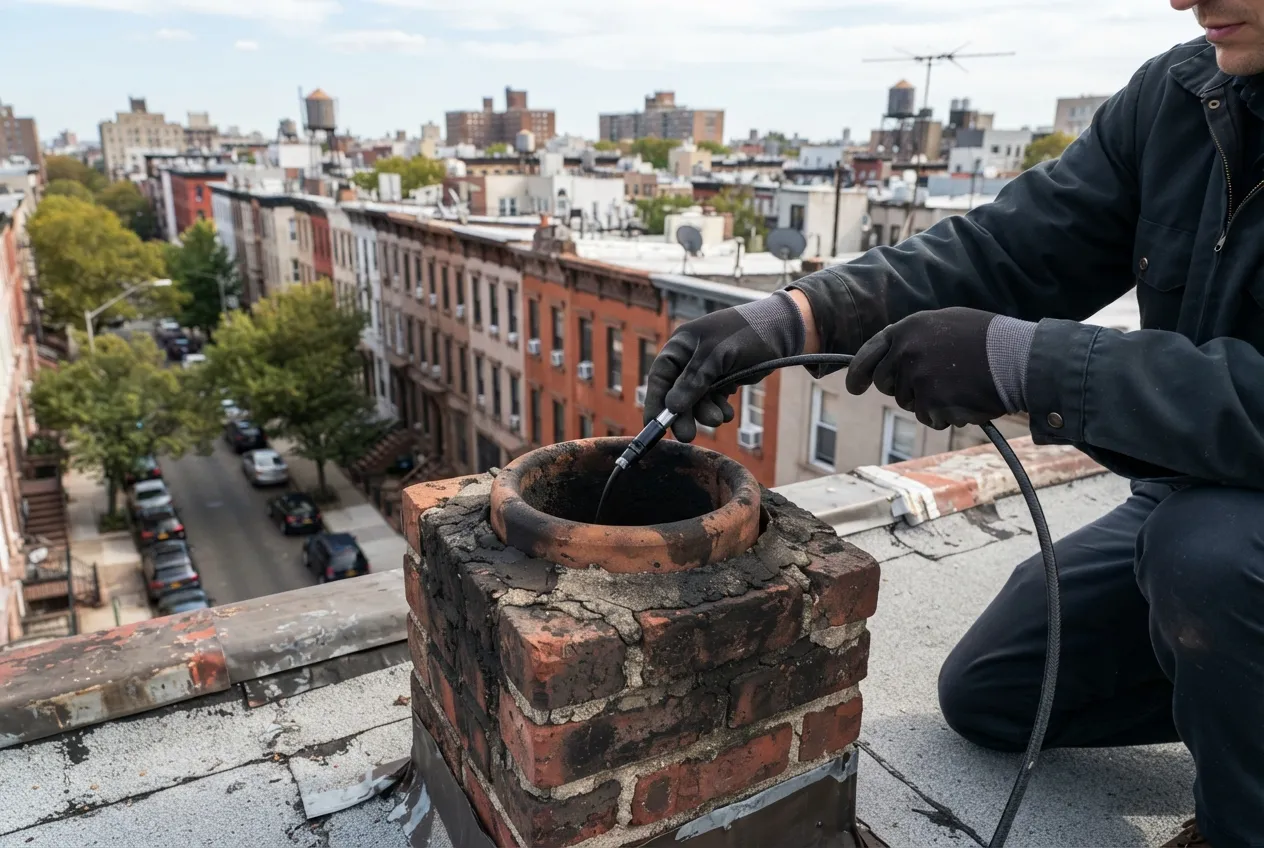
Fireplace work happens in your living space, so we treat it that way. The crew lays drop cloths from the entry to the hearth and seals the fireplace opening during brushing and cutting. HEPA vacuums run throughout to capture fine soot and masonry dust, and rotary brushes clear the smoke chamber and damper area before any repair begins. When we need to see farther up the flue than a flashlight reaches, we run a camera and show you the footage.
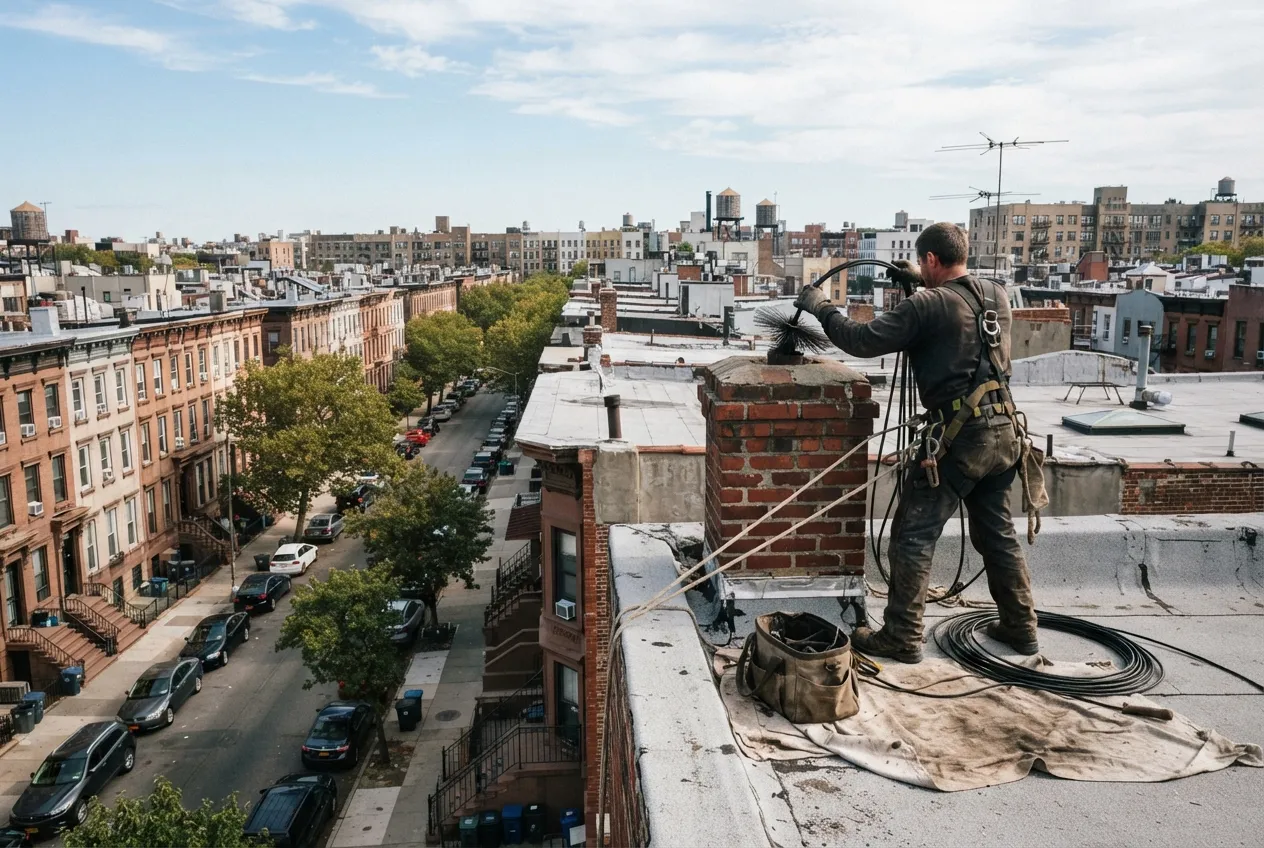
On the roof, the crew checks the cap, crown and top of the flue, and installs top-sealing dampers from above. Many Brooklyn homes share walls and rooflines with neighbors, so we plan roof access ahead of time and keep tools and debris contained. Before we leave, the work area is vacuumed and the drop cloths come up last.
Time for your annual chimney check?
The standard we follow
We follow the NFPA 211 standard, which calls for chimneys, fireplaces and vents to be inspected once a year. A repair visit is a good time to make sure that happens, because a damper or firebox problem is often connected to something else in the system.
Chimney professionals use three inspection levels. Level 1 applies when nothing about the system has changed. Level 2 applies when the system changes, for example a new appliance or a switch of fuel, or when the home is sold. Level 3 is needed only when a hidden hazard has to be reached by opening part of the chimney or building.
Our certified technicians tell you which level fits your situation and why. If you're adding a gas insert or changing what you burn, plan on a Level 2 inspection.
What affects the price
We don't quote a price before seeing the fireplace, because the same symptom can have very different causes. These factors change the scope of a job:
After the inspection you get a written estimate that spells out what's included, so you can weigh your options before deciding.
- Chimney height and how hard the roof is to reach
- Fuel type: wood, gas logs or a gas insert
- Size and condition of the flue and smoke chamber
- How much soot and creosote has to be removed before repair can start
- Whether a camera inspection is needed to see the problem
- The repair itself: a few mortar joints, a full firebox rebuild, or a new damper
- Whether water damage has spread into the surrounding masonry
How a visit works
Contact us and tell us what you're noticing. We'll ask about the fireplace type, the fuel you burn, and when it was last used or inspected, then set an arrival window.
On the day of the visit, the technician confirms the problem with you, protects the room and inspects the fireplace and chimney. You see photos or camera footage and hear what we found in plain terms. If the repair is straightforward and you approve it, it can often be done the same visit. Larger work, such as a firebox rebuild or a top-sealing damper, is scheduled for a return trip.
Before leaving, we clean up, test the damper and draft, and tell you whether the fireplace is ready to use or how long new mortar needs to cure. If your building also has a boiler, remember that New York City's heat season runs from October 1 through May 31; booking chimney work in late spring or summer keeps it clear of the months when heat has to stay on.