The short answer
If clothes take longer to dry, the dryer runs hot, or lint collects at the outside hood, your dryer vent probably needs cleaning. RoyalFlue cleans the full run from the dryer to the wall or roof termination and then tests airflow. According to the U.S. Fire Administration, failure to clean is the leading factor contributing to home clothes dryer fires.
Lint that gets past your dryer's filter ends up somewhere: in the hose behind the machine, in the bends of the vent run, and at the outside hood or roof cap. In Brooklyn rowhouses, brownstones and multi-family buildings, dryers often vent through long runs, basements or up to the roof, so that buildup can grow faster than most owners expect. RoyalFlue Chimney Services cleans dryer vents from the dryer connection all the way to the outside end. We check that air is actually moving when we finish, and we tell you plainly what we found. This page covers the signs that a vent needs attention, what a cleaning includes, how our crew works in your home and on the roof, what affects the cost, and how a visit works.
Signs you need it
A restricted dryer vent usually shows up in everyday use before anything else. Watch for any of these:
- Clothes need a second cycle, or come out damp and hot
- The dryer, or the room it sits in, gets noticeably hotter than it used to
- A burning or scorched smell while the dryer runs
- Lint collecting behind the dryer or around the outside vent hood
- Weak or no airflow at the outside hood while the dryer is running
- An exterior flap that stays stuck open or shut
- Dust or lint blowing back into the laundry area
- Chirping, scratching or nesting material at the vent opening from birds or rodents
- The dryer shuts itself off partway through a cycle
Why regular cleaning matters
According to the U.S. Fire Administration, failure to clean is the leading factor contributing to clothes dryer fires in homes. Lint is light, dry and catches fire easily, and the dryer pushes hot air past it every time it runs. As the vent narrows, heat stays in the machine and the duct longer. The dryer works harder, and lint builds up even faster.
A clogged vent also costs you time and wears on the dryer's heating parts. With a gas dryer there is one more reason to keep the vent open: it carries combustion exhaust along with moist air, so it needs a clear path outdoors.
No single schedule fits every home. Daily use, a long run with several elbows, or a roof termination usually means the vent needs attention more often than a short, straight run through an outside wall. After cleaning, we'll suggest a reasonable interval for your setup.
What's included in a dryer vent cleaning
Every cleaning covers the full path the exhaust travels, not just the part you can reach behind the machine.
- Moving the dryer out and disconnecting the transition hose
- Checking the transition hose and flagging plastic or crushable foil types that should be replaced
- Cleaning the lint screen housing inside the dryer
- Rotary brushing the full vent run, from inside and from the outside end where needed
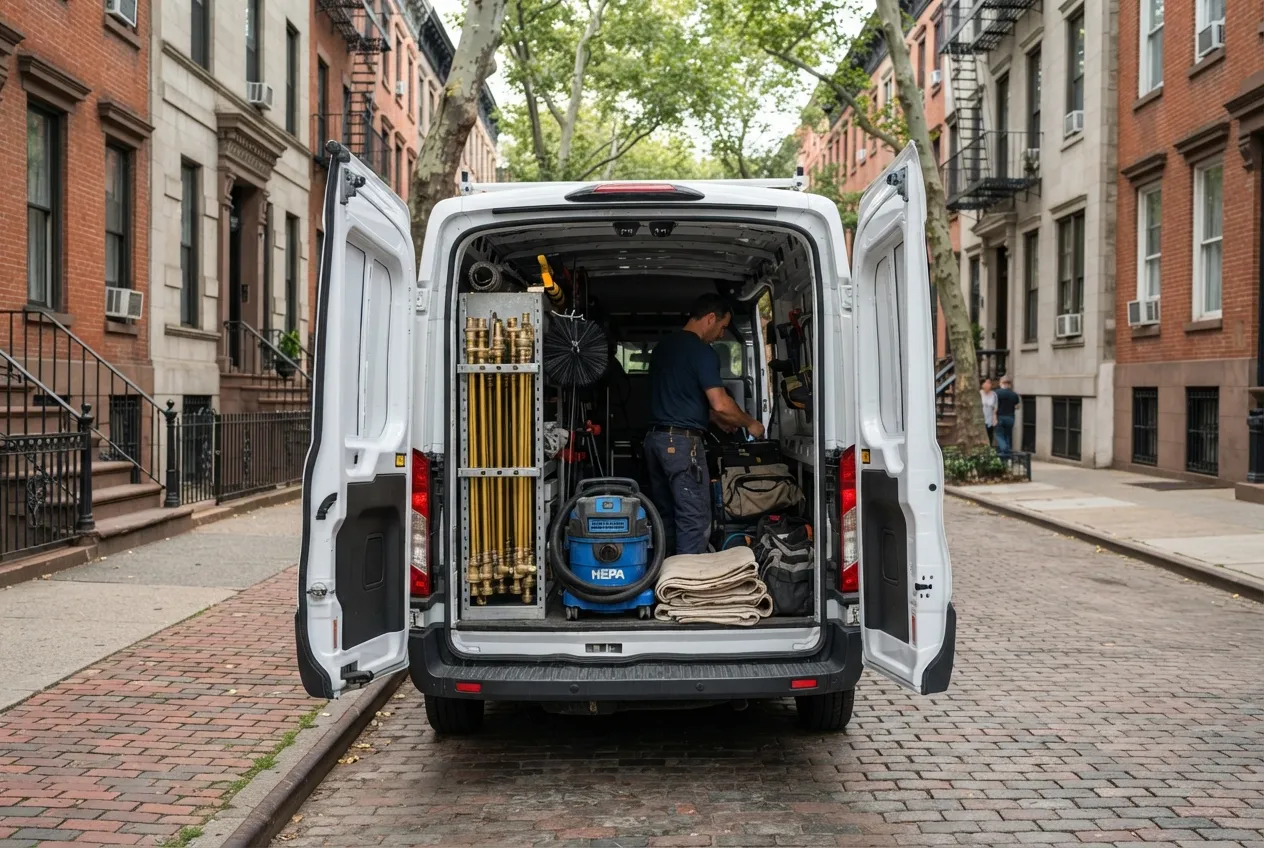
- Collecting lint and debris with HEPA vacuums
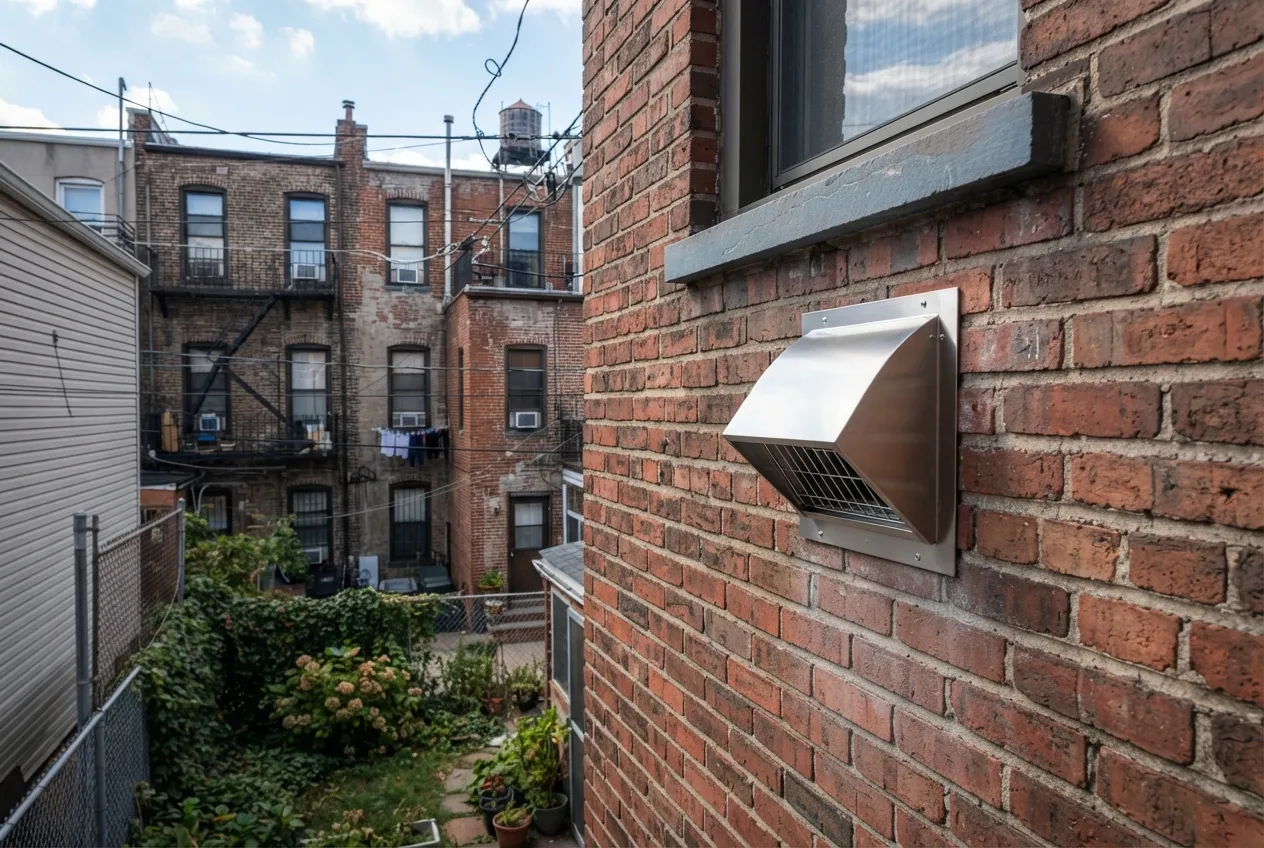
- Clearing the outside hood or roof cap and checking that the flap moves freely
- Removing nests or debris left by birds or rodents
- Camera inspection when the run is long, hidden in walls, or still restricted after brushing
- Reconnecting the dryer and testing airflow at the outside end
- A plain summary of what we found, including crushed, separated or damaged sections
Time for your annual chimney check?
How our crew works in your home and on the roof
Our certified technicians lay drop cloths from your door to the laundry area before moving anything. The dryer is unplugged, or the gas is shut off at the appliance valve, and then it is pulled out with care and the hose is disconnected. A HEPA vacuum runs at the open end of the vent while rotary brushes work through the duct, so lint is pulled into the machine instead of blowing into your room.
Laundry setups in Brooklyn vary a lot. Some dryers sit in a basement with a short run out the back wall. Others are in an upper-floor closet with a long run through the floor framing or up to the roof. For long or hidden runs, a camera shows us sagging sections and loose joints we can't reach by hand, and it confirms the duct is clear after brushing.
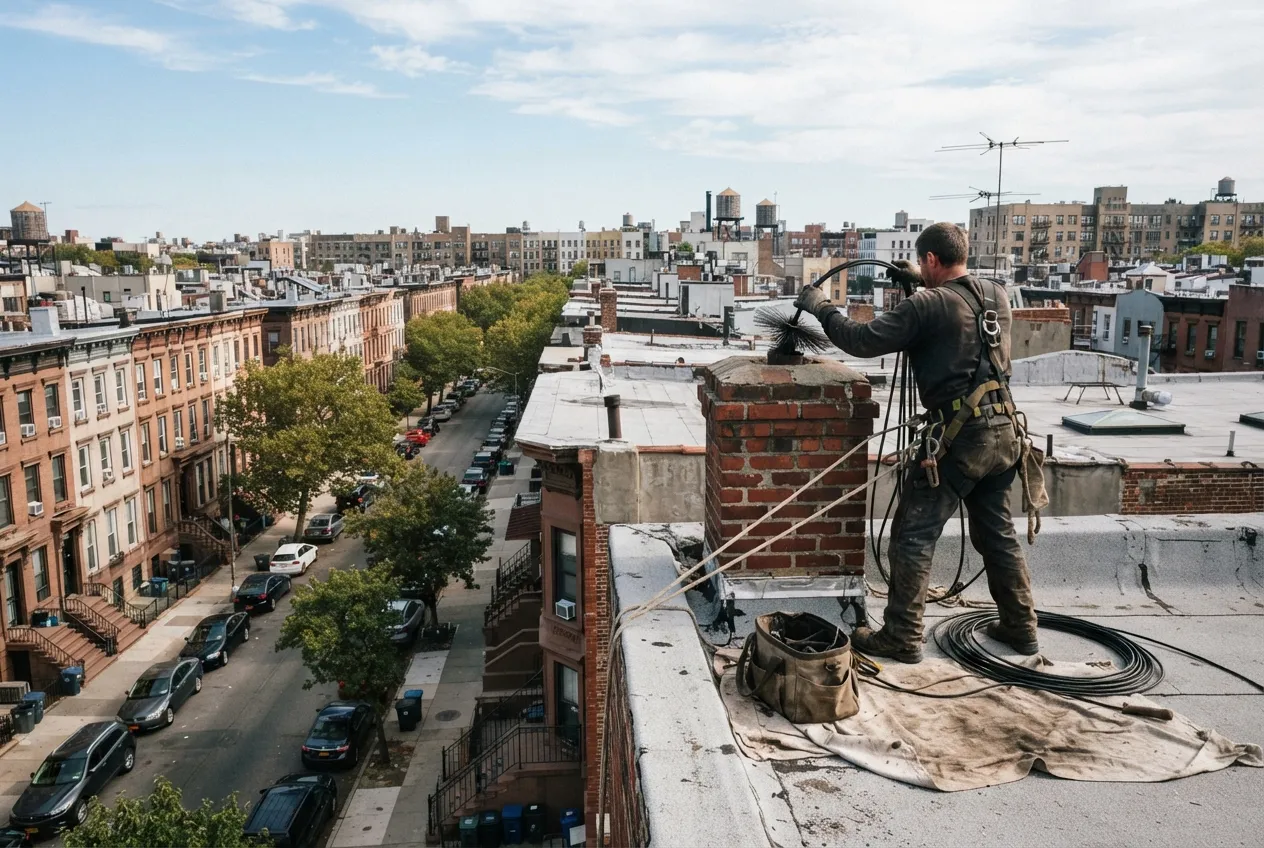
When the vent ends on the roof, a technician goes up to clean and inspect the cap. Roof caps often trap lint behind louvers or screens, and a screen on a dryer vent is a lint catcher in its own right. We clear the cap, check the flap, and look at where the vent meets the roof. If ice, heavy rain or a lack of safe access makes the roof unsafe that day, we'll tell you and reschedule that part of the work.
Before leaving, we reconnect the dryer, run it, and check airflow outside. Then we pick up the drop cloths and vacuum the work area.
What affects the price
We quote once we understand your setup. The main factors are:
If we find something that needs repair, we explain it and let you decide before doing any extra work.
- Length of the vent run and how many bends it has
- Where it ends: a ground-level wall, an upper-floor wall, or the roof
- Building height and how easily and safely we can reach the roof
- How much lint has built up, and whether there are nests
- How easy it is to move the dryer and reach the connection, such as stacked units or tight closets
- Whether a camera inspection is needed for hidden sections
- Repairs such as replacing a crushed hose, refastening a separated joint, or replacing a broken hood or cap
How a visit works
When you contact us, we'll ask where the dryer is, whether it's gas or electric, roughly where the vent ends outside, and what you've noticed. That lets us bring the right equipment and plan for roof access if it's needed.
On the day, the technician looks over the setup first, explains the work, and confirms anything beyond a standard cleaning before starting. From there it's the steps above: protect the area, disconnect, clean, inspect, reconnect, test airflow and clean up.
If you also have a fireplace, wood stove or boiler flue, we can look at it on the same visit. The NFPA 211 standard calls for chimneys, fireplaces and vents to be inspected once a year.