The short answer
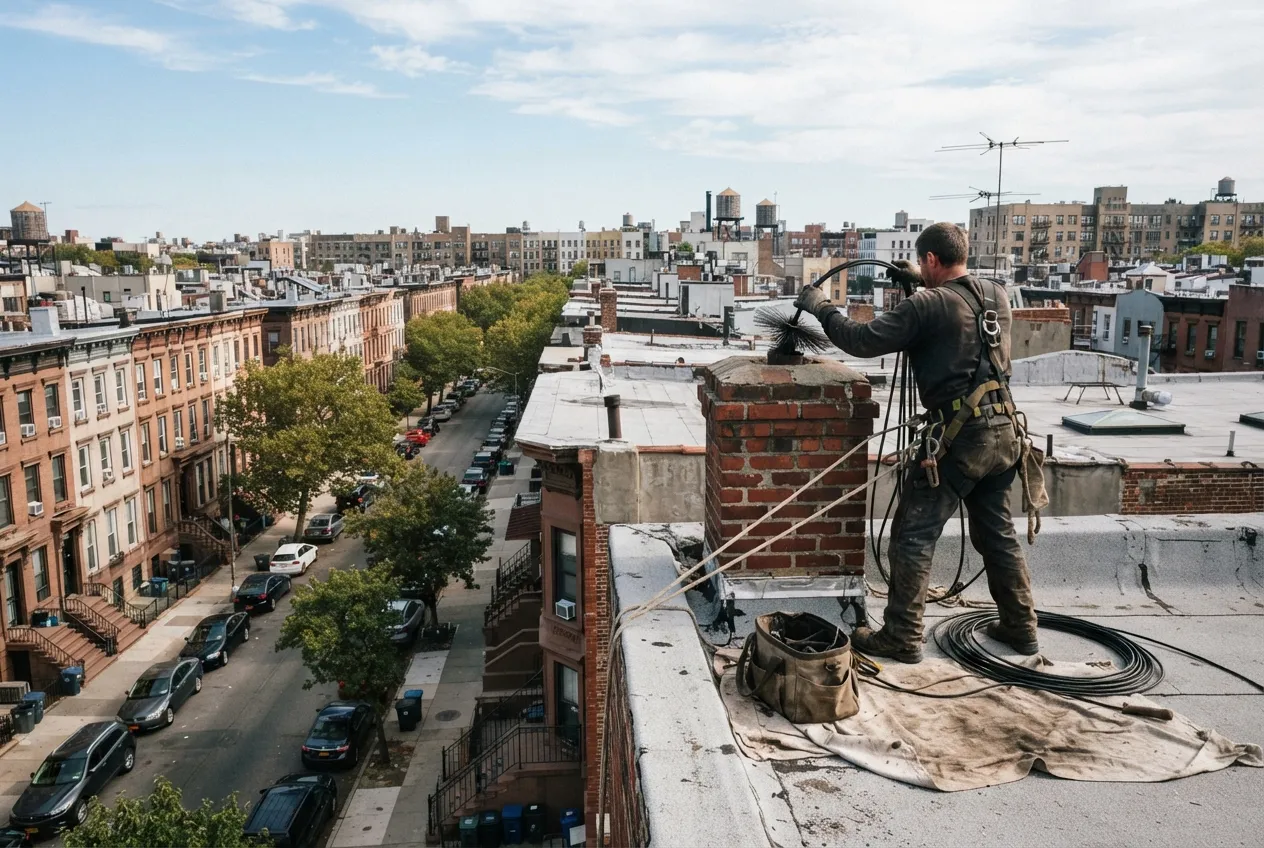
Chimney repair in Long Island City usually means fixing worn masonry, damaged crowns and caps, leaks around flashing, or flue liners, especially after an oil-to-gas boiler conversion. RoyalFlue starts with an inspection to find the cause, then repairs it, ideally before the October heat season begins.
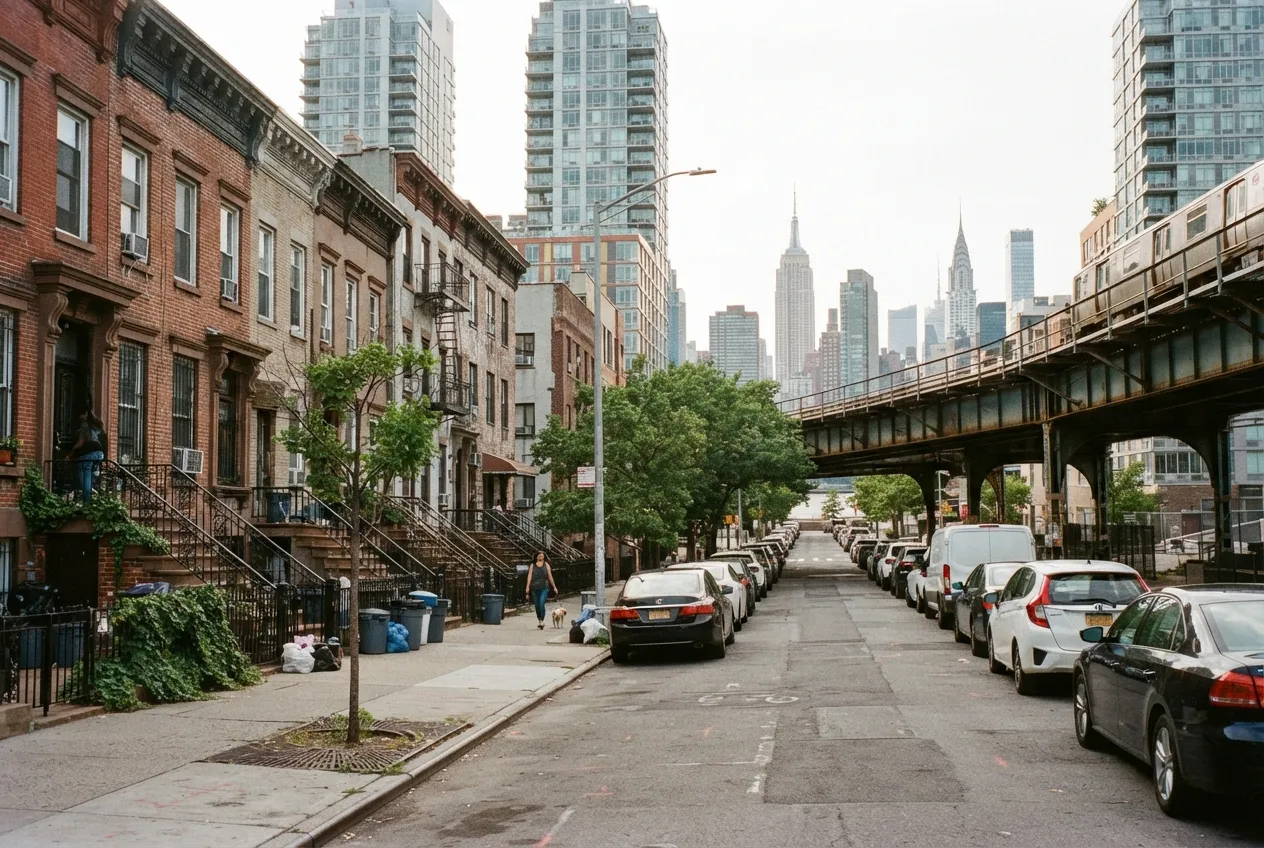
Long Island City has a mix of older brick rowhouses, pre-war apartment buildings, converted industrial spaces and newer construction. Many of the older chimneys have handled decades of heating seasons, freeze-thaw cycles and fuel changes. RoyalFlue Chimney Services works about a mile north of our Greenpoint, Brooklyn office, covering both Long Island City ZIP codes, 11101 and 11109. Our certified technicians find out what is actually wrong with a chimney, explain it in plain terms, and repair what needs repairing. We do not sell work a chimney doesn't need.
Common Chimney Problems in Long Island City Homes
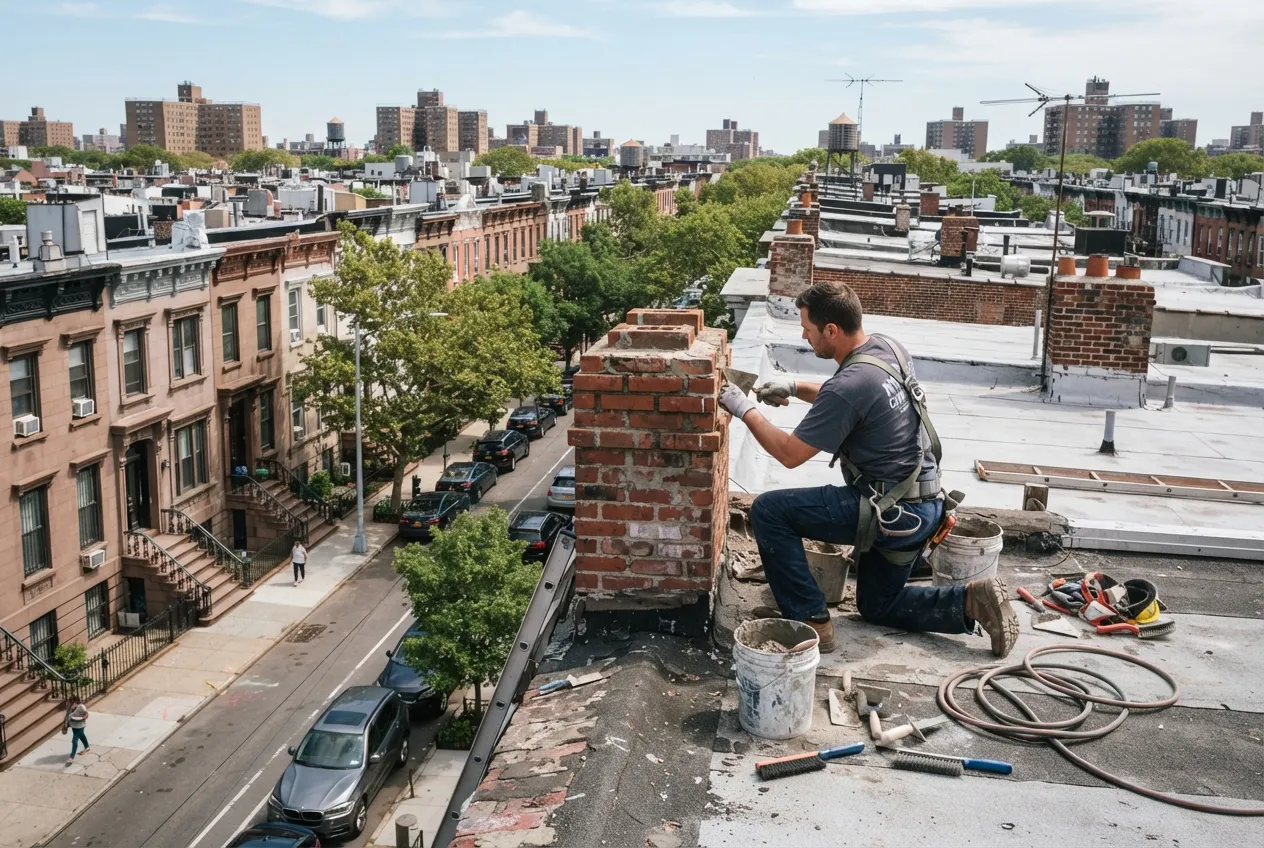
Most of the chimneys we see in the neighborhood are masonry. They run through older rowhouses and through multi-family and pre-war apartment buildings. Brick and mortar hold up well, but they don't last forever. Water is usually the cause of the damage. It gets into cracked mortar joints or a broken crown, freezes in winter, and widens the gaps a little more every year.
Inside the chimney, the flue has its own problems. Clay tile liners can crack, mortar between tiles can wash out, and acidic exhaust can eat into masonry that was never meant to carry it. These issues are often invisible from the street or the roof.
- Cracked or crumbling mortar joints and spalling brick
- Cracked or missing chimney crowns
- Leaks where the chimney meets the roof, often from failed flashing
- Missing or rusted caps that let in rain, debris and animals
- Cracked, deteriorated or missing flue liners
- Water stains on ceilings or walls next to the chimney
Repairs Start With the Right Inspection
We don't guess at repairs. The NFPA 211 standard calls for chimneys, fireplaces and vents to be inspected once a year, and it uses three inspection levels. A Level 1 inspection fits a system where nothing has changed. A Level 2 inspection applies when something changes, such as a new appliance or a switch of fuel, or when a home is sold. A Level 3 inspection is for cases where a hidden hazard can only be reached by opening part of the chimney or the building.
For most repair calls, we begin with the inspection level that fits your situation. We look at the exterior masonry, the crown, the cap and the flashing, and we check the flue as well. You get a clear account of what we found and what we recommend. If something can wait, we tell you that too.
Oil-to-Gas Conversions and Flue Liners
Many Long Island City buildings have moved, or are planning to move, their boilers from oil to gas. When a New York City building converts its boiler from oil to gas, the chimney has to be evaluated as part of the work. A new liner is often needed. Gas exhaust produces acidic condensate, and over time that condensate can corrode an unlined or poorly lined masonry flue.
If your building is planning a conversion, or has already converted and the chimney was never looked at, we can evaluate the flue and install a liner sized for the new appliance. We coordinate with your heating contractor so the chimney work fits into the overall project.
Time for your annual chimney check?
Plan Repairs Around the Heat Season
New York City's heat season runs from October 1 through May 31. During those months, building owners must keep apartments heated to the city's minimum temperatures. A chimney problem found in the middle of winter can leave a boiler shut down while repairs wait.
For owners of multi-family buildings in particular, late spring and summer are the practical time to do masonry and liner work. Mortar cures well in mild weather, and you have time to address problems before the heat has to be on. If you've noticed leaks, loose brick or draft problems, it's worth having them looked at now rather than in November.
Serving Long Island City and Nearby Neighborhoods
We work throughout Long Island City and next door in Hunters Point and Sunnyside. Because our office is in Greenpoint, just across Newtown Creek, we're also close by for homeowners in Greenpoint itself and across the river in Murray Hill and Kips Bay. Whether you own a single rowhouse or manage a pre-war apartment building, the approach is the same: inspect, explain, and repair what the chimney actually needs.
More services in Long Island City
- Chimney Sweep in Long Island CityLocal service & repairs
- Chimney Inspection in Long Island CityLocal service & repairs
- Air Duct Cleaning in Long Island CityLocal service & repairs
- Chimney Liner Installation in Long Island CityLocal service & repairs