The short answer
Most Long Island City homeowners should have their chimney swept and inspected once a year, ideally before the heating season starts on October 1. Sweeping removes soot, creosote and debris, and the inspection that goes with it checks whether the flue is still safe to use, which matters most for older masonry chimneys and buildings that have switched from oil to gas.
Long Island City mixes older rowhouses and pre-war apartment buildings with newer construction, and many of those homes still rely on a working chimney, whether for a wood-burning fireplace, a gas fireplace, or the flue that vents a boiler or water heater. RoyalFlue Chimney Services is based in Greenpoint, Brooklyn, about a mile south, so getting a certified technician to homes in ZIP codes 11101 and 11109 is a short trip. This page explains what a chimney sweep involves here, when to schedule one, and what we look for while we're on site.
What a Chimney Sweep Covers
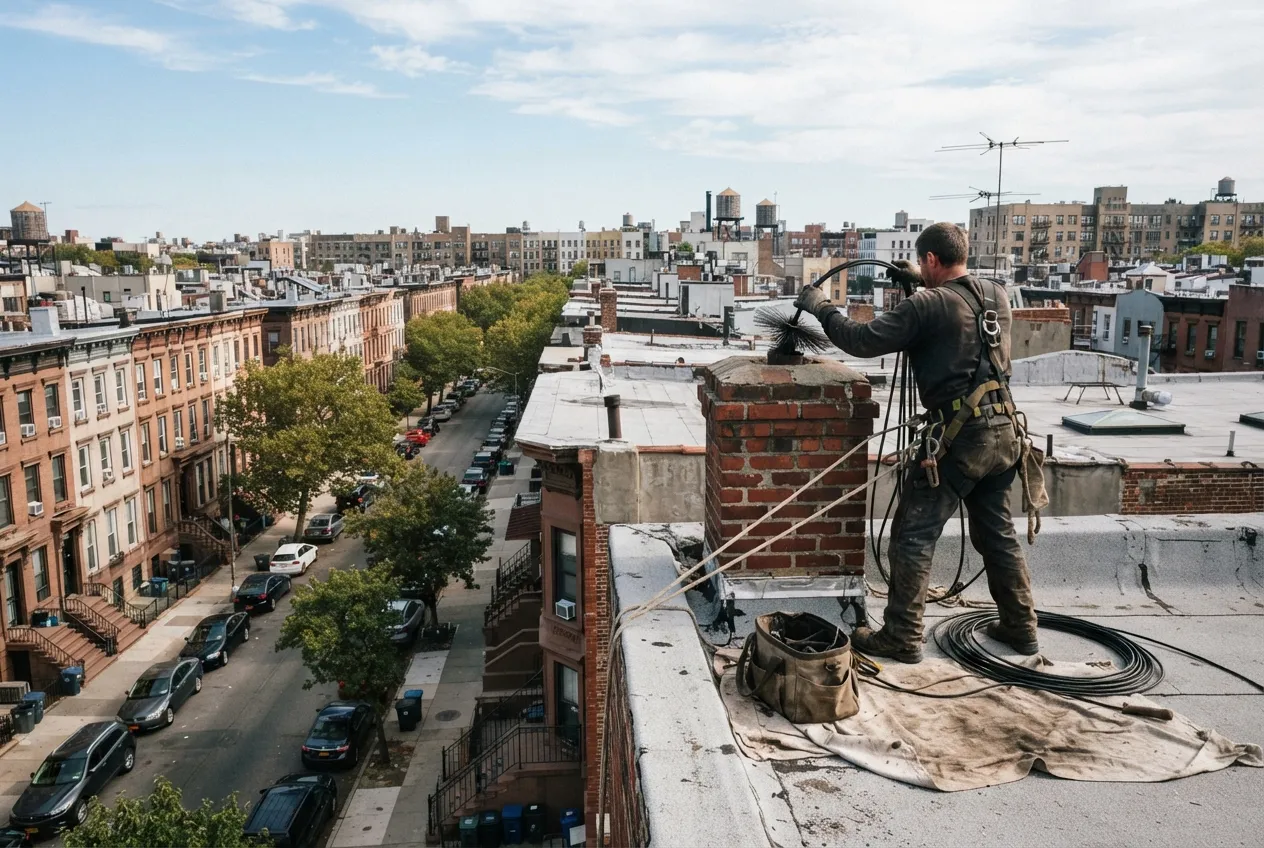
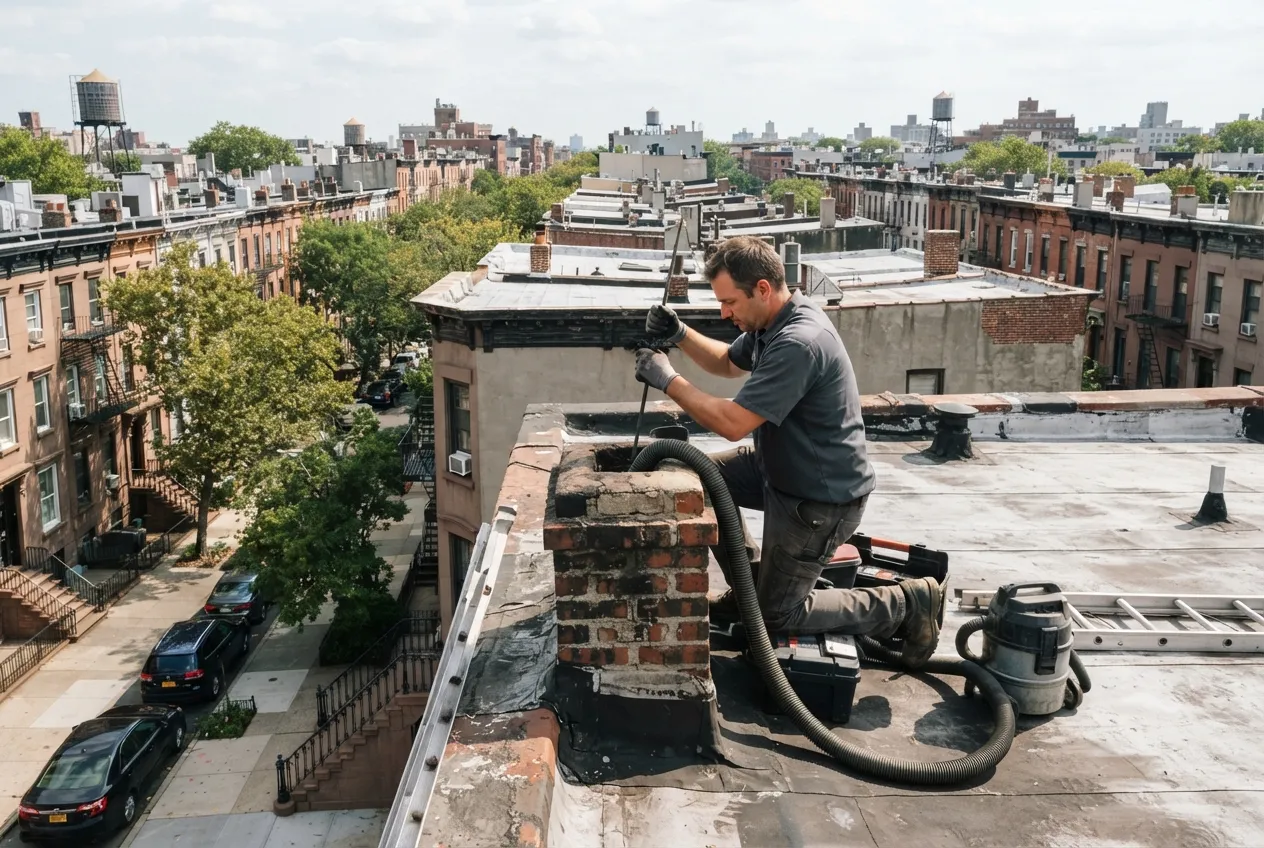
A sweep is more than brushing out the flue. Our technicians clean the chimney from the firebox or appliance connection up through the flue, then look at the parts that most often cause trouble. We protect the area around the fireplace or appliance before we start and contain the soot we remove, so the room is left the way we found it.
When the cleaning is done, we tell you what we saw, show you photos where they help, and explain whether anything needs attention now or can wait.
- Removal of soot and creosote buildup from the flue walls
- Clearing nests, leaves and debris that block airflow
- Cleaning the smoke chamber, damper area and firebox
- A check of the flue liner, crown, cap and flashing
- Notes on any cracks, gaps or deterioration we find
Chimneys in Long Island City Homes
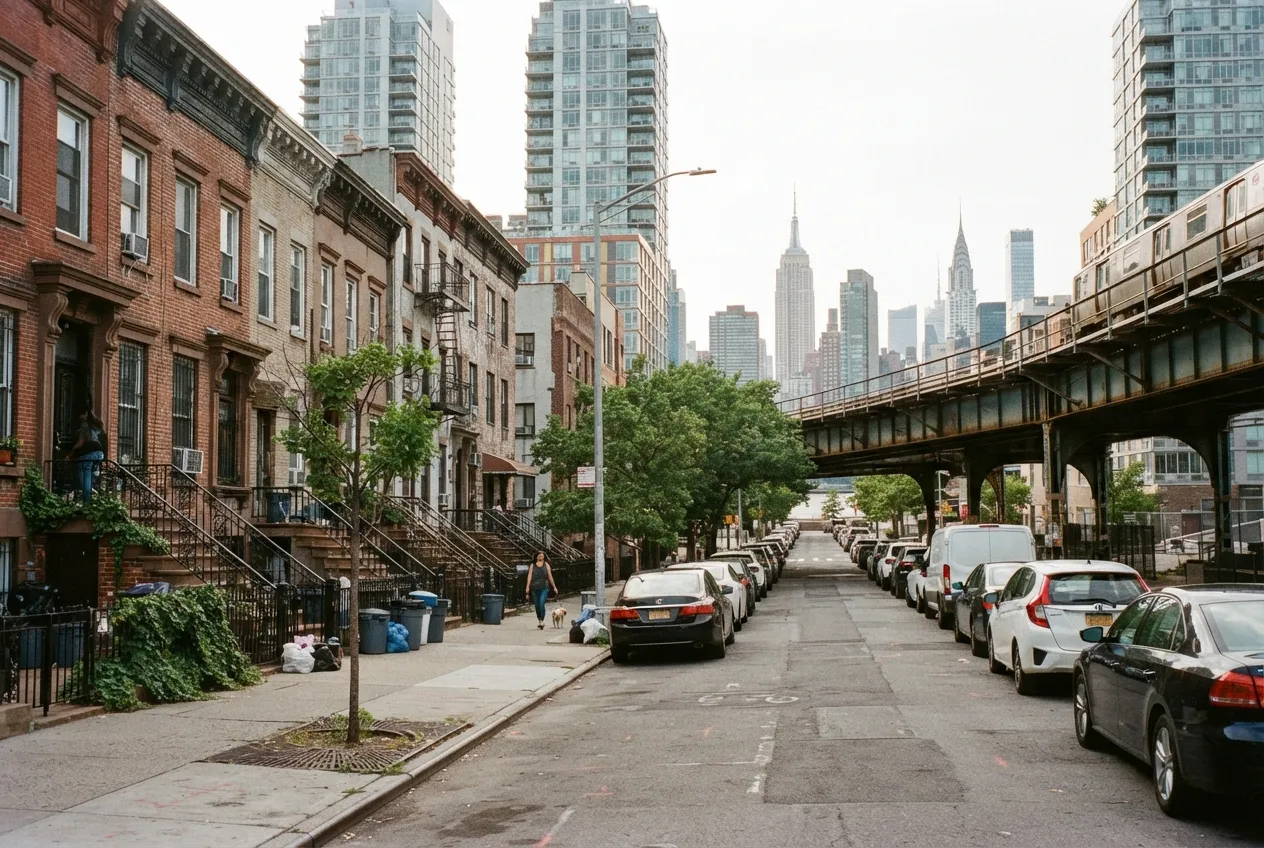
Housing in Long Island City ranges from brick rowhouses and small multi-family buildings to pre-war apartment buildings and newer towers. Older masonry chimneys in rowhouses and pre-war buildings are the ones we see most often. Many of them have served several generations of heating equipment, and their mortar, liners and crowns have been through decades of freeze and thaw.
In many buildings the chimney doesn't serve a fireplace at all. It vents the boiler or water heater in the basement, and a blockage or damaged liner there can push exhaust back into the building. A sweep and inspection of these flues is just as important as cleaning a fireplace chimney.
When to Schedule a Sweep
The NFPA 211 standard calls for chimneys, fireplaces and vents to be inspected once a year. In New York City, heat season runs from October 1 through May 31, and building owners must keep apartments heated to the city's minimum temperatures during that time. Booking your sweep in late summer or early fall means any repairs can be handled before the boiler is running every day.
You should also call sooner if you notice any of these warning signs:
- A strong smoky or tar-like smell from the fireplace, especially in humid weather
- Smoke drifting into the room instead of drawing up the chimney
- Black, flaky or shiny deposits inside the firebox or flue
- Pieces of tile, brick or mortar falling into the firebox
- Animal sounds or nesting material near the top of the chimney
Time for your annual chimney check?
Inspection Levels and Oil-to-Gas Conversions
Chimney professionals use three inspection levels. A Level 1 inspection fits when nothing about the system has changed. A Level 2 inspection applies when the system changes, such as a new appliance or a switch of fuel, or when the home is being sold. A Level 3 inspection is used when a hidden hazard has to be reached by opening part of the chimney or building.
Fuel conversions come up often in older New York City buildings. When a building converts its boiler from oil to gas, the chimney has to be evaluated as part of the work, and a new liner is often needed. Gas exhaust produces acidic condensate that can corrode a masonry flue over time. If your building has converted, or plans to, we can sweep the flue and tell you what condition the existing liner is in.
Neighborhoods We Serve Near Long Island City
Along with Long Island City, we serve Hunters Point, Sunnyside, and our home neighborhood of Greenpoint, as well as Murray Hill and Kips Bay across the East River in Manhattan. If you're not sure whether your address is in our area, ask when you contact us.
More services in Long Island City
- Chimney Inspection in Long Island CityLocal service & repairs
- Chimney Repair in Long Island CityLocal service & repairs
- Air Duct Cleaning in Long Island CityLocal service & repairs
- Chimney Liner Installation in Long Island CityLocal service & repairs