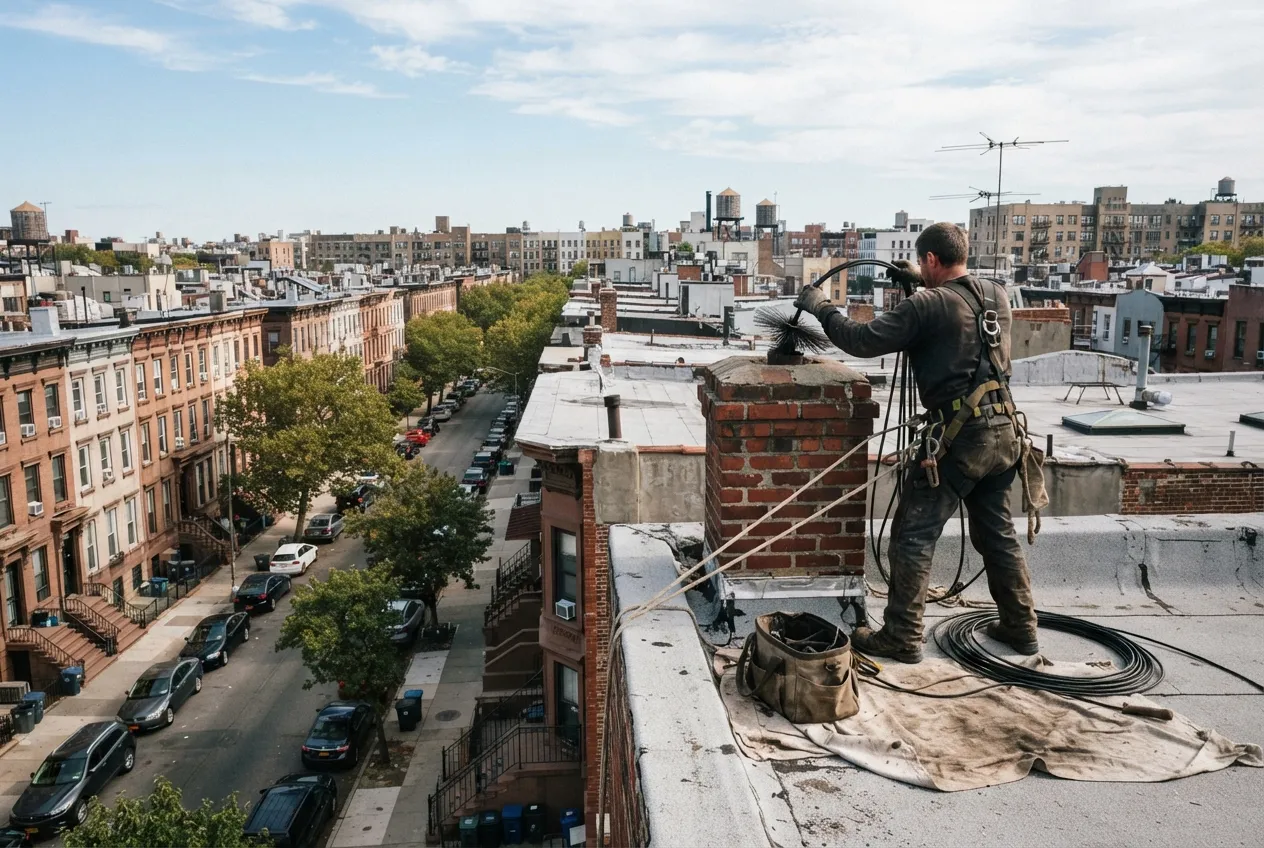
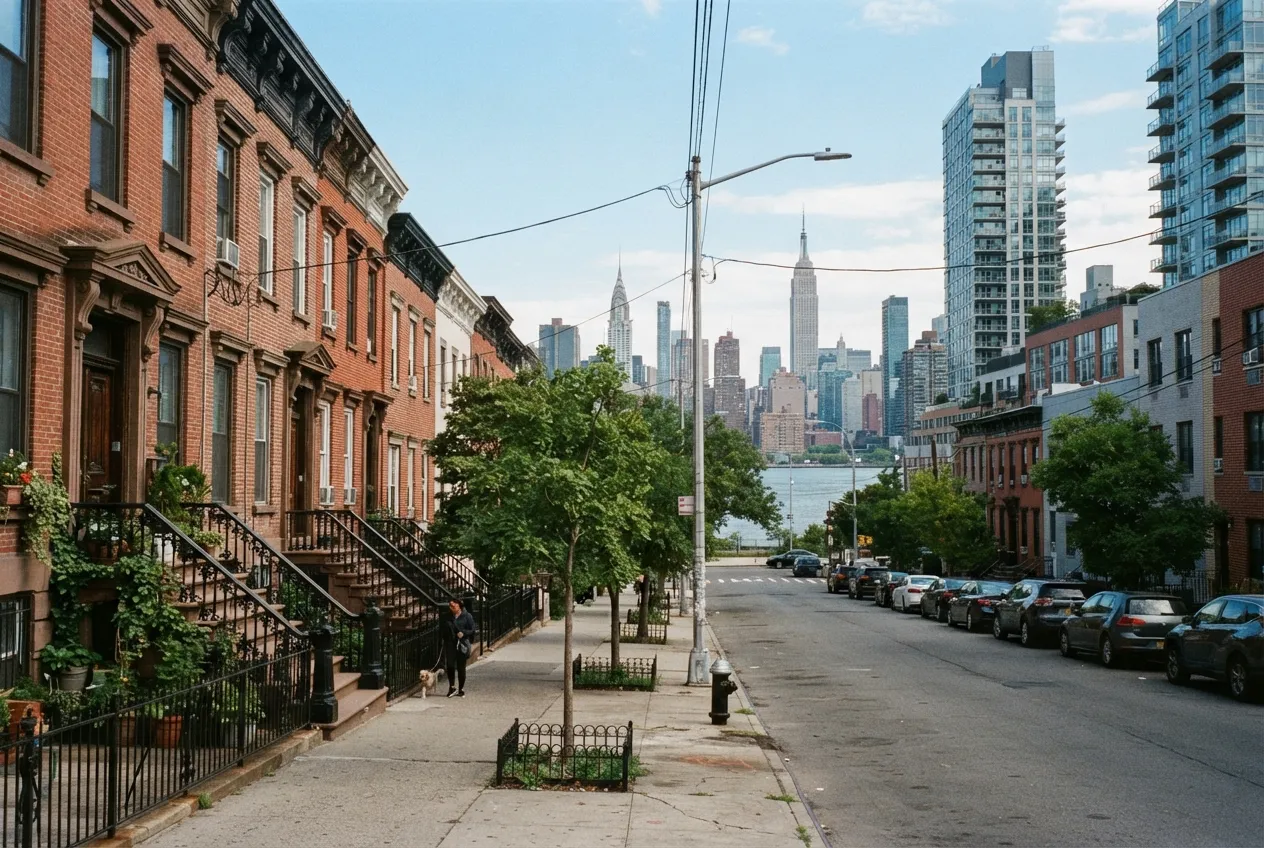
The short answer
Most Hunters Point chimneys need repair because of water damage: failed mortar, cracked crowns, leaking flashing, and worn-out flue liners. RoyalFlue's certified technicians, based about a mile away in Greenpoint, inspect the chimney, explain what's urgent, and fix it before the damage spreads.
Hunters Point is about a mile north of our office in Greenpoint, Brooklyn. That makes it easy for us to get to you when a chimney in 11101 or 11109 starts leaking, shedding brick, or failing an inspection. The neighborhood mixes older brick rowhouses and pre-war apartment buildings with newer construction. The older chimneys here have been through decades of wet winters, freeze-thaw cycles, and changes in heating fuel. Our certified technicians repair the masonry, crowns, flashing, and flue liners that keep smoke and exhaust moving up and water staying out.
Common Chimney Repairs on Hunters Point Rowhouses and Apartment Buildings
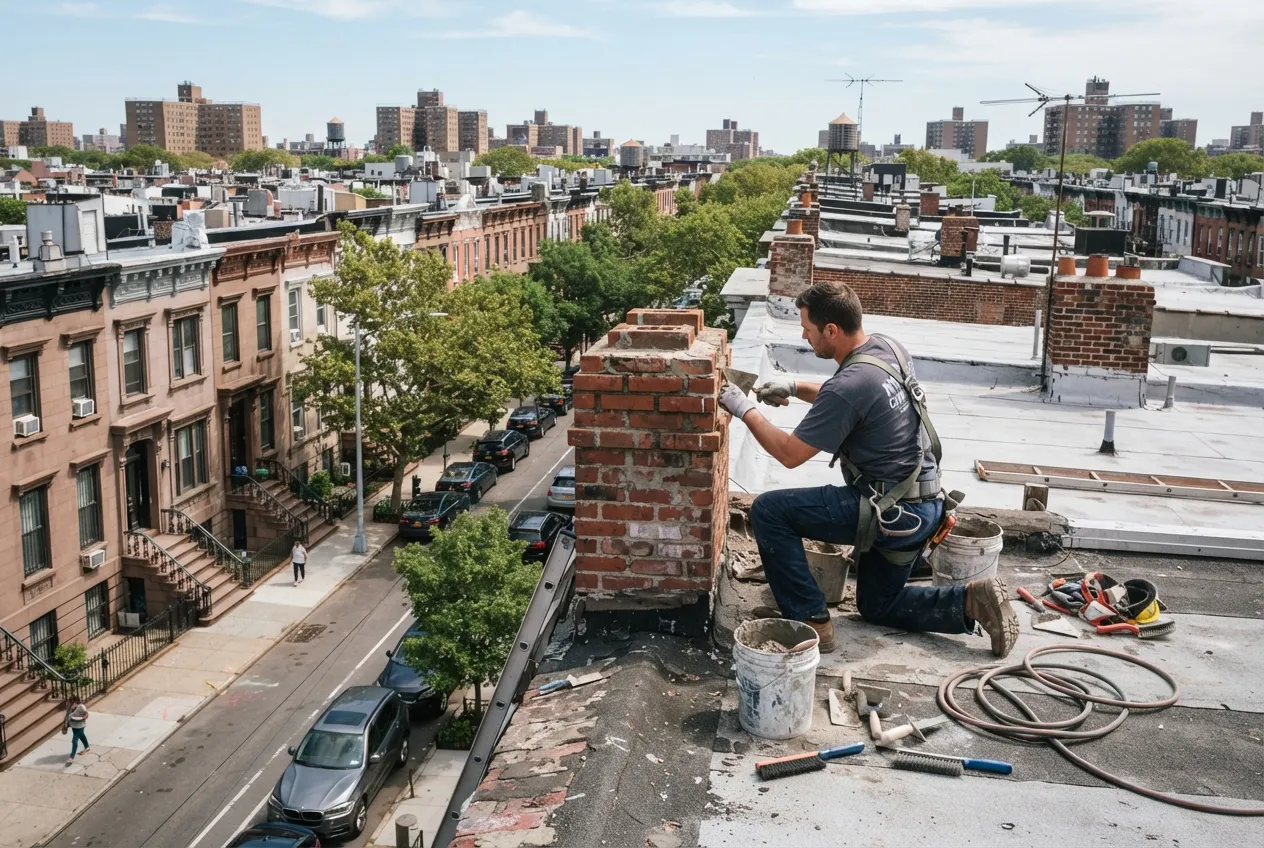
Most chimney damage in older Queens buildings starts with water. Moisture gets into cracked mortar or a broken crown, then freezes and expands, slowly pushing the masonry apart. By the time you notice a ceiling stain or bits of brick on the roof, the problem has usually been building for a while. Here is the work we do most often:
- Repointing: grinding out failed mortar joints and packing in fresh mortar matched to the existing brick
- Crown repair or rebuild: sealing cracks in the concrete cap at the top of the chimney, or replacing it if it's crumbling
- Brick replacement for spalled or broken bricks that let water into the stack
- Flashing repair where the chimney meets the roof, a frequent source of leaks on flat rowhouse roofs
- Chimney caps and screens to keep out rain, birds, and debris
- Flue liner repair or relining when tiles are cracked or the liner doesn't suit the appliance
Signs Your Chimney Needs Repair
Some problems are visible from the street or the roof. Others only show up inside the house. Schedule an inspection if you notice any of these:
Any of these can mean the flue is no longer sealed. A leaky flue can let heat, smoke, or exhaust gases reach parts of the house they shouldn't. Get it checked before the next heating cycle.
- Water stains on walls or ceilings near the chimney, or dampness in the fireplace
- Loose, flaking, or missing brick and mortar
- A cracked or crumbling crown
- White, chalky deposits on the brick, a sign that water is moving through the masonry
- Rust on the damper, firebox, or cap
- Pieces of clay tile in the fireplace or at the base of the flue
- Smoke or exhaust odors that linger indoors
Liners and Oil-to-Gas Conversions
Many buildings in western Queens have converted their boilers from oil to gas, or are planning to. In New York City, the chimney has to be evaluated as part of that conversion, and a new liner is often needed. Gas exhaust produces acidic condensate, which can corrode an old masonry flue that was built for a different fuel.
We inspect the existing flue and tell you whether it can stay as is, needs repair, or needs a new liner sized for the new appliance. We also coordinate with your heating contractor so the conversion isn't held up waiting on the chimney.
Time for your annual chimney check?
Timing Repairs Around the Heat Season
New York City's heat season runs from October 1 through May 31. During those months, building owners must keep apartments heated to the city's minimum temperatures. If you own a building with tenants, a chimney problem that shuts down the boiler in January is serious.
Spring and summer are the easiest times for masonry and liner work. Mortar cures better in mild weather, and the heating system can be offline without affecting anyone. If something fails in the middle of winter, we'll sort out what has to be done right away to restore safe venting and what can wait until it's warmer.
How a Chimney Repair Visit Works
Every repair starts with an inspection. The NFPA 211 standard calls for chimneys, fireplaces, and vents to be inspected once a year, and chimney professionals use three inspection levels:
After the inspection, we show you photos of what we found and explain which repairs are urgent and which can be planned. You get a written estimate before any work begins. We protect floors and furniture during the job and clean up when we're done. Besides Hunters Point, we also serve nearby Long Island City, Greenpoint, Sunnyside, Murray Hill, and Kips Bay.
- Level 1: when nothing about the system has changed
- Level 2: when the system changes, such as a new appliance or a switch of fuel, or when the home is sold
- Level 3: when a hidden hazard can only be reached by opening part of the chimney or building
More services in Hunters Point
- Chimney Sweep in Hunters PointLocal service & repairs
- Chimney Inspection in Hunters PointLocal service & repairs
- Air Duct Cleaning in Hunters PointLocal service & repairs
- Chimney Liner Installation in Hunters PointLocal service & repairs