The short answer
Chimney repair in East Williamsburg usually means fixing water damage at the top of the chimney, such as cracked crowns, worn mortar, and failed flashing, or relining flues that vent gas boilers. RoyalFlue inspects first, then explains what is urgent and what can wait before any repair begins.
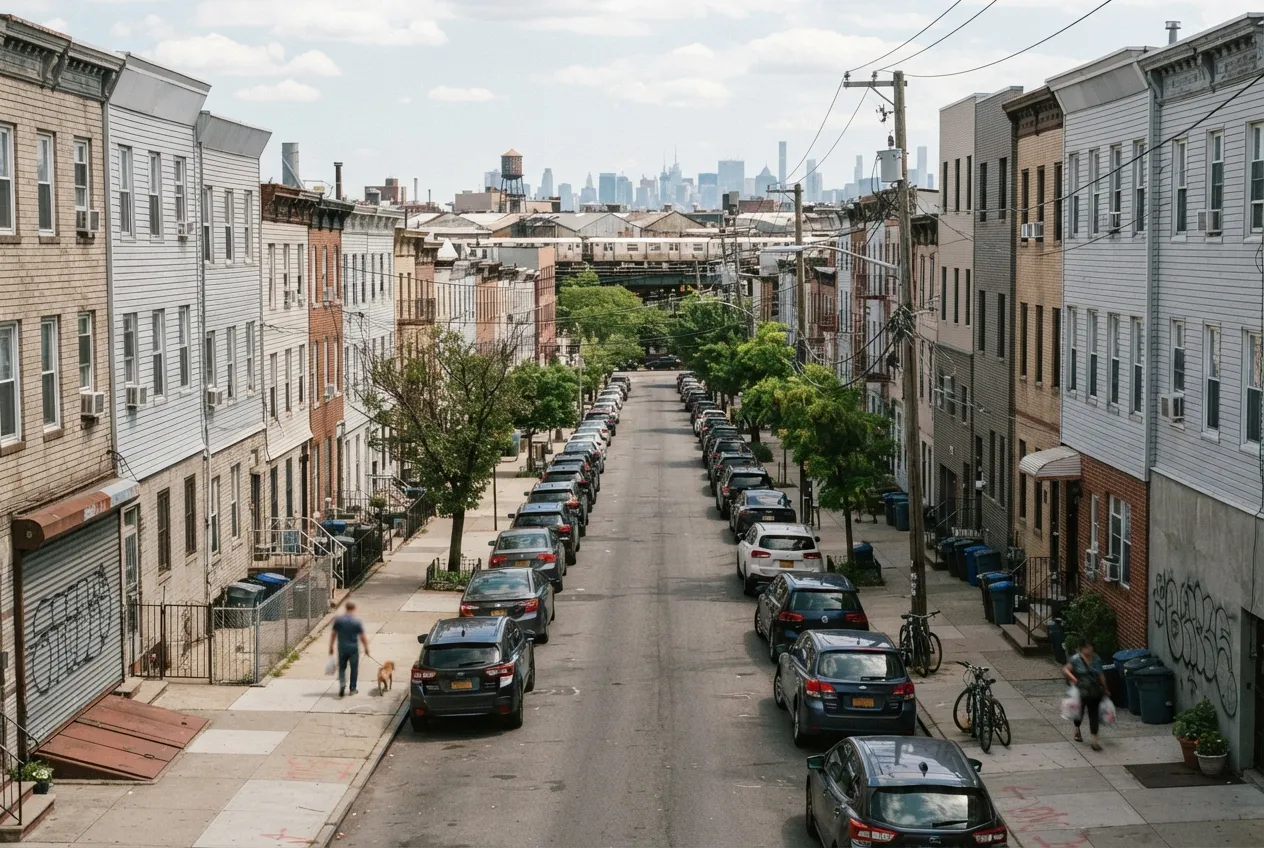
East Williamsburg is about 2 miles southeast of our Greenpoint office, so RoyalFlue technicians can reach homes in 11206 and 11211 quickly when a chimney needs work. Much of the neighborhood's housing is older brick: attached rowhouses, pre-war walk-up apartment buildings, and some frame houses with masonry chimneys that have been patched or rebuilt over the decades. These chimneys take years of freeze-thaw cycles, wind-driven rain, and boiler exhaust. This page covers the repairs we do most often here, how we decide what a chimney needs, and what to expect when you contact us.
Common Chimney Problems in East Williamsburg Homes
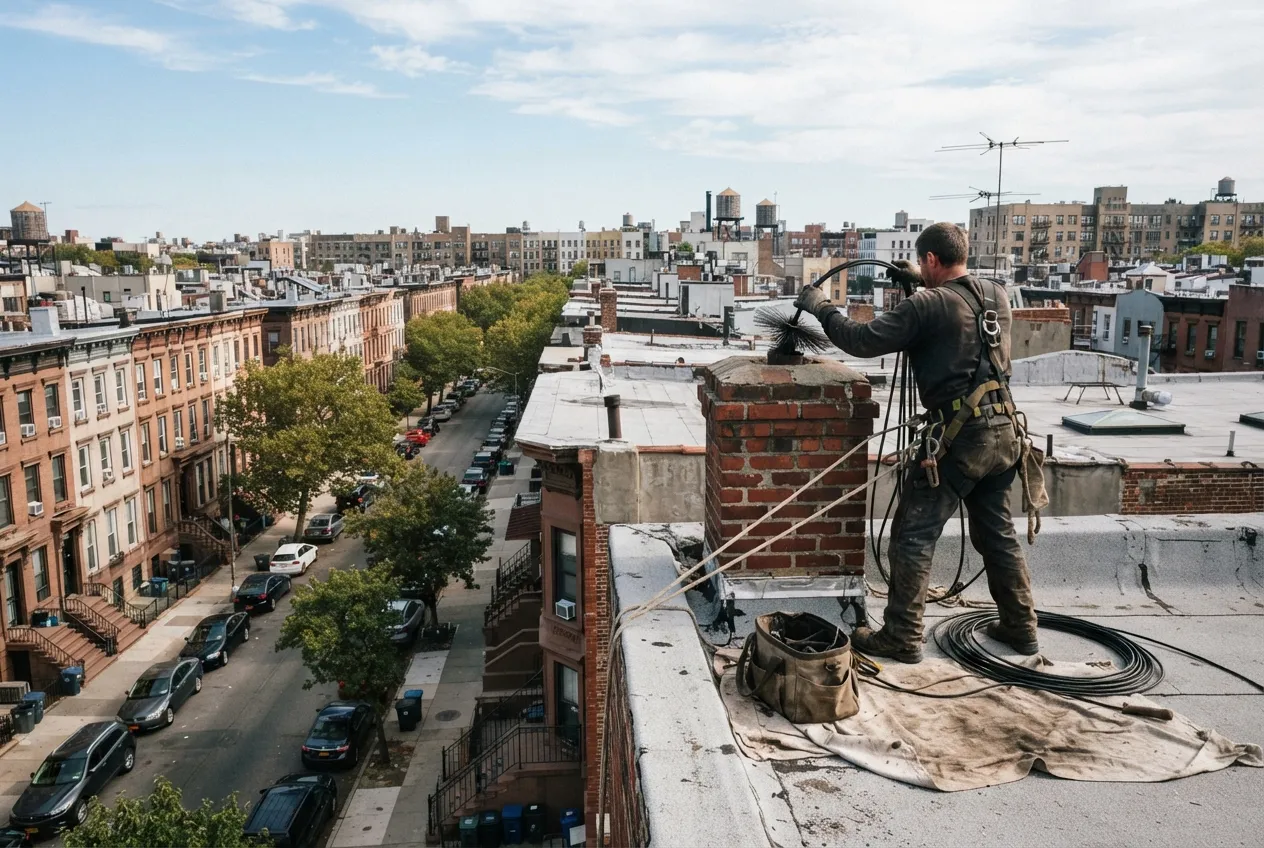
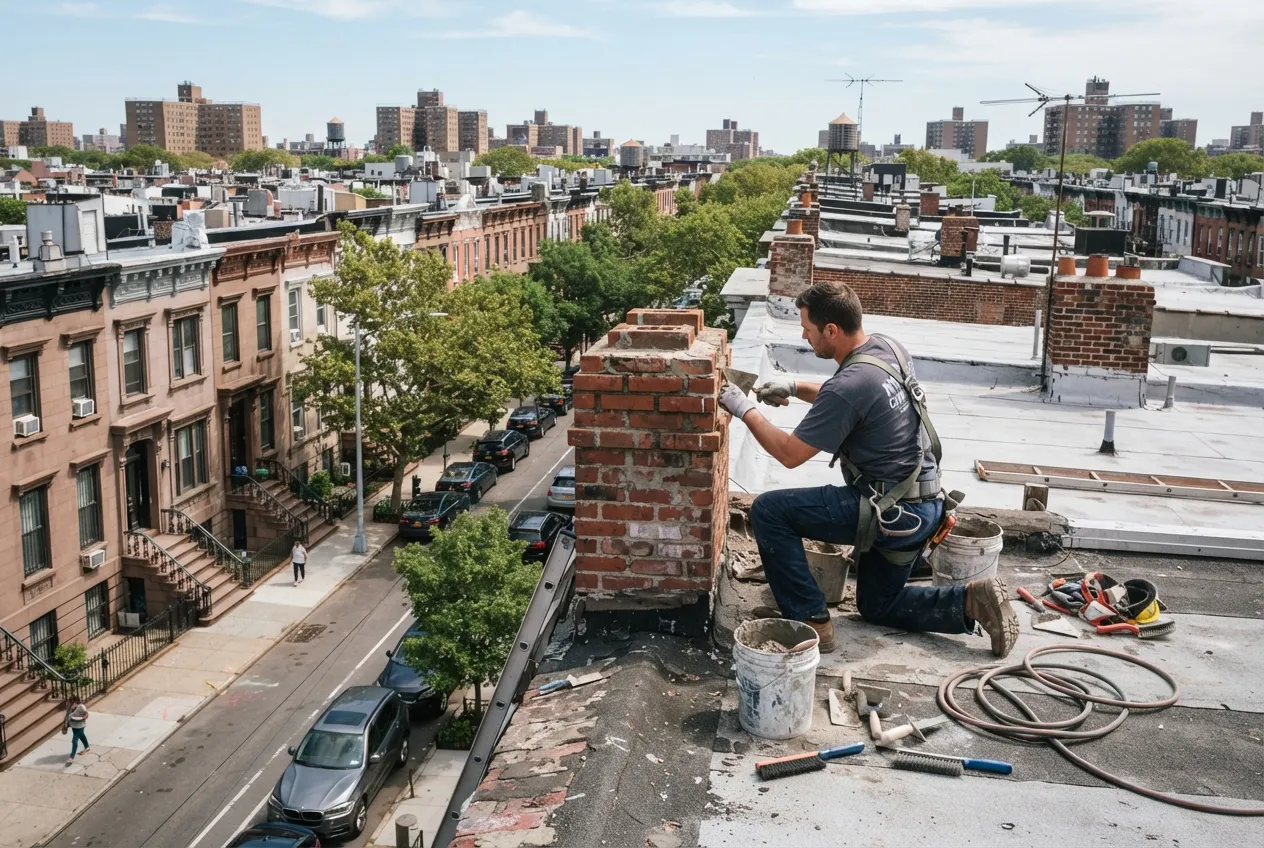
Most of the chimney damage we see here starts at the top. That part of the masonry takes the most weather and is hard to see from the street. Water gets into cracked crowns and open mortar joints, freezes, and pushes the brick apart a little more each winter. On attached rowhouses, chimneys often share walls and rooflines with the houses next door, so a leak can show up as a stain in a room that seems unrelated to the chimney.
- Cracked or crumbling chimney crowns that let water into the flue and brick
- Eroded mortar joints and spalling brick, where the face of the brick flakes off
- Failed flashing where the chimney meets a flat or pitched roof
- Missing or rusted chimney caps that let in rain, birds, and debris
- Damaged or deteriorated flue liners, especially in chimneys that vent a boiler or water heater
Oil-to-Gas Conversions and Flue Liners
Many older Brooklyn buildings once burned oil, and many have since switched to gas or plan to. When a New York City building converts its boiler from oil to gas, the chimney has to be evaluated as part of the work. A new liner is often needed. Gas exhaust produces acidic condensate, and that condensate can corrode a masonry flue from the inside.
Your building may have converted without anyone checking the chimney. Signs of trouble include crumbling material at the base of the flue or in the cleanout, white staining on the outside brick, and damp patches on walls next to the chimney. We inspect the flue, explain what we find, and recommend a liner that matches the appliance it serves.
How We Decide What to Repair
The NFPA 211 standard calls for chimneys, fireplaces and vents to be inspected once a year. Every repair we recommend starts with an inspection, and chimney professionals use three levels. A Level 1 inspection fits when nothing about the system has changed. A Level 2 is called for when something does change, such as a new appliance or a switch of fuel, or when the home is being sold. A Level 3 is for cases where a hidden hazard can only be reached by opening part of the chimney or the building.
After the inspection, our certified technicians tell you which problems are urgent, which can wait, and which are only cosmetic. We share photos of the problem areas so you can see what we see. We don't recommend a rebuild when a repair will do the job.
Time for your annual chimney check?
Chimney Repairs We Handle
Our work in East Williamsburg covers the whole chimney, from the roof down to the cleanout:
- Repointing: removing failing mortar and replacing it with mortar suited to older brick
- Crown repair or replacement, shaped to shed water away from the flue
- Partial and full rebuilds above the roofline when brick has shifted or loosened
- Flashing repair and replacement where the chimney meets the roof
- Chimney cap installation and replacement
- Flue liner installation for gas, oil, and wood-burning appliances
- Damper repair and diagnosis of water damage inside the home
Timing Repairs Around Brooklyn's Heat Season
New York City's heat season runs from October 1 through May 31. During that time, building owners must keep apartments heated to the city's minimum temperatures, so a chimney that serves the boiler can't be shut down for weeks in January. For owners of multifamily buildings, late spring and summer are the easiest times for liner work and larger masonry repairs.
Some problems can't wait for good weather. Contact us right away if you see a leak, notice brick falling from the chimney, or smell exhaust indoors. If you smell exhaust or your carbon monoxide alarm sounds, leave the home and call 911 first. We also serve nearby Williamsburg, Greenpoint, Sunnyside, Long Island City, and Hunters Point.
More services in East Williamsburg
- Chimney Sweep in East WilliamsburgLocal service & repairs
- Chimney Inspection in East WilliamsburgLocal service & repairs
- Air Duct Cleaning in East WilliamsburgLocal service & repairs
- Chimney Liner Installation in East WilliamsburgLocal service & repairs