The short answer
A chimney sweep in East Williamsburg removes soot, creosote and blockages from fireplace and boiler flues in the neighborhood's rowhouses and pre-war buildings. The NFPA 211 standard calls for a yearly inspection. Booking before New York City's heat season starts on October 1 gives you time to fix problems before you need the heat.
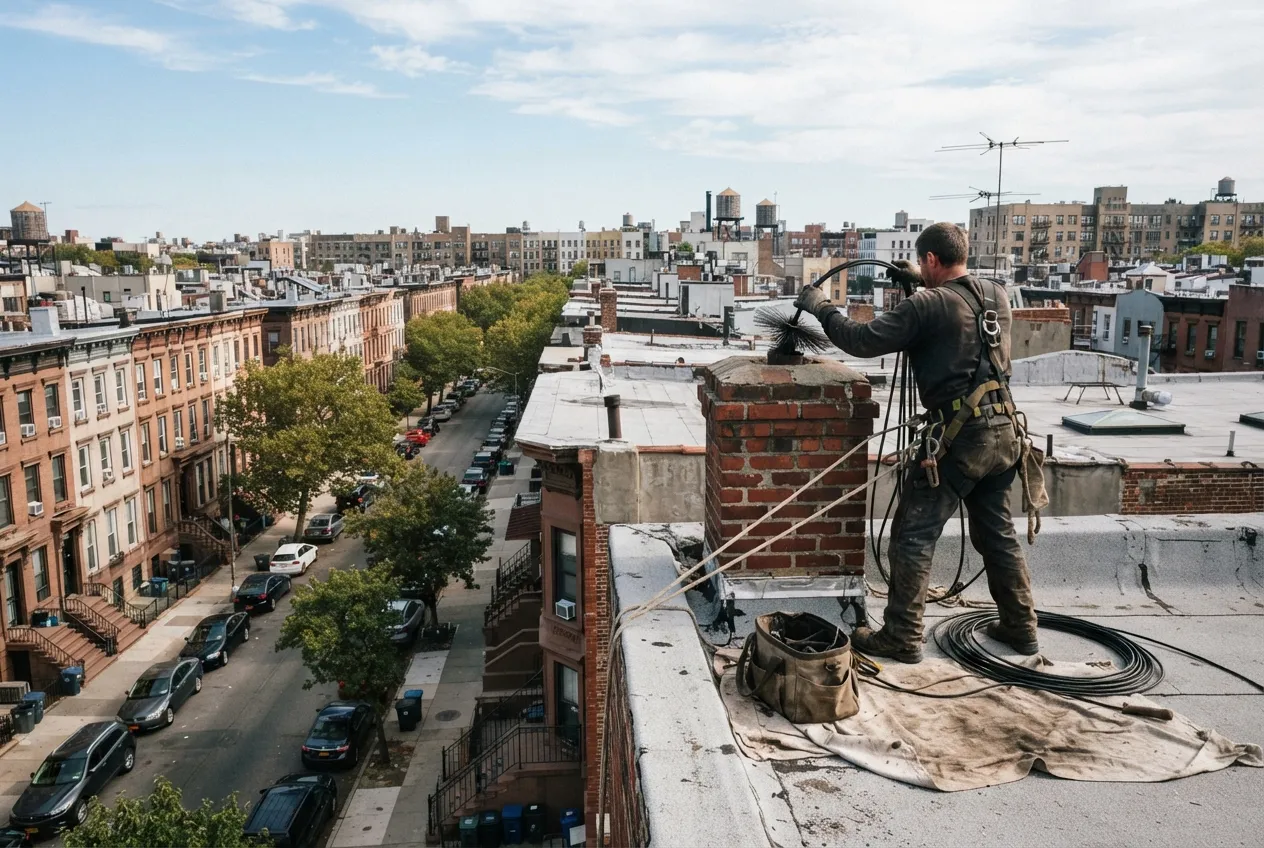
RoyalFlue Chimney Services cleans chimneys for homes and small buildings in East Williamsburg, in ZIP codes 11206 and 11211. Our office is in Greenpoint, about 2 miles away, so the trip is short. A chimney sweep removes creosote, soot, debris and blockages from the flue so smoke and exhaust leave the house the way they should. If you burn wood in a fireplace, run a gas boiler that vents through an old masonry chimney, or just moved into a place with a chimney you know nothing about, a cleaning is a sensible place to start.
What a Chimney Sweep Covers in East Williamsburg Homes
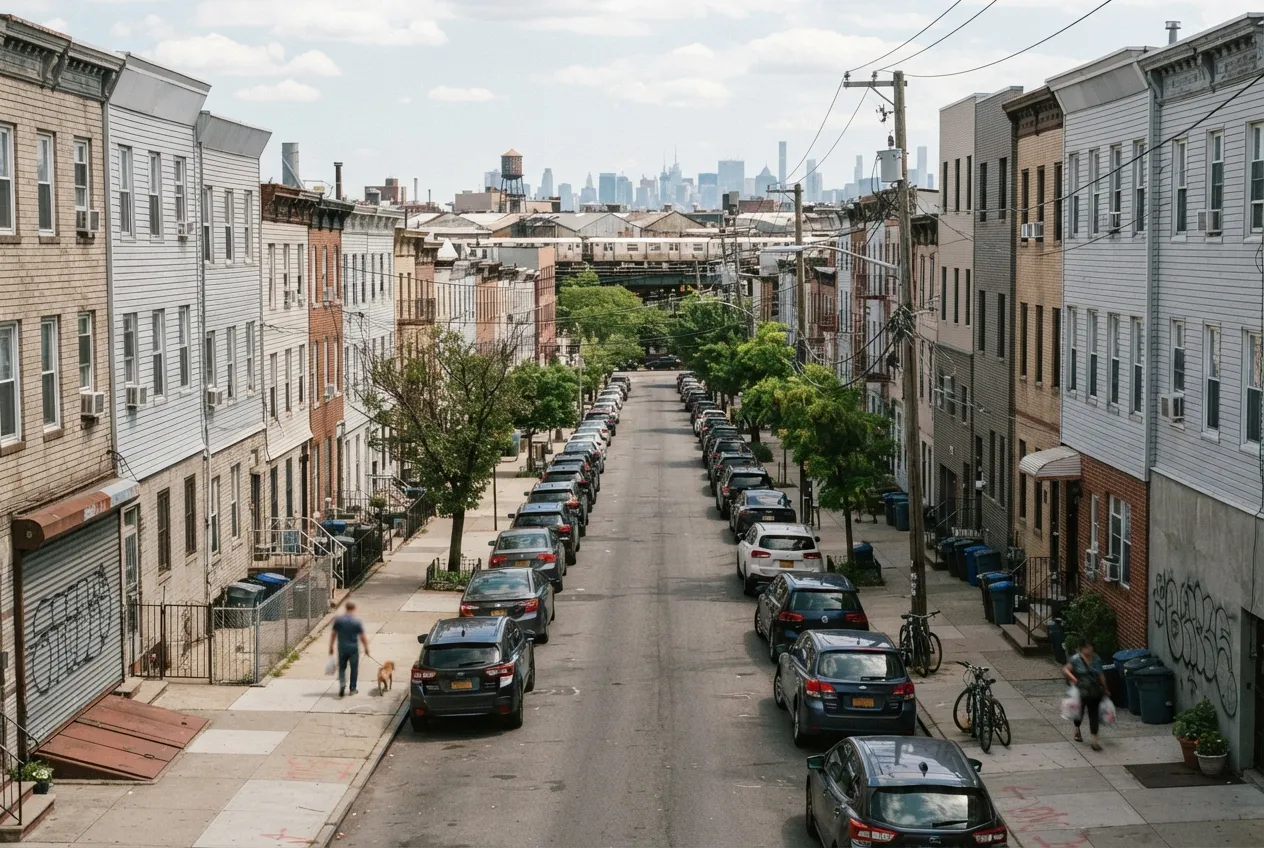
Most housing in East Williamsburg is older. You'll find brick and frame rowhouses, two- and three-family homes, pre-war apartment buildings and some converted industrial buildings. Many of these chimneys were built for coal or oil and now vent a gas boiler, a water heater, or both. Some fireplaces were sealed off decades ago and later reopened by a new owner. Each setup needs a slightly different approach, so we start by checking what the chimney actually serves before we clean it.
A standard sweep includes:
- Brushing the flue from top to bottom to remove soot and creosote
- Clearing nests, leaves, fallen brick and other blockages
- Cleaning the smoke chamber, smoke shelf and firebox on wood-burning fireplaces
- Checking the damper, cap and crown for damage or gaps
- Vacuuming loose debris, with the work area covered to keep dust out of your home
Chimneys That Vent Boilers and Water Heaters
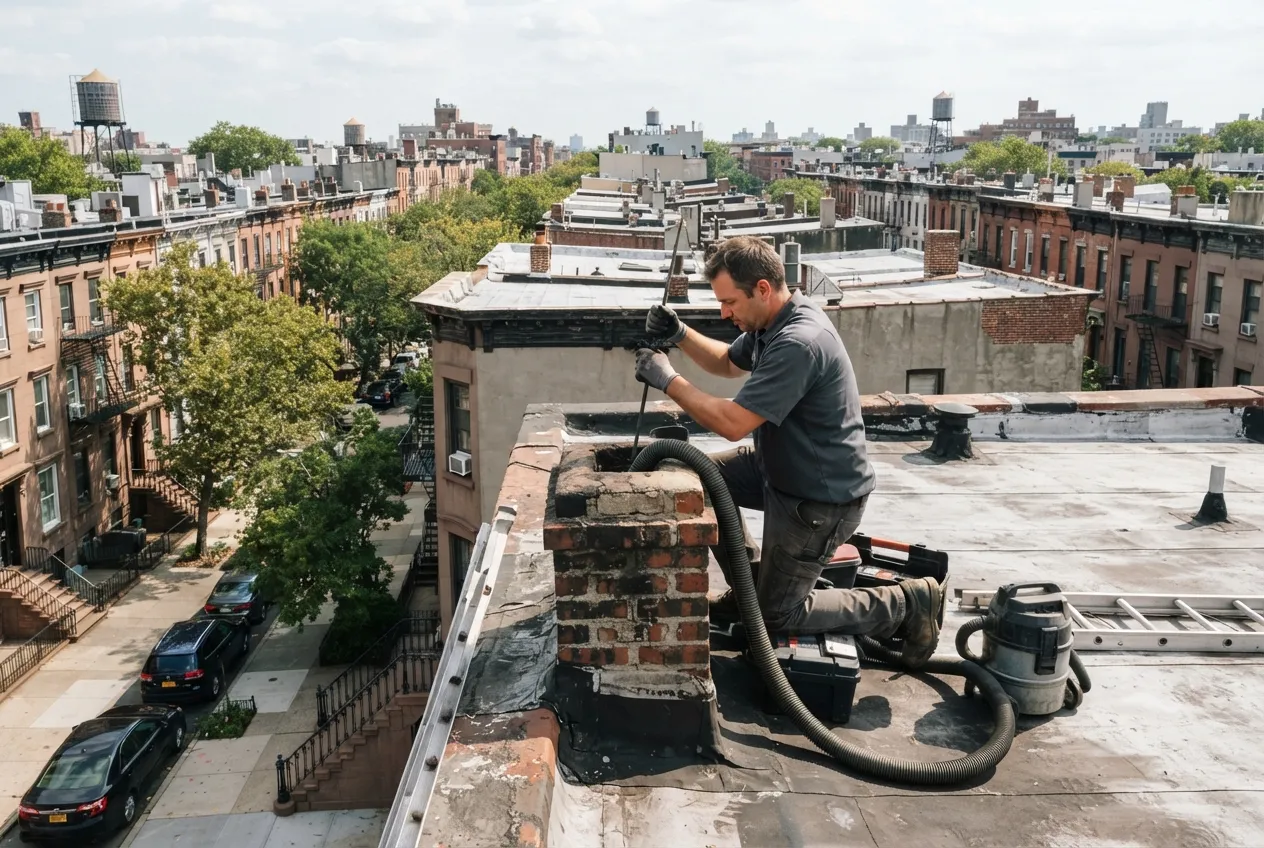
In many East Williamsburg buildings, the chimney's main job is carrying exhaust from the heating system. These flues still collect soot, debris and fallen mortar. A partial blockage can push exhaust, including carbon monoxide, back into the basement or living space. Cleaning and checking an appliance flue matters as much as cleaning a fireplace, even if nobody in the house has lit a fire in years.
Your building may have switched from an oil boiler to gas, or you may be planning to. In New York City, the chimney has to be evaluated as part of that work. Gas exhaust produces acidic condensate that can corrode an older masonry flue, so a new liner is often needed. We can clean the flue and tell you what we find, so you and your heating contractor know where things stand.
When to Schedule a Sweep
The NFPA 211 standard calls for chimneys, fireplaces and vents to be inspected once a year. Pairing that inspection with a sweep keeps buildup from getting ahead of you. If you burn wood often, your flue may need cleaning more than once a season.
Timing matters in New York City. Heat season runs from October 1 through May 31. During that time, building owners must keep apartments heated to the city's minimum temperatures. If you book in late summer or early fall, you can fix any problem before the boiler has to run. That beats finding it during a cold snap, with tenants depending on heat.
Chimney professionals use three inspection levels. Most yearly visits are a Level 1 inspection, which is used when nothing about the system has changed. A Level 2 inspection is the right choice when you add a new appliance, change fuel, or sell the home. A Level 3 inspection is for hidden hazards that can only be reached by opening part of the chimney or building.
Time for your annual chimney check?
Signs Your Chimney Needs Attention
Call for a sweep before your yearly visit if you notice any of these:
- A strong smoky or tar-like smell from the fireplace, especially in humid weather
- Smoke drifting into the room instead of going up the flue
- Black, flaky or shiny glazed deposits inside the firebox or on the damper
- Bits of brick, mortar or tile in the firebox or at the base of a boiler flue
- Birds or other animals heard inside the chimney
- A carbon monoxide alarm going off near the boiler or fireplace
What to Expect on the Day
Our certified technicians lay down drop cloths and set up a vacuum to control dust. Depending on how the chimney is built, they work from the roof, the firebox or the appliance connection. In attached rowhouses, roof access and shared chimney stacks can affect how the job is done. It helps to tell us ahead of time how to reach the roof.
When we finish, we show you what we removed and point out anything that needs attention, such as a cracked crown, a missing cap or a damaged liner. You decide what, if anything, to do next. We also serve nearby Williamsburg, Greenpoint, Sunnyside, Long Island City and Hunters Point.
More services in East Williamsburg
- Chimney Inspection in East WilliamsburgLocal service & repairs
- Chimney Repair in East WilliamsburgLocal service & repairs
- Air Duct Cleaning in East WilliamsburgLocal service & repairs
- Chimney Liner Installation in East WilliamsburgLocal service & repairs