The short answer
If your East Williamsburg chimney has a cracked or missing flue liner, or your boiler is converting from oil to gas, you likely need a new liner. RoyalFlue inspects the flue, sizes a liner to your appliance, and installs it from the roof down with a cap on top.
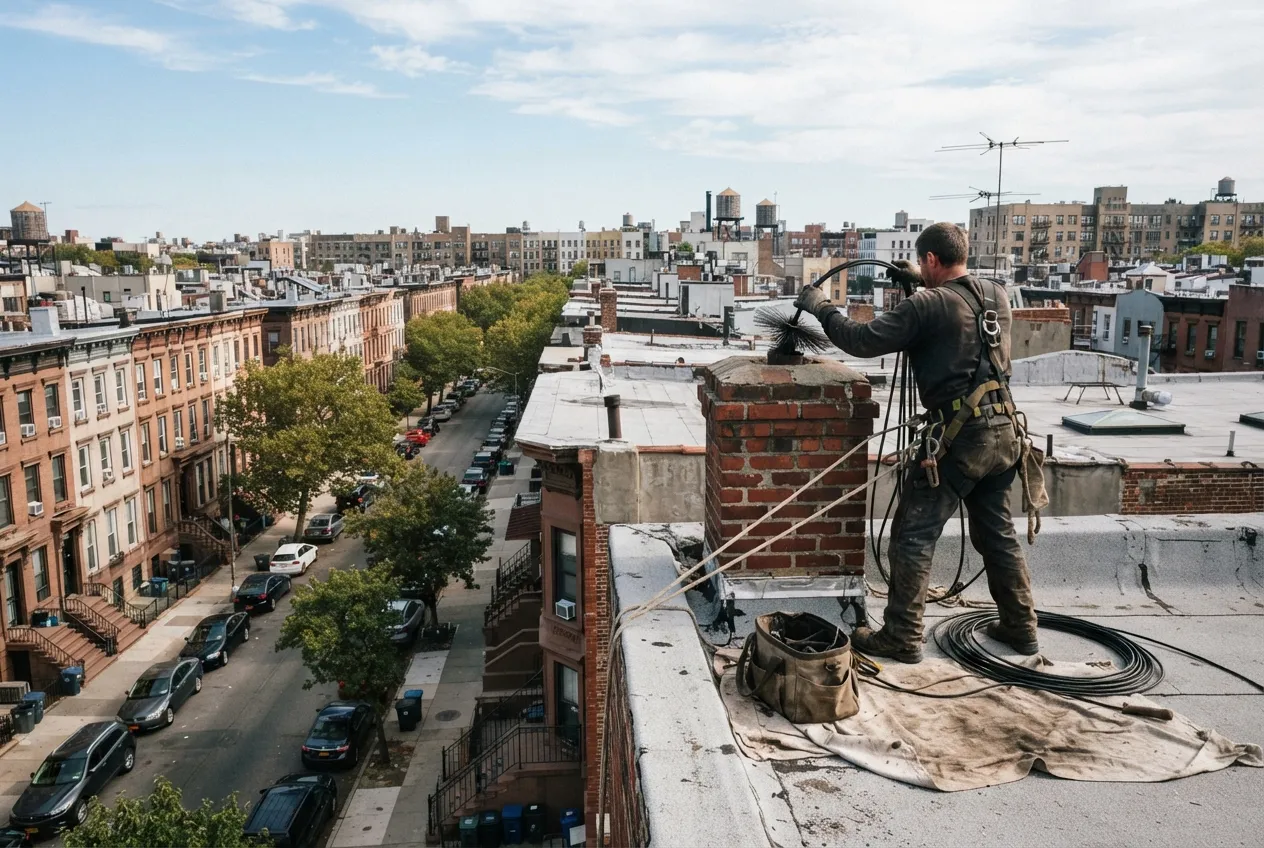
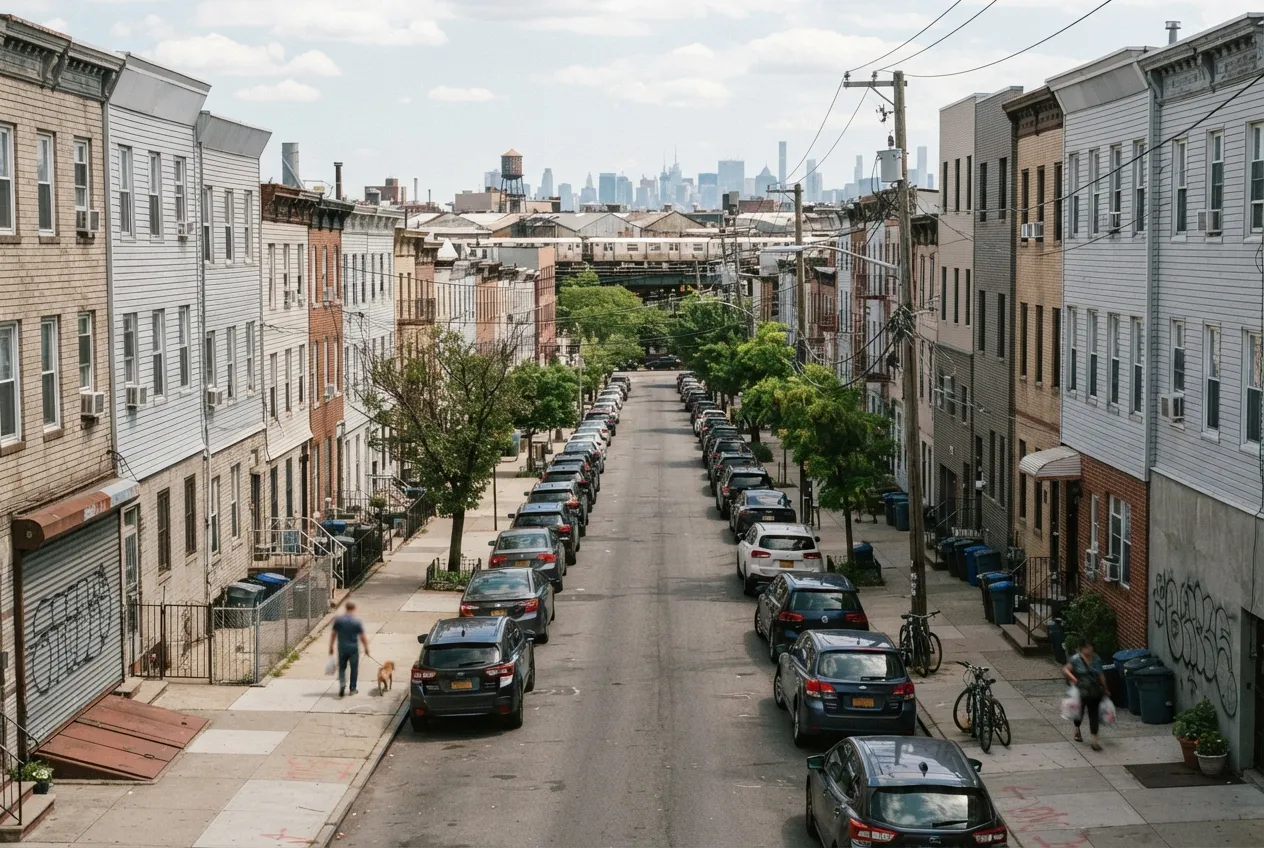
In East Williamsburg, many homes still vent boilers, water heaters and fireplaces through masonry chimneys built long before today's appliances existed. A chimney liner is the tube inside that chimney that carries exhaust safely up and out of the house. RoyalFlue installs chimney liners in rowhouses, brownstones, pre-war apartment buildings and detached homes across ZIP codes 11206 and 11211. We work from our office in Greenpoint, about 2 miles away. Our certified technicians inspect the flue first, size the liner to the appliance it serves, and explain what they found before any work begins.
Why East Williamsburg Chimneys Often Need New Liners
Much of the housing here was built when coal and oil were the main heating fuels. Over decades, clay tile liners crack, mortar joints wash out, and some older chimneys were never lined at all. Heat and exhaust can then reach the brick directly. In a rowhouse or attached building, that brick may sit right against a neighbor's wall.
Fuel changes are another common reason. When a New York City building converts its boiler from oil to gas, the chimney has to be evaluated as part of the work. A new liner is often needed, because gas exhaust produces acidic condensate that can corrode a masonry flue from the inside.
A sound liner also protects the people living above and beside you. Carbon monoxide and hot gases that escape through a damaged flue can seep into neighboring rooms or units, which matters in the closely built rowhouses and apartment buildings common in this part of Brooklyn.
Signs Your Chimney May Need a New Liner
A liner problem is not always visible from inside the room. These are the situations where we most often recommend relining:
- Cracked, shifted or missing flue tiles found during an inspection
- A boiler conversion from oil to gas, or a new high-efficiency appliance
- Flaking masonry, white staining or damp spots on walls near the chimney
- Pieces of tile or mortar falling into the fireplace or boiler cleanout
- A flue that is too large or too small for the appliance it serves, causing poor draft
- A home sale, which often calls for a closer Level 2 inspection
How We Install a Liner in Your Home
Every job starts with an inspection. The NFPA 211 standard calls for chimneys, fireplaces and vents to be inspected once a year, and a liner project usually involves a Level 2 inspection because the system is changing. That typically includes a camera run through the full length of the flue. If a hidden problem has to be reached by opening part of the chimney or a wall, that is a Level 3 inspection, and we will talk with you before doing it.
From there, the work generally follows these steps:
- Clean the flue so the liner goes into a clear passage
- Measure the flue and match the liner size to the appliance's venting needs
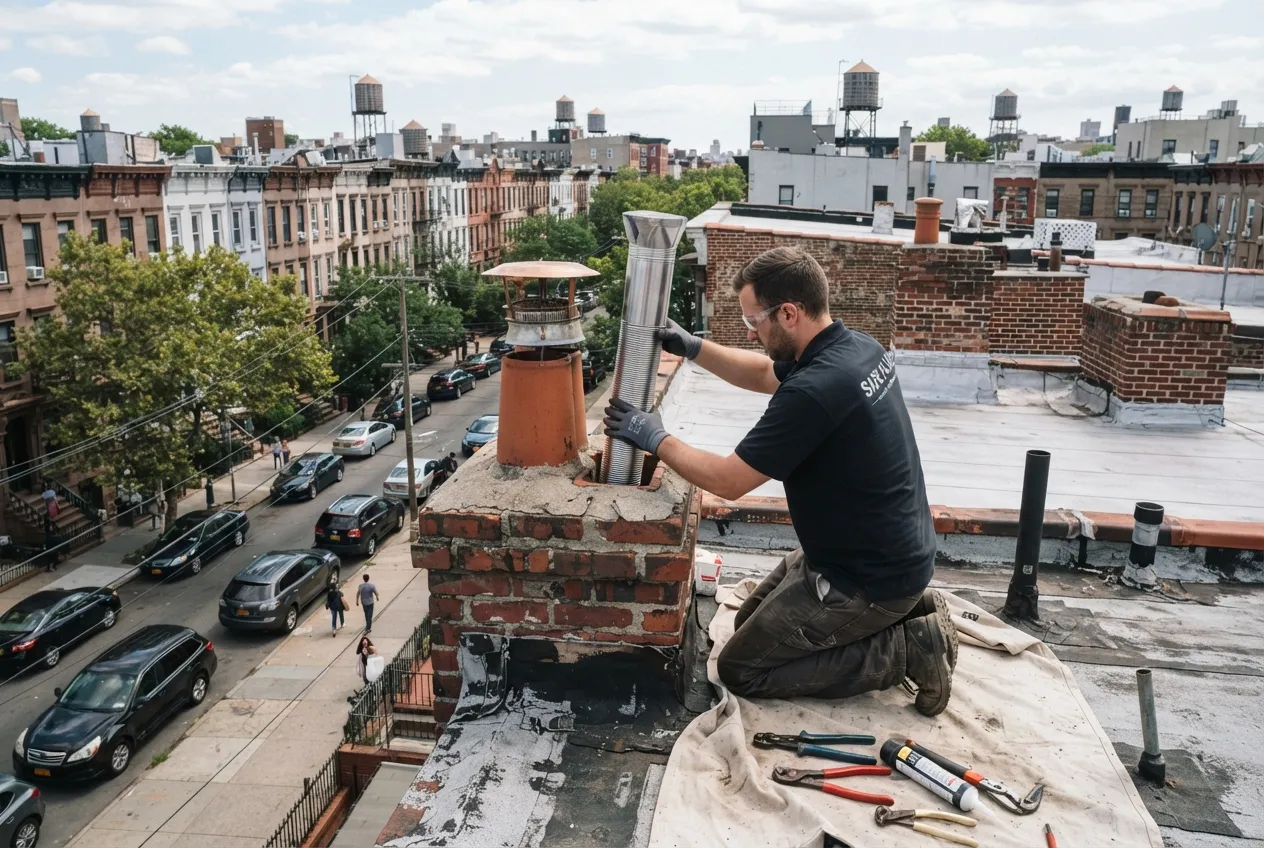
- Lower the liner from the roof and connect it to the appliance at the base
- Add insulation where the liner type and chimney call for it
- Fit a top plate and cap to keep out rain, debris and animals
- Test the draft and show you photos of the finished work
Time for your annual chimney check?
Choosing the Right Liner for Your Chimney
Most liners we install are stainless steel, either flexible or rigid, because steel handles both wood smoke and the acidic condensate from gas appliances. Flexible liners work well in older chimneys with slight bends or offsets, which are common in attached buildings. Rigid liners suit straight, unobstructed runs.
Fireplaces, boilers and water heaters each have different venting needs. A gas boiler and a water heater sharing one chimney may need separate liners or a properly sized common vent. We go over the options with you and explain why one fits your chimney better than another, so the final decision is yours.
Scheduling Around Heat Season
New York City's heat season runs from October 1 through May 31, when building owners must keep apartments heated to the city's minimum temperatures. For landlords and owners of multi-unit buildings, that makes late spring and summer the easiest time to reline a boiler flue. If a problem turns up in mid-winter, we work to keep downtime short and coordinate with your heating contractor.
Our crews cover East Williamsburg along with Williamsburg, Greenpoint, Sunnyside, Long Island City and Hunters Point, so we can usually schedule an inspection close to your preferred date.
More services in East Williamsburg
- Chimney Sweep in East WilliamsburgLocal service & repairs
- Chimney Inspection in East WilliamsburgLocal service & repairs
- Chimney Repair in East WilliamsburgLocal service & repairs
- Air Duct Cleaning in East WilliamsburgLocal service & repairs