The short answer
A chimney sweep removes soot, creosote and debris from your flue so smoke and exhaust can leave the house safely. For most Williamsburg homes, the right time is once a year, ideally before the city's heat season starts on October 1. That timing also fits the yearly inspection called for by the NFPA 211 standard.
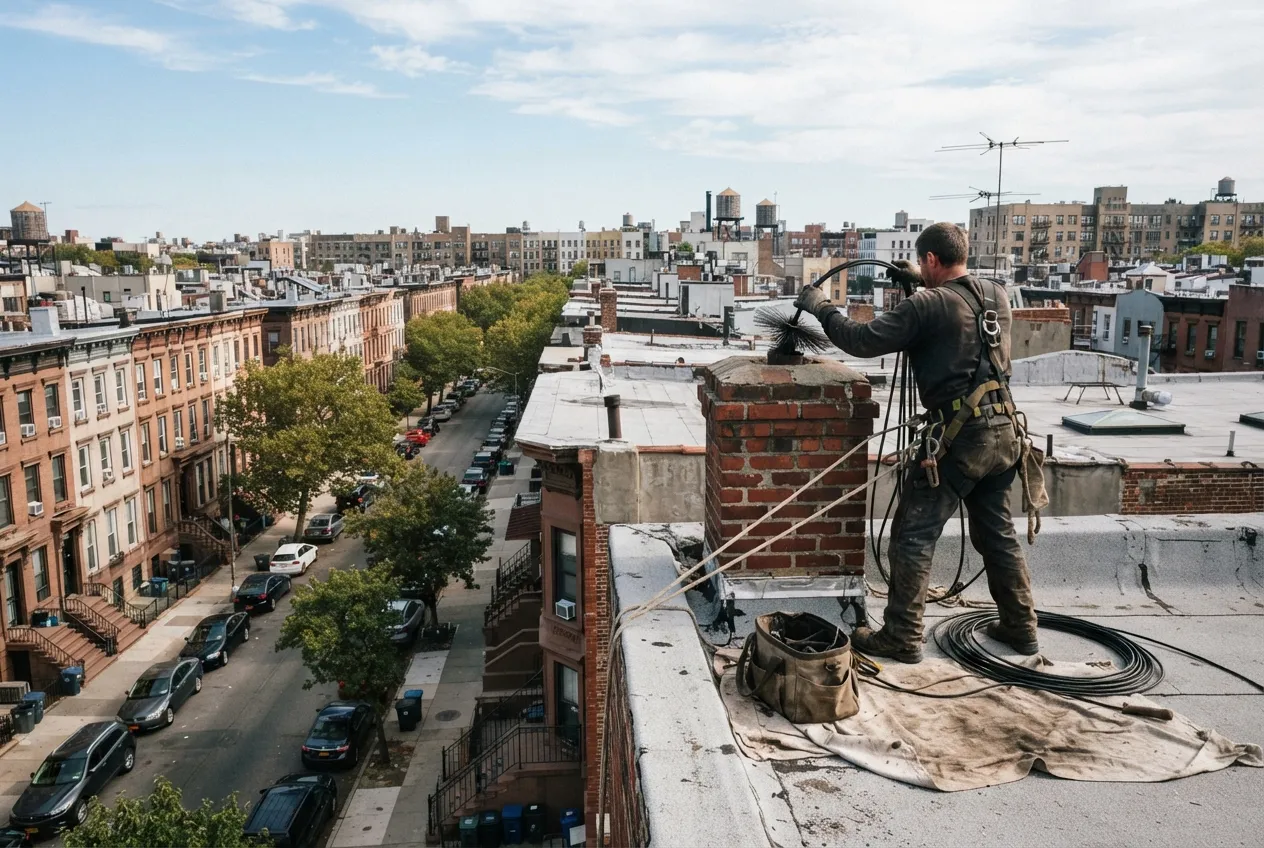
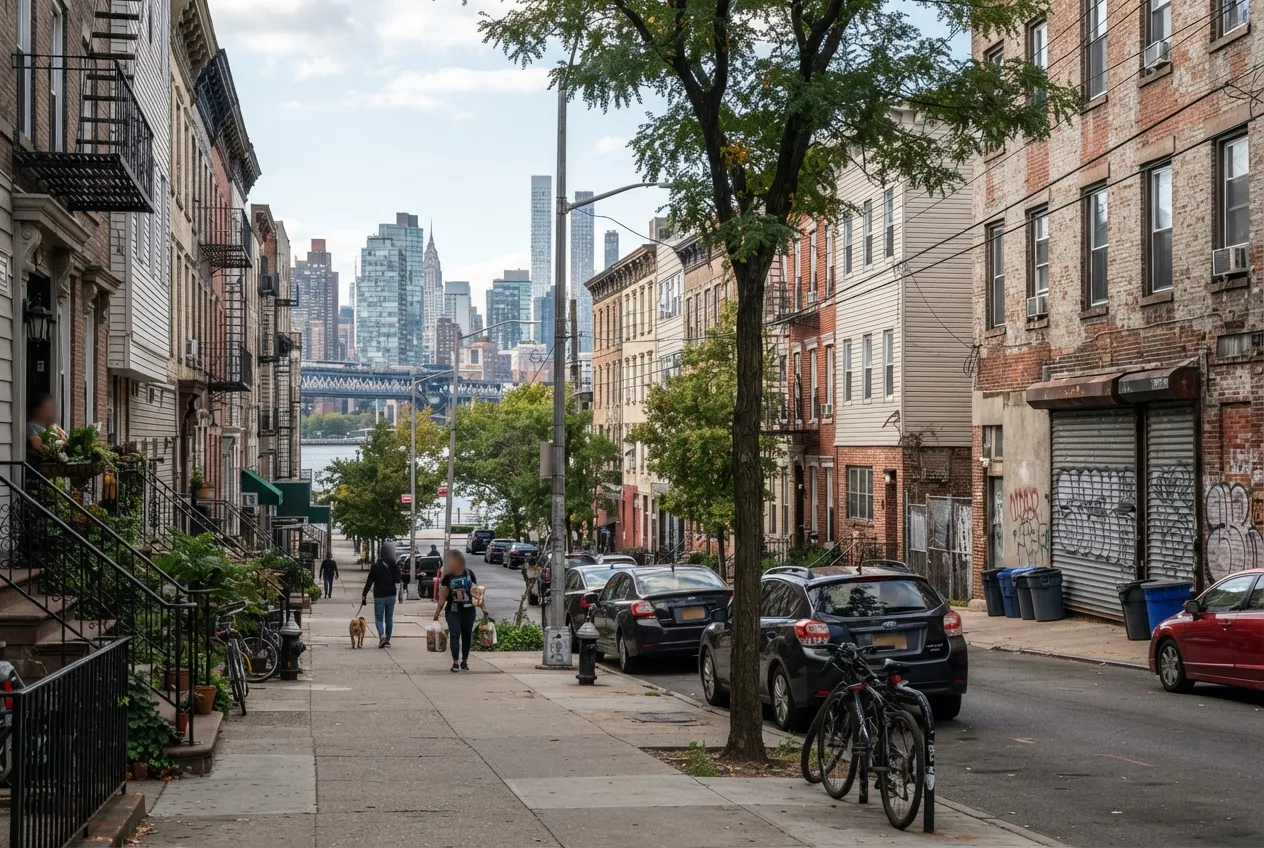
Williamsburg has a mix of older rowhouses, brownstones, pre-war apartment buildings and newer conversions, and many of them still rely on masonry chimneys for fireplaces, boilers or water heaters. RoyalFlue Chimney Services sweeps chimneys throughout the neighborhood from our office in Greenpoint, about a mile to the north. Our certified technicians clean the flue, note what they see along the way, and explain the condition of your chimney in plain terms. That way you can decide what, if anything, needs to happen next.
What a Chimney Sweep Covers
A sweep is more than running a brush up the flue. The goal is to clear anything that narrows the passage or could catch fire, and to get a good look at the parts of the chimney you can't see from the living room.
On a typical visit in Williamsburg, we work on the parts below:
- The firebox, smoke chamber and damper, where soot and creosote tend to build up first
- The full length of the flue, swept with brushes sized to the flue's shape and material
- Debris such as fallen mortar, leaves or nesting material that can block the draft
- A visual check of the liner, crown and cap from the accessible points
- A plain-language report of what we found, including anything that should be looked at more closely
How Williamsburg's Older Homes Affect Chimney Cleaning
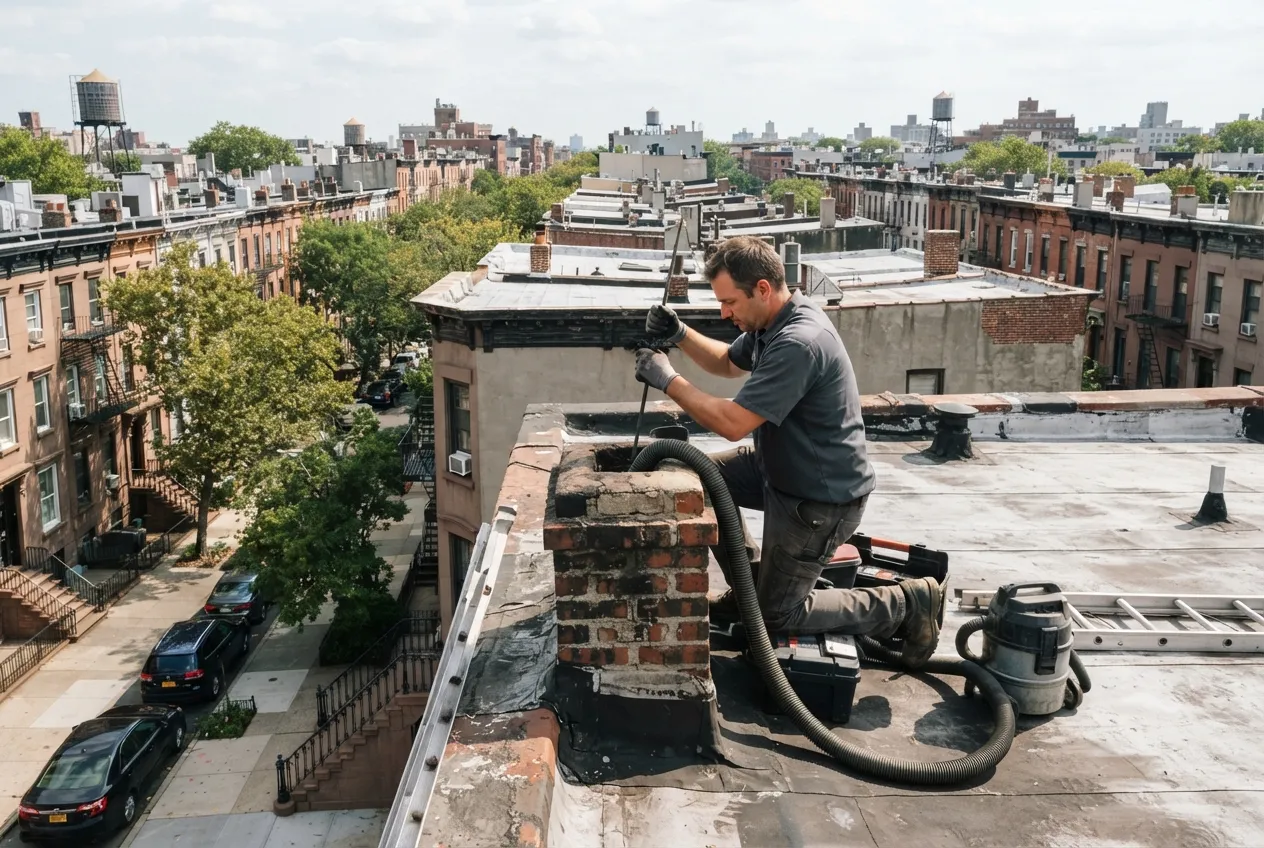
Many rowhouses and brownstones in the neighborhood were built with several flues running through a shared chimney stack. Over the decades, some fireplaces were sealed off, others were reopened, and some flues were switched to serve a boiler or water heater. Before we sweep, we figure out which flue serves which appliance or fireplace, so the right one gets cleaned and nothing gets mixed up.
In pre-war apartment buildings, the main chimney often serves the building's heating plant rather than individual units. Some apartments also have their own decorative or working fireplaces. If you rent or own a unit, it helps to check with your building management about which chimney work falls to the building and which falls to you.
Older masonry also tends to show its age inside the flue. Cracked clay tiles, gaps in the mortar and loose bricks can all trap creosote and let heat or exhaust reach places it shouldn't. A sweep is often when these problems first come to light.
Timing Your Sweep Around Heat Season
New York City's heat season runs from October 1 through May 31. During those months, building owners must keep apartments heated to the city's minimum temperatures. Boilers and furnaces run hardest then, and most people who burn wood do it in the same stretch. Sweeping in late summer or early fall means problems can be fixed before you need the heat.
The NFPA 211 standard calls for chimneys, fireplaces and vents to be inspected once a year. A Level 1 inspection fits when nothing about your system has changed. A Level 2 inspection is called for when something changes, such as a new appliance or a switch of fuel, or when the home is sold. A Level 3 inspection is needed only when a hidden hazard has to be reached by opening part of the chimney or the building. We pair the sweep with the inspection level your situation calls for.
Time for your annual chimney check?
Sweeping and Checking After an Oil-to-Gas Conversion
A number of older buildings in Brooklyn have moved their boilers from oil to gas. When a New York City building makes that change, the chimney has to be evaluated as part of the work. Gas exhaust produces acidic condensate that can corrode a masonry flue, so a new liner is often needed.
If your building converted some time ago and the chimney hasn't been looked at since, a sweep and inspection can show whether the flue is holding up. Signs we look for include crumbling mortar, staining and flaking tile inside the flue.
What to Expect on the Day
We aim to keep the visit clean and predictable, especially in finished living spaces and smaller apartments.
- We put down drop cloths and set up around the fireplace or appliance connection before any brushing starts
- We use vacuums to control soot while we work
- Fireplaces should be out and cool, ideally unused for at least a day beforehand
- For boiler or water heater flues, the appliance may need to be shut off during the work
- Before leaving, we walk you through what we saw and any recommended next steps
More services in Williamsburg
- Chimney Inspection in WilliamsburgLocal service & repairs
- Chimney Repair in WilliamsburgLocal service & repairs
- Air Duct Cleaning in WilliamsburgLocal service & repairs
- Chimney Liner Installation in WilliamsburgLocal service & repairs