The short answer
A chimney liner gives your flue a sealed, correctly sized channel that protects the masonry and carries exhaust safely out of the building. In the East Village, a new liner is most often needed when old clay tile liners fail or when a building converts from oil to gas, because gas exhaust produces acidic condensate that can corrode a masonry flue.
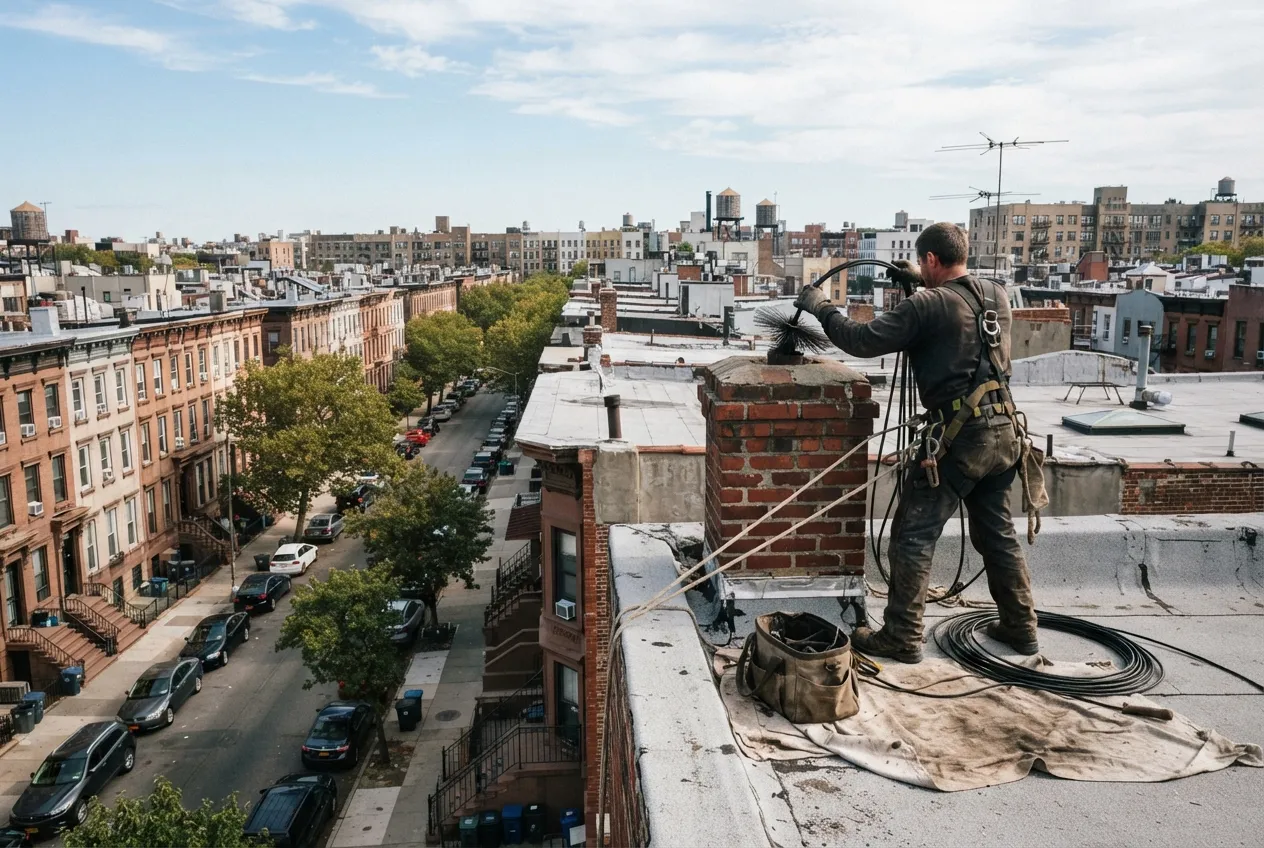
East Village homes and buildings put their chimneys to hard use. Many flues here were built of brick and clay tile long before today's boilers, water heaters and gas inserts, and they were never designed for the exhaust those appliances produce. A chimney liner is a continuous, properly sized channel inside the chimney. It carries combustion gases up and out while protecting the masonry around it. RoyalFlue's certified technicians install liners for rowhouses, brownstones and pre-war apartment buildings in ZIP codes 10003 and 10009. We work from our office in Greenpoint, Brooklyn, about 2 miles away.
Why Older East Village Flues Often Need a Liner
Most chimneys in the neighborhood's brownstones, rowhouses and pre-war walk-ups were built for an earlier era of heating. Clay tile liners crack with age and settling, mortar joints erode, and some flues were never lined at all. When hot gases and moisture reach unprotected brick, the masonry deteriorates faster, and heat or carbon monoxide can escape into the building.
A change of fuel makes this more urgent. When a New York City building converts its boiler from oil to gas, the chimney has to be evaluated as part of the work, and a new liner is often needed. Gas exhaust produces acidic condensate that can corrode a masonry flue from the inside. Common signs that a liner needs attention include:
- Crumbling tile or mortar at the base of the flue or in the cleanout
- White staining or damp patches on chimney walls inside the building
- A boiler, water heater or fireplace insert being replaced or switched to a new fuel
- An inspection that finds cracked, missing or undersized liner sections
- Draft problems, such as exhaust smells near the appliance
How We Install a Chimney Liner
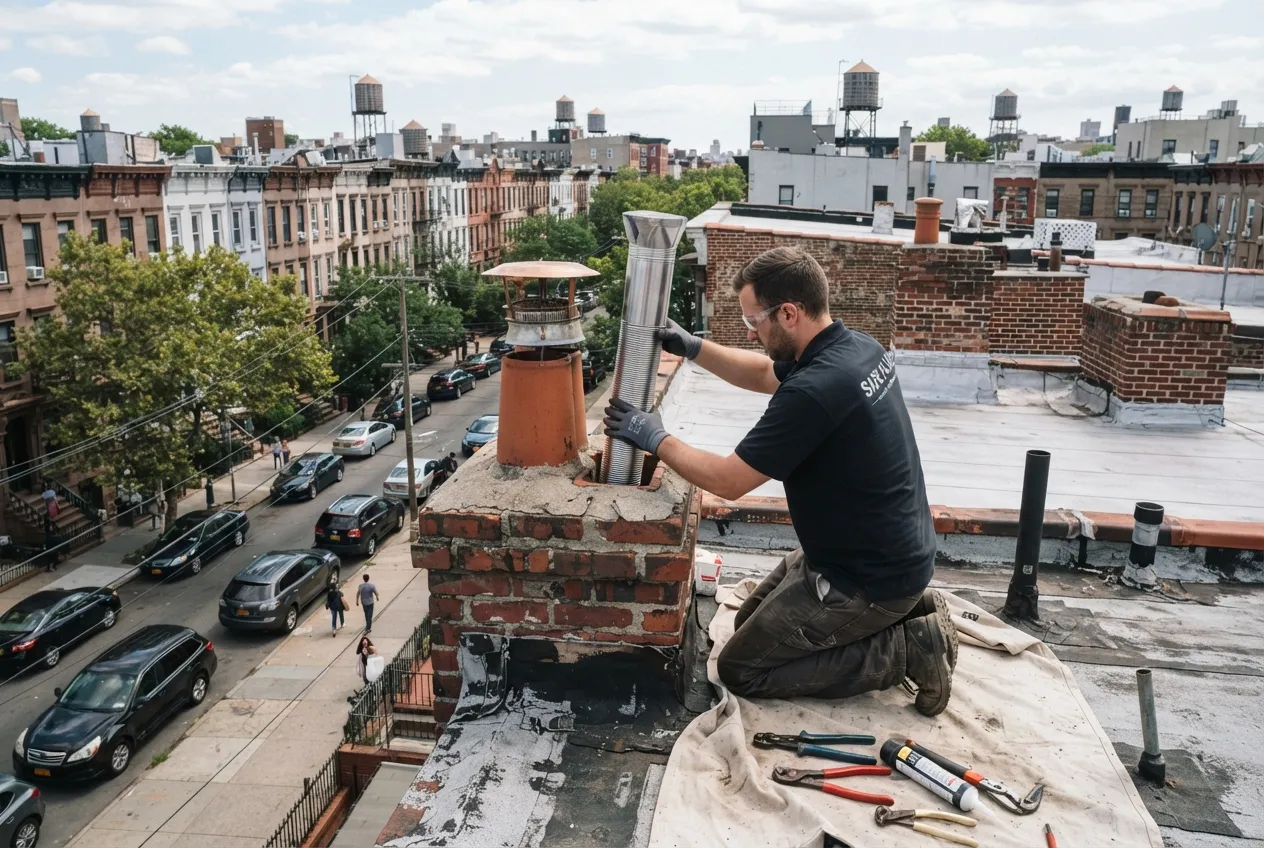
Every job starts with a look inside the flue, usually with a camera. This lets us measure the flue's size and condition and confirm which appliance or appliances it serves. From there, the work follows a clear sequence:
In attached rowhouses and multi-unit buildings, access often means arranging roof entry, boiler room access and notice to tenants. We plan these details with owners and building staff before the installation date so the work goes smoothly.
- Clean the flue so the liner goes into a clear, sound channel
- Size the liner to the connected appliance rather than to the old chimney opening
- Run the liner from the appliance connection to the top of the chimney, adding insulation where the system calls for it
- Connect it securely at the bottom, then fit a top plate and cap to keep out rain, debris and animals
- Check the draft and walk you through the finished work
Choosing the Right Liner for Your Appliance
No single liner fits every chimney. Stainless steel liners are a common choice for gas and oil boilers and water heaters because, when matched to the fuel, they stand up well to acidic condensate. Wood-burning fireplaces and stoves need a liner rated for higher temperatures. Insulation is often added to keep the flue warm, improve draft and reduce creosote buildup.
Size matters as much as material. A flue that is too large for a modern, high-efficiency appliance lets exhaust cool and condense before it leaves the chimney. We recommend a liner based on the appliance's requirements and what we find inside the flue, and we explain the options before any work begins.
Time for your annual chimney check?
Plan Around Heat Season
New York City's heat season runs from October 1 through May 31. During that time, building owners must keep apartments heated to the city's minimum temperatures, so a boiler serving several units can't sit idle for long once the weather turns.
For that reason, late spring and summer are the easiest times to reline a chimney in a multi-family building. If a problem shows up in winter, we coordinate the schedule with your heating contractor so the system can return to service as soon as the liner is in place.
Inspections Before and After Relining
The NFPA 211 standard calls for chimneys, fireplaces and vents to be inspected once a year. A Level 1 inspection is used when nothing has changed. A change to the heating system, such as a new appliance or a switch of fuel, calls for a more thorough Level 2 inspection, as does the sale of a home. If a hidden hazard can only be reached by opening part of the chimney or building, a Level 3 inspection may be needed.
Along with the East Village, our technicians install chimney liners in Stuyvesant Town, Peter Cooper Village, Gramercy, Murray Hill and Kips Bay.
More services in East Village
- Chimney Sweep in East VillageLocal service & repairs
- Chimney Inspection in East VillageLocal service & repairs
- Chimney Repair in East VillageLocal service & repairs
- Air Duct Cleaning in East VillageLocal service & repairs