The short answer
A chimney liner is a protective channel inside the flue that carries exhaust safely out of the house and shields the masonry from heat and corrosive condensate. Sunnyside homes most often need one when an old clay or unlined flue is damaged, or when a boiler or furnace is replaced or converted from oil to gas.
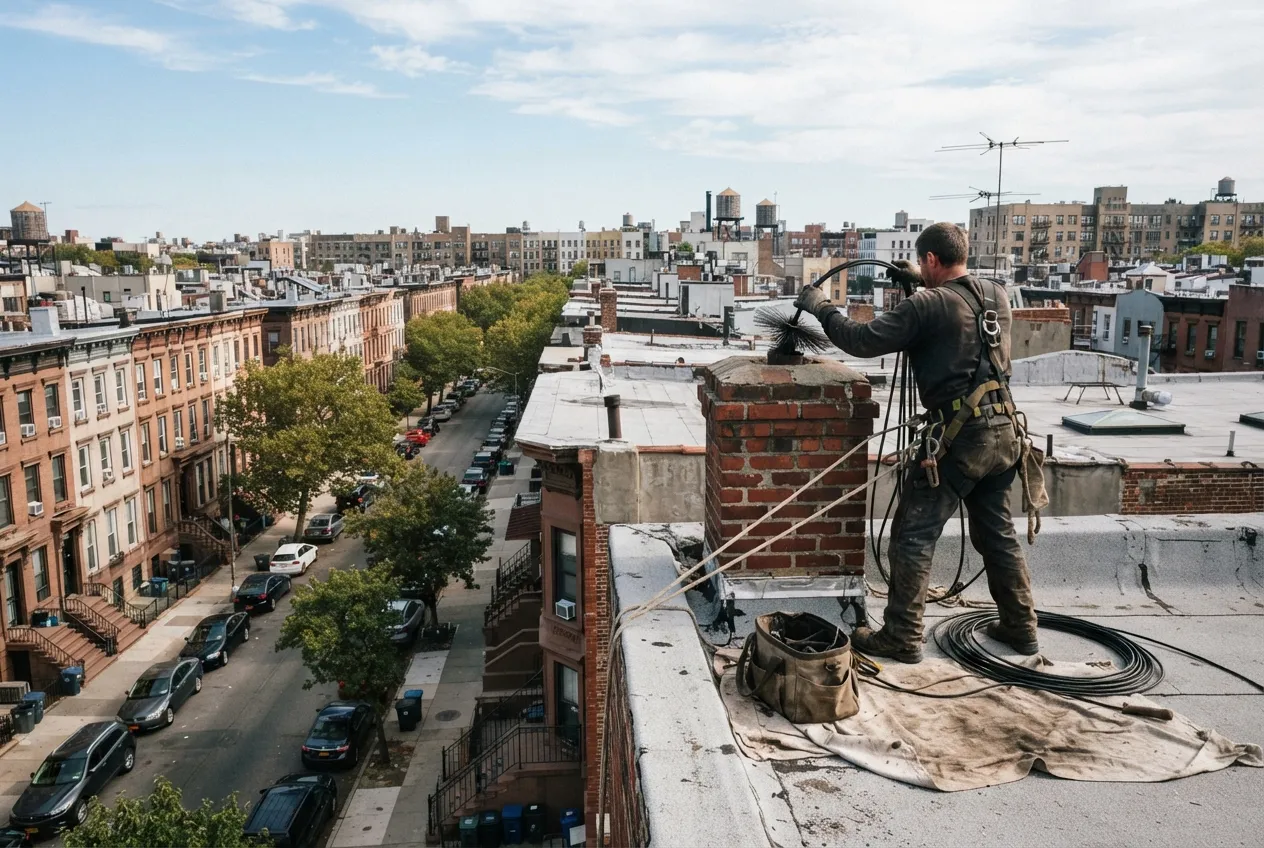
Many chimneys in Sunnyside were built long before modern heating equipment existed. The masonry flues inside rowhouses, two-family homes and pre-war apartment buildings were often lined with clay tile, or not lined at all. Decades of heat, moisture and exhaust can crack those tiles, wear down mortar joints and leave gaps that let gases and heat reach the surrounding brick and framing. RoyalFlue Chimney Services installs new chimney liners for homes and buildings in Sunnyside (ZIP 11104), a short trip east of our office in Greenpoint, Brooklyn. Our certified technicians inspect the flue, explain what they find and recommend a liner that fits your appliance and your chimney.
Why Older Sunnyside Chimneys Often Need a New Liner
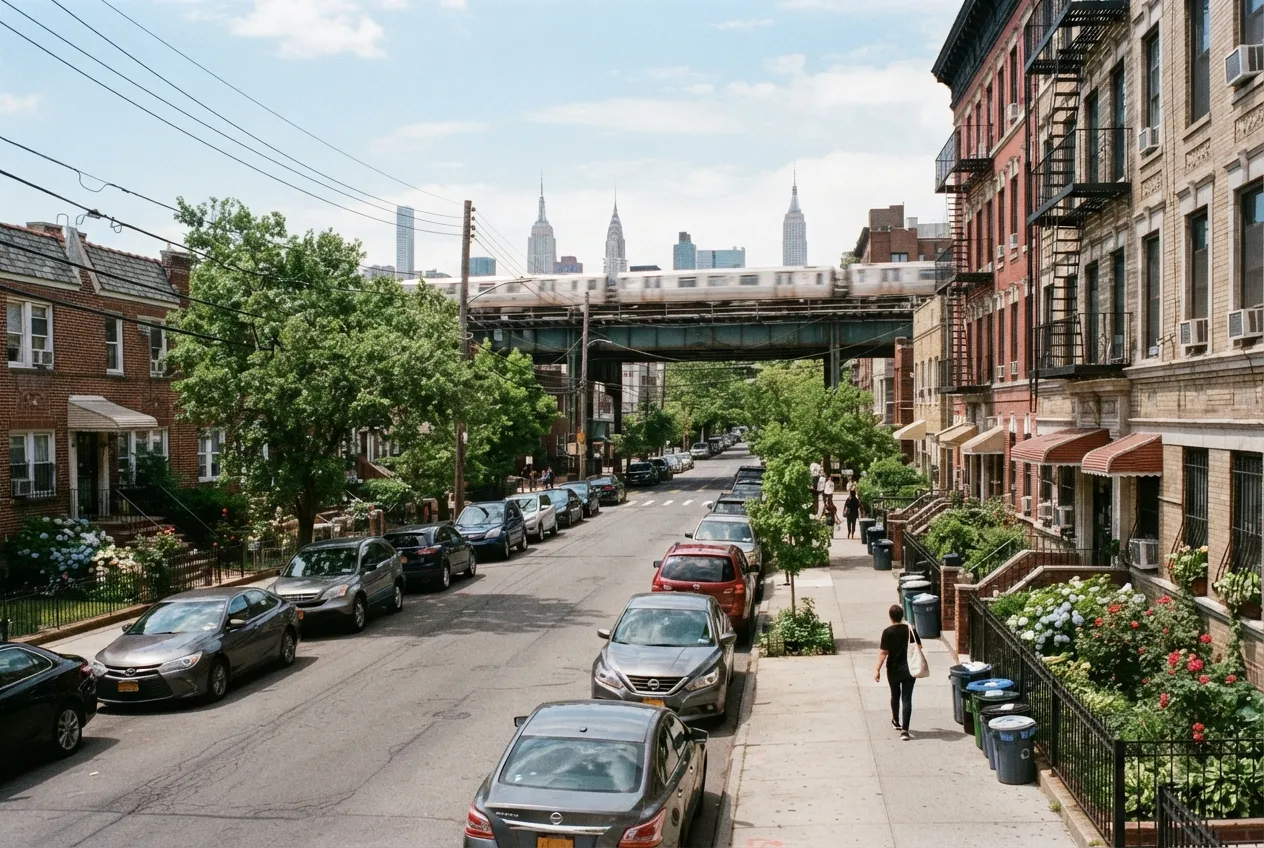
Sunnyside's housing is mostly attached and semi-attached brick construction: rowhouses, two-family homes and pre-war apartment buildings, with shared walls and chimneys that run through several floors. When a flue liner fails in a building like this, the problem rarely stays in one place. Cracked tiles can let exhaust leak into wall cavities or toward a neighboring unit, and deteriorating mortar can shed debris that partly blocks the flue.
Many of these chimneys also serve heating equipment rather than fireplaces. A flue that worked well with an older oil boiler may not be the right size or material for a newer, more efficient appliance. An oversized flue can let exhaust cool too quickly, which leads to condensation, poor draft and faster wear on the masonry.
Oil-to-Gas Conversions and Appliance Changes
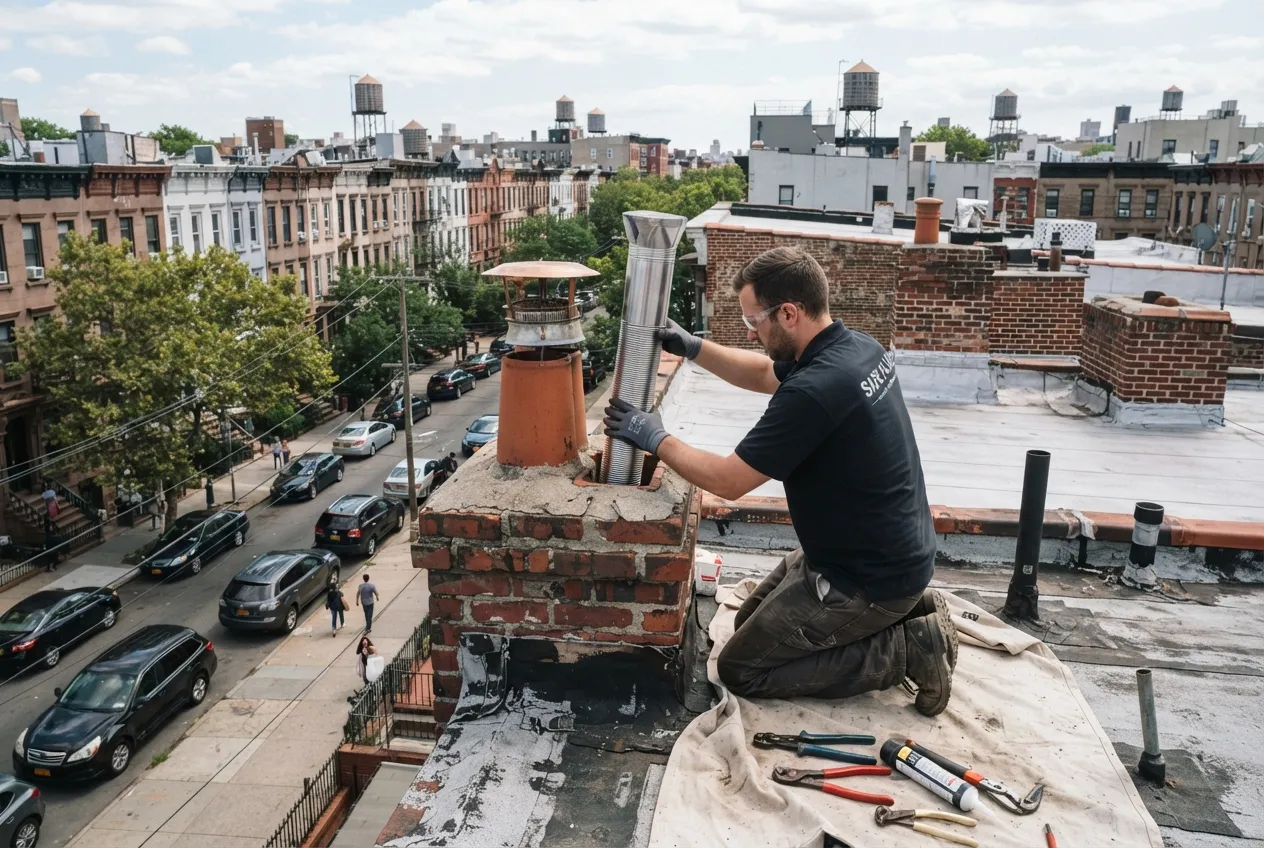
When a New York City building converts its boiler from oil to gas, the chimney has to be evaluated as part of the work. A new liner is often needed because gas exhaust produces acidic condensate that can corrode a masonry flue. Over time that condensate can eat into mortar and tile from the inside, even when the outside of the chimney looks fine.
The same caution applies when you replace a boiler, furnace or water heater, or add a new appliance to an existing flue. Under the NFPA 211 standard, a change to the system like this calls for a Level 2 inspection, which includes a camera look inside the flue. That inspection tells us whether the existing liner can stay, needs repair or should be replaced.
Liner Options We Install
The right liner depends on the fuel, the appliance's venting requirements and the size and condition of the flue. We match the liner to the manufacturer's specifications for the equipment it serves.
- Stainless steel liners: a common choice for gas, oil and wood-burning appliances, available in rigid and flexible forms to work through offsets in older chimneys.
- Sized liners for high-efficiency equipment: correctly sized to keep exhaust warm enough to draft properly and limit condensation.
- Insulated liners: used where clearances or the chimney's condition call for extra protection between the liner and the masonry.
- Liners for fireplaces and wood stoves: built to handle the higher temperatures of solid-fuel burning.
Time for your annual chimney check?
How Liner Installation Works
Most liner jobs follow the same basic sequence. We keep you informed at each step and clean up the work area before we leave.
- Inspect the chimney and flue, including a camera inspection of the interior.
- Measure the flue and confirm the appliance's venting requirements.
- Clean the flue and remove loose or broken tile if needed for clearance.
- Install the liner from the top, connect it at the appliance and seal the top with a cap.
- Check draft and connections, then review the finished work with you.
Timing Your Liner Work Around Heat Season
New York City's heat season runs from October 1 through May 31, and building owners must keep apartments heated to the city's minimum temperatures during that time. For multi-unit buildings in Sunnyside, that makes late spring and summer the easiest window for liner work and boiler conversions. If a problem turns up mid-winter, we will help you plan the work so heat is out of service for as short a time as possible.
We also serve nearby Long Island City, Hunters Point, Greenpoint, East Williamsburg and Williamsburg.
More services in Sunnyside
- Chimney Sweep in SunnysideLocal service & repairs
- Chimney Inspection in SunnysideLocal service & repairs
- Chimney Repair in SunnysideLocal service & repairs
- Air Duct Cleaning in SunnysideLocal service & repairs