The short answer
You usually need a new chimney liner when the old flue is cracked or deteriorated, or when a new appliance is installed. A switch from oil to gas also commonly calls for one, because gas exhaust can corrode an unlined masonry flue. RoyalFlue inspects the chimney first, sizes a liner to the appliance it serves, and installs it to vent safely.
A chimney liner is the channel inside a chimney that carries smoke and exhaust safely out of the building. It also protects the surrounding masonry from heat and corrosive byproducts. In Stuyvesant Town and the nearby Manhattan neighborhoods, many chimneys serve boilers and water heaters in larger apartment buildings. Others serve fireplaces in older rowhouses and pre-war buildings. Many of these flues were built decades ago for appliances and fuels that have since changed. RoyalFlue's certified technicians install new liners and replace failing ones. Our office in Greenpoint, Brooklyn, is about a mile east of the neighborhood.
Why Liners Matter in Stuyvesant Town Buildings
Most chimneys in this part of Manhattan are masonry. Many were originally lined with clay tile or not lined at all. Over time, heat cycles, moisture and acidic exhaust can crack tiles, wash out mortar joints and leave gaps in the flue. When that happens, exhaust gases can leak into the building. Heat can also reach nearby framing.
A flue that is the wrong size for the appliance causes its own problems. If the flue is too large, exhaust cools and condenses before it gets out, which leads to moisture damage and poor draft. If it is too small, exhaust can back up. A properly sized liner fixes both problems. That matters most in apartment buildings, where one chimney can affect many households.
Oil-to-Gas Conversions and Your Chimney
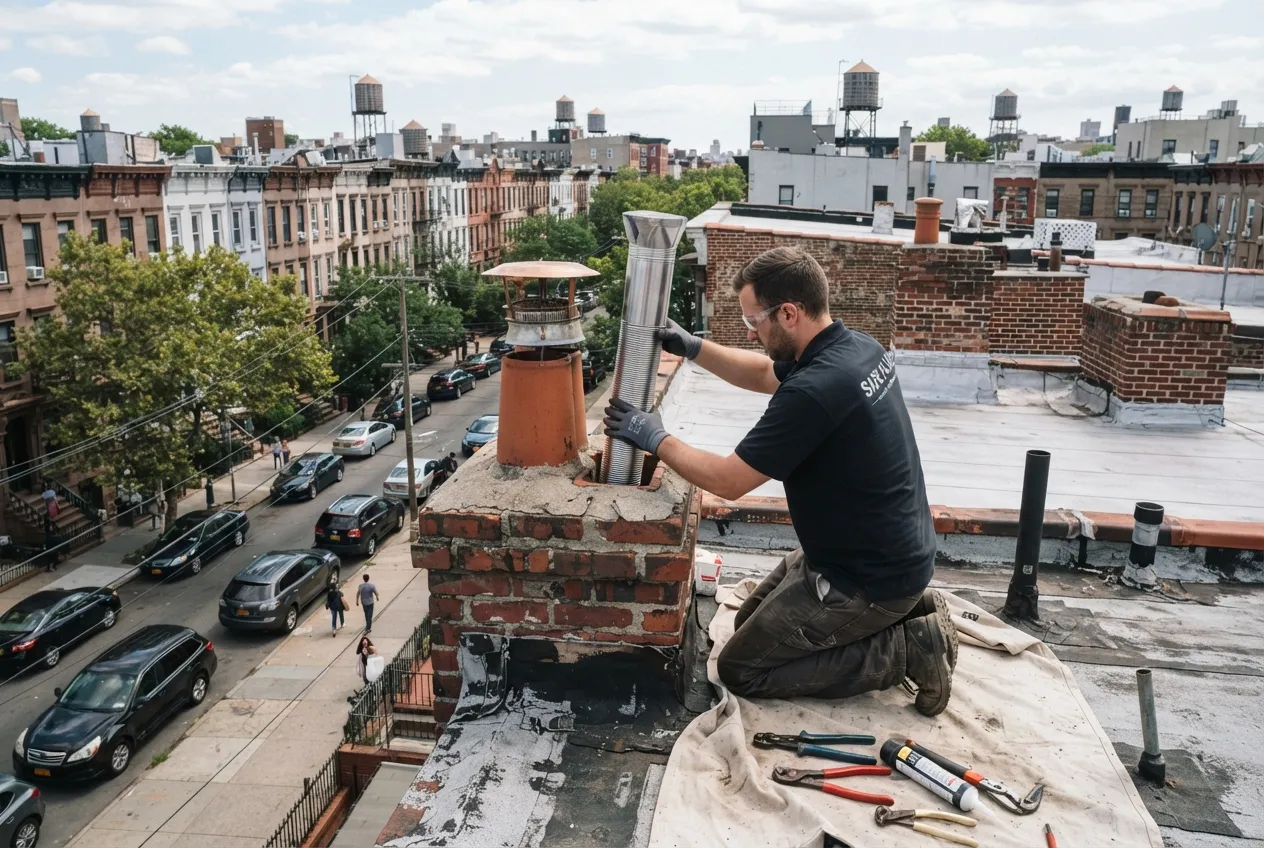
When a New York City building converts its boiler from oil to gas, the chimney has to be evaluated as part of the work. A new liner is often needed. Gas exhaust produces acidic condensate, and over time that condensate can corrode a masonry flue that handled oil exhaust without trouble.
Under the NFPA 211 standard, a change of fuel or a new appliance calls for a Level 2 inspection. This is a closer look than the routine yearly check, and it usually includes a camera scan of the flue. We do this inspection before recommending a liner. That way the liner we propose matches the new equipment and the actual condition of the chimney.
Liner Options We Install
The right liner depends on what the chimney serves, how the flue is shaped and what condition it is in. After the inspection, we explain which options fit your building and why.
- Stainless steel liners: suited to gas, oil and wood-burning appliances. Available rigid or flexible for flues with offsets.
- Aluminum liners: an option for certain gas appliances where the manufacturer allows it.
- Cast-in-place liners: a poured lining that seals cracks and can add strength to older masonry flues.
- Insulated liner systems: help keep exhaust warm so it drafts well and produces less condensation.
- Liner caps and terminations: keep rain, debris and animals out of the new flue.
Time for your annual chimney check?
How Installation Works
We plan each job around how the building operates. That includes access to the roof and the boiler room, notifying residents, and keeping dust out of living spaces.
- Inspection of the existing flue, including a camera scan where needed.
- Measurement of the appliance and flue so the liner is sized correctly.
- Cleaning and removal of any debris or failed tile that would block the new liner.
- Installation of the liner from the top of the chimney, with connections made at the appliance.
- Final check of draft and connections, plus a walkthrough of the finished work with you or your building staff.
Timing Around Heat Season
New York City's heat season runs from October 1 through May 31. During those months, building owners must keep apartments heated to the city's minimum temperatures. For buildings with central boilers, it makes sense to schedule liner work for late spring or summer, when the boiler can be taken offline more easily.
If a problem turns up during the heating months, we can inspect it and talk through your options. We plan the work to keep the boiler offline for as short a time as possible.
Serving Stuyvesant Town and Nearby Neighborhoods
Besides Stuyvesant Town, we install chimney liners in Peter Cooper Village, the East Village, Gramercy, Murray Hill and Kips Bay. Our work includes pre-war apartment buildings, brownstones and rowhouses, from single-family homes to multi-unit properties managed by boards and building staff.
More services in Stuyvesant Town
- Chimney Sweep in Stuyvesant TownLocal service & repairs
- Chimney Inspection in Stuyvesant TownLocal service & repairs
- Chimney Repair in Stuyvesant TownLocal service & repairs
- Air Duct Cleaning in Stuyvesant TownLocal service & repairs