The short answer
Yes, RoyalFlue Chimney Services serves Roosevelt Island from our Greenpoint, Brooklyn office about 2 miles away. We handle chimney sweeping, inspection, liner work, repairs, dryer vent cleaning and air duct cleaning for apartment buildings and individual units.
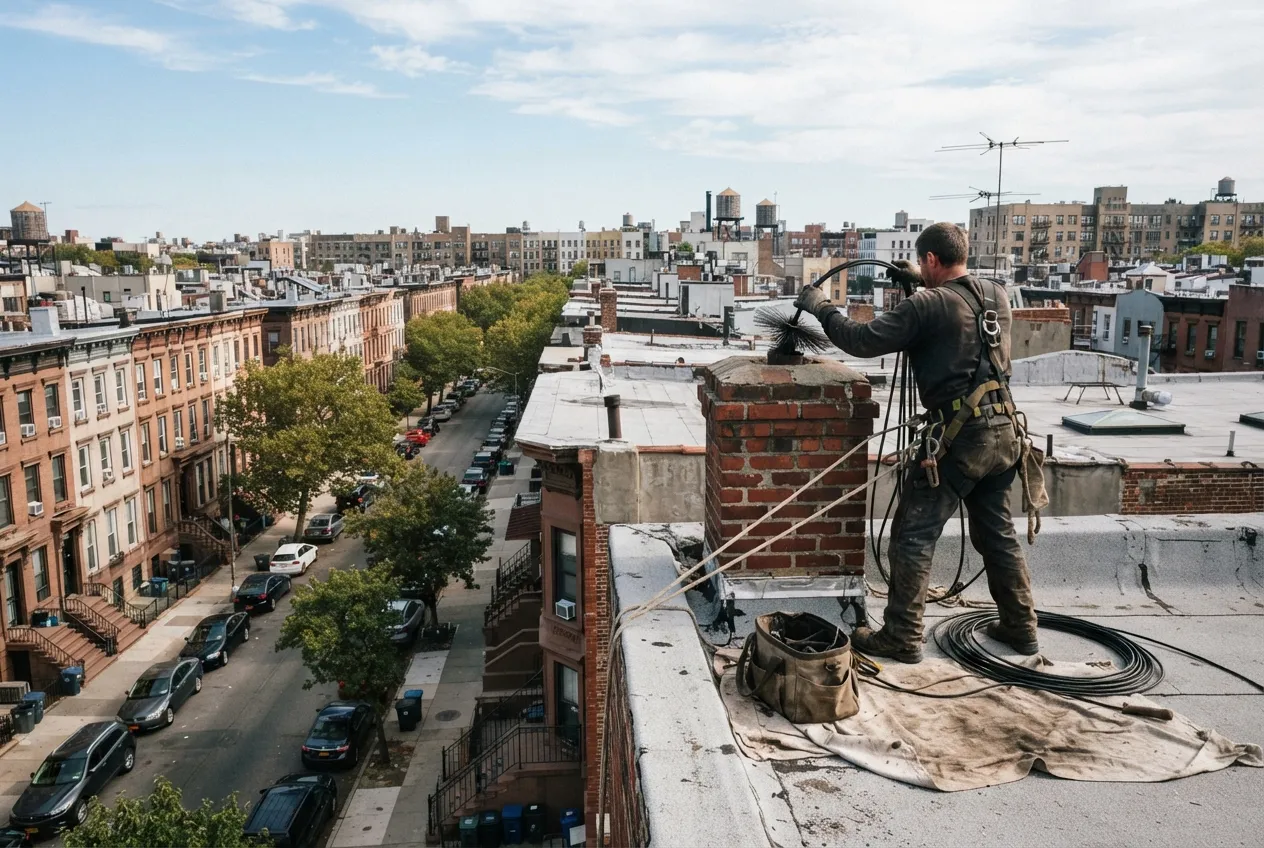
RoyalFlue Chimney Services works on Roosevelt Island from our office in Greenpoint, Brooklyn, about 2 miles to the south. Most homes on the island are in apartment buildings, so the work we do here centers on shared and individual venting: boiler and appliance flues, dryer vents, air ducts, and the fireplaces in units that have them. Our certified technicians clean, inspect and repair these systems for building owners, managers, co-op and condo boards, and residents. We cover all of the Roosevelt Island area, including ZIP codes 10021, 10044, 10065, 10075 and 10162.
Services We Offer on Roosevelt Island
Apartment buildings depend on vents and flues that residents rarely see. A boiler chimney serves the whole building, dryer vents run through walls and shafts, and ductwork moves air between floors. We look after all of it, along with the masonry and metal parts that keep these systems sealed and dry.
- Chimney sweep for fireplaces and boiler flues
- Chimney inspection, from a routine yearly check to a closer evaluation after changes
- Chimney repair, including masonry and crown work
- Chimney liner installation for boiler and appliance flues
- Chimney rebuilding when masonry is too far gone to patch
- Chimney cap and chase cover installation
- Chimney waterproofing
- Fireplace and damper repair
- Dryer vent cleaning for individual units and shared laundry rooms
- Air duct cleaning
How the Weather Here Wears on Chimneys and Vents
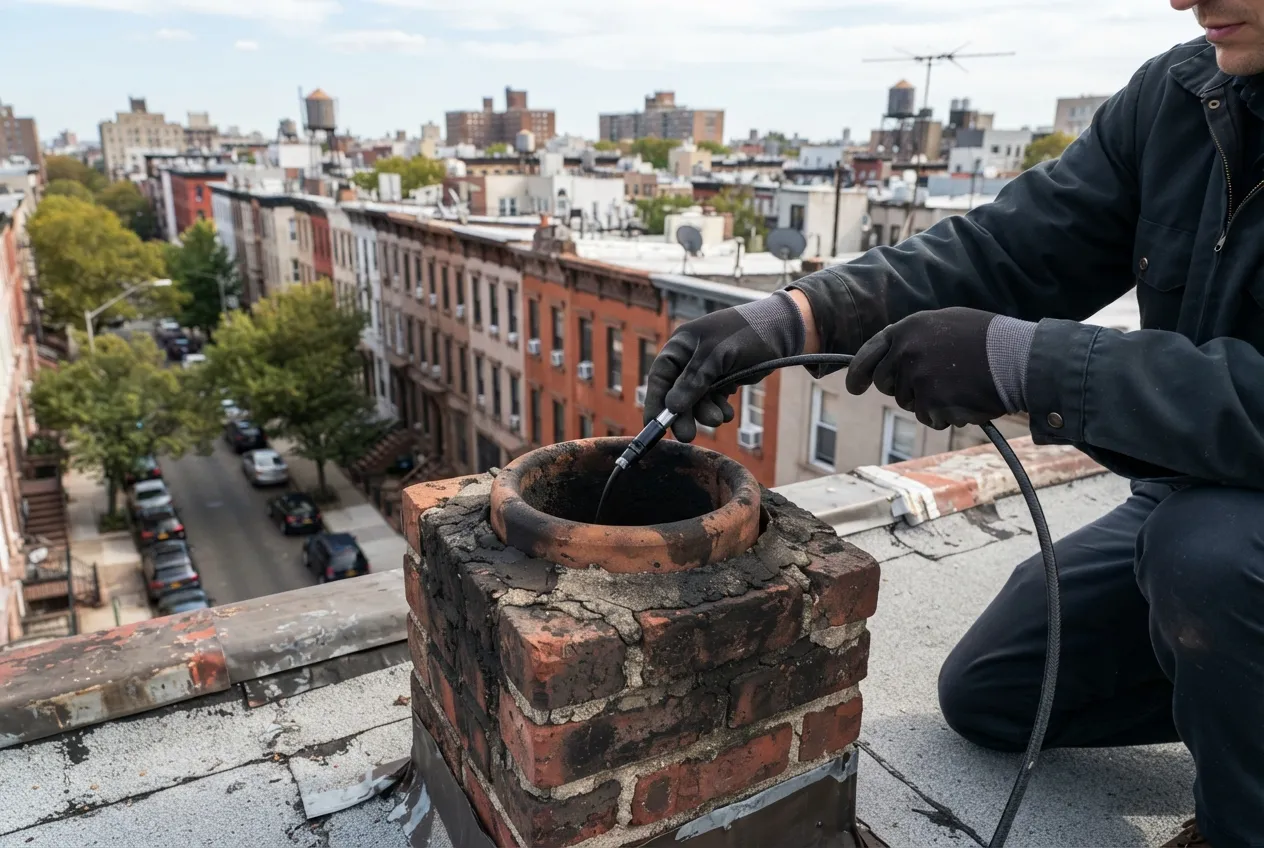
Sitting in the East River, Roosevelt Island gets steady wind and damp air on top of the usual New York weather. Winters bring repeated freeze-thaw cycles: water soaks into brick and mortar, freezes, expands and loosens the masonry a little more each time. Nor'easters drive rain sideways into crowns, flashing and joints that would stay dry in calmer conditions.
Summers are hot and humid, and moisture that collects in a flue or duct can lead to rust, odors and mold. A properly fitted cap keeps rain and animals out, waterproofing helps brick shed water while still letting it breathe, and a sound crown or chase cover stops water from running straight down the chimney. Fixing small cracks early is far easier than rebuilding a section of chimney later.
Boiler Chimneys, Heat Season and Oil-to-Gas Conversions
New York City's heat season runs from October 1 through May 31, and building owners must keep apartments at the city's minimum temperatures during that time. A boiler that has to shut down because of a blocked or damaged flue puts that at risk, so we recommend having the chimney checked before October rather than waiting for a problem in January.
When a city building converts its boiler from oil to gas, the chimney has to be evaluated as part of the job. A new liner is often needed, because gas exhaust produces acidic condensate that can corrode a masonry flue from the inside. We inspect the flue, explain what we find, and install a correctly sized liner when one is called for.
Time for your annual chimney check?
Dryer Vents and Air Ducts in Apartment Buildings
Long dryer vent runs are common in apartment buildings, and lint builds up quickly in them. According to the U.S. Fire Administration, failure to clean is the leading factor contributing to clothes dryer fires in homes. Signs that a vent needs attention include clothes taking longer to dry, a hot laundry room, or a burning smell. We clean the full run, not just the part behind the machine.
For air ducts, we follow the U.S. EPA's guidance: cleaning makes sense when there is substantial visible mold growth, vermin, or excessive dust and debris. The EPA notes that duct cleaning has not been shown to prevent health problems, so we won't promise that. We inspect first, tell you plainly whether cleaning is worthwhile, and avoid chemical treatments unless there is a clear reason to use them.
Inspections That Follow NFPA 211
The NFPA 211 standard calls for chimneys, fireplaces and vents to be inspected once a year. A Level 1 inspection fits when nothing has changed. A Level 2 inspection is needed when the system changes, such as a new appliance or a switch of fuel, or when a home is sold. A Level 3 inspection is used when a hidden hazard can only be reached by opening part of the chimney or building. We tell you which level applies and why before any work begins.
We also serve nearby neighborhoods, including Long Island City, Hunters Point, Murray Hill, Kips Bay and Sunnyside.
ZIP codes we serve
- 10021
- 10044
- 10065
- 10075
- 10162